

¿Por qué los sistemas industriales necesitan anticongelante/refrigerante en verano?
23/05/2026
Pasos para la limpieza química de torres de refrigeración: guía de implementación
27/04/2026
Tipos de sedimentos en sistemas de ósmosis inversa y métodos para identificarlos.
25/04/2026
Beneficios de utilizar soluciones especializadas de Abrizan Company para MED
28/02/2026
Cathodic protection method selection and system design

Factors affecting the design of a cathodic protection system:
The items that are important in designing a system and selecting a cathodic protection method and should be considered are:
- Potential size: Using the Evans curve, its potential is selected so that different metals in the cathodic area are protected.
- Circuit current: The current intensity (in amperes) required to reach the protective potential must be calculated.
- Anodic package distance: The greater the distance between the anodes and the part, the greater the current must be injected into the circuit to achieve more complete protection. Note: Too close to the anode to the part will prevent the current from reaching the entire surface (especially the back side of the part).
- The use of protective coatings and their effect on the design of the cathodic protection system should be considered.
- The size of the engineering part, length, width or diameter of the part, must be known in order to calculate the surface area and, as a result, the electrical resistance of the part.
- The type and type of soil are of particular importance in terms of chemical properties and determining its resistance.
- The possibility of stray currents, induced currents caused by high voltage current passing near the engineering component or the presence of transformers and other devices, must be considered.
Information required in the design of a cathodic protection system:
This information is divided into two main categories:
a) Site (area) information
b) Structure information
The above information is very necessary and essential for corrosion engineers, so we must become familiar with how to prepare each of these items.
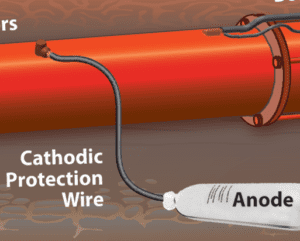
Site Information (Area):
A field survey to obtain site-related information should be conducted prior to design. This survey is divided into nine items according to the NACE-RPO169-96 standard, the most important of which is the soil electrical resistivity test. In the design of a cathodic protection system, information on the specific soil resistivity as an electrolyte is essential. The number and location of points where soil resistance should be measured depends on environmental conditions and soil type. Of course, economic and practical considerations limit the number of tests.
Structure Information:
The following information should be provided to the cathodic protection system designer by the engineers designing the piping system, pumping station, cooling tower, valves, etc.
- Size and length of underground pipes
- Location of change of status of pipes from underground to above ground
- Location and method of installation of valves and flanges
- Size and specifications of valves
- Working pressure and class of valves and other fittings
- How to install all pipelines such as: fire, gas pipes, cooling water, liquid fuels and determine the location of each intersection.
Factors affecting the selection of cathodic protection method:
The corrosion engineer or relevant technician must determine under different conditions which method to use for applying cathodic protection. The project manager must be able to compare the various factors affecting the two cathodic protection methods with each other and select the best one.
The following points are noteworthy from comparing the two cathodic protection methods considering the same conditions:
- Since sacrificial anodes have a certain current density depending on their type compared to the applied current method, applied current is used to protect large equipment under the same type of conditions.
- In the absence of access to electricity, sacrificial anodes that do not require a voltage source are used.
- In the applied current method, if there is insufficient accuracy, a reverse current may be created and corrosion may be intensified. However, this problem does not exist with the use of sacrificial anodes.
- In the applied current method, a specialist or a person familiar with the technical principles of the work is needed, while in the second method, it is sufficient to give the type of anode, its surface and their distances to a simple worker and there is no need for a specialist.
compartir :
¿Por qué los sistemas industriales necesitan anticongelante/refrigerante en verano?
23/05/2026Pasos para la limpieza química de torres de refrigeración: guía de implementación
27/04/2026Tipos de sedimentos en sistemas de ósmosis inversa y métodos para identificarlos.
25/04/2026Beneficios de utilizar soluciones especializadas de Abrizan Company para MED
28/02/2026
Artículos relacionados
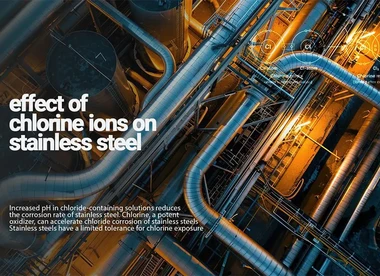
Efecto de los iones cloruro en los aceros inoxidables
Se expone el efecto del cloro y de los cloruros en la corrosión de los aceros inoxidables, así como los factores que influyen en su velocidad de corrosión; asimismo, se abordan los límites admisibles de las concentraciones de iones cloruro en el agua y las diferencias entre los efectos del cloro libre y de los cloruros en la corrosión de los aceros resistentes a la corrosión.
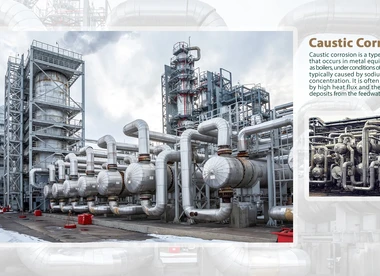
Corrosión cáustica
Corrosión localizada provocada por la concentración de sales cáusticas o alcalinas, la cual suele producirse en condiciones de alta evaporación o transferencia de calor. Las sales cáusticas —o la sosa cáustica— constituyen uno de los compuestos iónicos más utilizados; se emplean en diversos sectores, tales como el tratamiento de aguas, la producción de cartón y papel, la industria petrolera y de refinación, la fabricación de aluminio, la industria alimentaria, la producción de alcohol y la industria del vidrio.
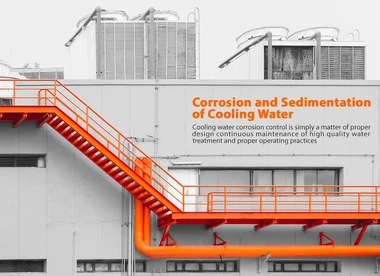
Corrosión y formación de depósitos en sistemas de agua de refrigeración, según la norma API 571
Se refiere a la corrosión general o localizada de los aceros al carbono y otros metales, causada por sales disueltas, gases, compuestos orgánicos o actividad microbiológica.

Corrosión microbiana según API 571
La corrosión microbiana es un tipo de corrosión causada por organismos vivos, tales como bacterias, algas u hongos. Este tipo de corrosión suele estar asociado a tubérculos o a materiales orgánicos viscosos.
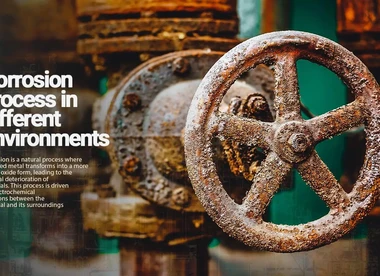
Proceso de corrosión en diferentes entornos
En una clasificación más exhaustiva, los procesos de corrosión se dividen en tres grupos: corrosión en soluciones o medios acuosos, corrosión en sales fundidas y metales líquidos, y corrosión en gases.
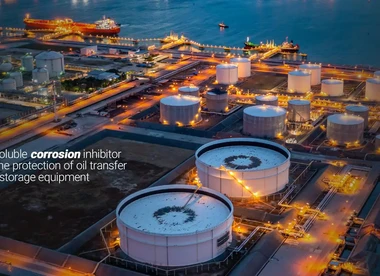
Inhibidor de corrosión soluble en aceite para la protección de equipos de transferencia y almacenamiento de petróleo
La corrosión es un fenómeno natural que se produce como resultado de la reacción electroquímica de un metal con el entorno que lo rodea. En la industria del petróleo y el gas, la corrosión constituye uno de los principales problemas, lo que supone un coste económico enorme cada año. Parte de estos costes se debe a la corrosión de tuberías o líneas de transporte de petróleo. Los métodos eficaces para prevenir la corrosión en los equipos de transporte y almacenamiento de petróleo se dividen en dos categorías: soluciones físicas y soluciones químicas.

uso de cupones
El método de cupones —o uso de cupones de corrosión— es la técnica más sencilla para el monitoreo de la corrosión. Los cupones constituyen la herramienta de monitoreo de la corrosión más antigua. Consisten en pequeñas piezas de metal o aleación —del mismo material que se desea analizar— que se sumergen en el medio del proceso; tras un periodo de tiempo determinado, se retiran para evaluar y examinar la pérdida de peso o de dimensiones que hayan experimentado.
Deaerators
Deaerators are mechanical devices that remove dissolved gases from the boiler feedwater. By reducing the concentration of oxygen and carbon dioxide in the solution, they minimize corrosion and protect the boiler from the effects of corrosive gases.
Envía tu opinión
Tu dirección de correo electrónico no será publicada.