

¿Por qué los sistemas industriales necesitan anticongelante/refrigerante en verano?
1405/03/02
Pasos para la limpieza química de torres de refrigeración: guía de implementación
1405/02/07
Tipos de sedimentos en sistemas de ósmosis inversa y métodos para identificarlos.
1405/02/05
Beneficios de utilizar soluciones especializadas de Abrizan Company para MED
1404/12/09
Copper anti-corrosion

Copper Protection: Effective Solutions to Combat Corrosion
Copper, a metal with widespread applications in various industries, plays a vital role in technological advancement due to its high electrical and thermal conductivity and ductility. However, this valuable metal is also subject to corrosion. Copper corrosion can disrupt equipment performance and impose huge costs on industries.
Copper Corrosion Process
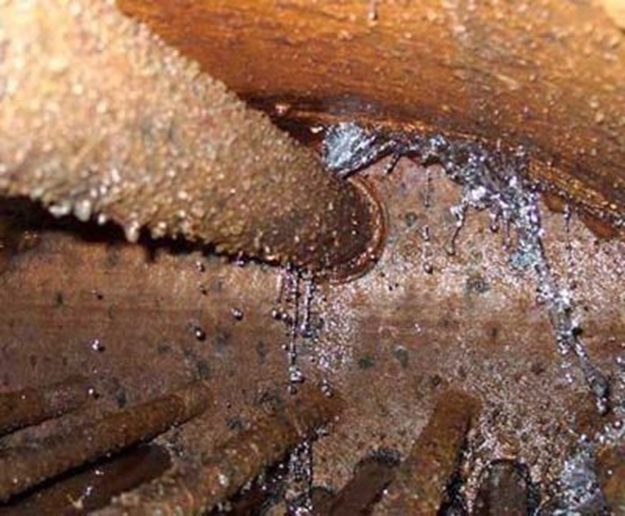
Copper corrosion is a process in which the copper surface is destroyed by reaction with the surrounding environment. This phenomenon is usually accompanied by a change in the color of the copper surface:
- In the early stages, the copper surface becomes dull.
- Then it turns dark brown or black.
- Finally, a green color (copper rust or patina) appears.

Factors Affecting Copper Corrosion
Several factors play a role in accelerating copper corrosion:
- Oxygen in the air
- Humidity
- Acidic solutions
- Compounds containing ammonia
- Hydrogen sulfide
- Chlorine and sulfate ions
Copper corrosion prevention solutions
There are effective solutions to protect copper from corrosion:
- Using copper anti-corrosion solutions
- Using corrosion inhibitors
- Controlling environmental conditions
- Copper surface coating
Copper anti-corrosion solution: Powerful protection
Copper anti-corrosion solutions prevent corrosion by creating a protective layer on the copper surface. These solutions:
- Prevent copper oxidation
- Increase the useful life of copper equipment
- Reduce maintenance costs
- Preserve the appearance of copper
Copper corrosion inhibitors
Copper corrosion inhibitors are divided into three categories:
- Anodic inhibitors: reduce anodic reactions
- Cathodic inhibitors: slow down cathodic reactions
- Mixed inhibitors: affect both anodic and cathodic reactions
Special applications of copper anti-corrosion
Copper anti-corrosion products are used in the following cases:
- Protection of copper pipes and wires
- Prevention of corrosion in electromagnetic motors
- Protection of copper equipment in the marine industry
- Prevention of scale formation in aquatic systems
Important points in choosing a copper anti-corrosion product
When choosing a copper anti-corrosion product, consider the following Consider:
- Compatibility with the application environment
- Ability to protect against all types of corrosion
- Durability and durability
- Ease of use
- Affordability
Conclusion
Using copper anti-corrosion products is an effective way to extend the life and maintain the efficiency of copper equipment. Given the importance of copper in various industries and its increasing price, investing in protecting this valuable metal is a smart and economical decision. Choosing the right copper anti-corrosion product can significantly reduce equipment maintenance and replacement costs and ensure optimal performance of copper systems.
compartir :
¿Por qué los sistemas industriales necesitan anticongelante/refrigerante en verano?
1405/03/02Pasos para la limpieza química de torres de refrigeración: guía de implementación
1405/02/07Tipos de sedimentos en sistemas de ósmosis inversa y métodos para identificarlos.
1405/02/05Beneficios de utilizar soluciones especializadas de Abrizan Company para MED
1404/12/09
Artículos relacionados
Effect of chlorine ions on stainless steels
The effect of chlorine and chloride parameters on the corrosion of stainless steels and the parameters affecting their corrosion rate, as well as the acceptable limits of chlorine ion levels in water and the differences in the effects of free chlorine and chloride on the corrosion of corrosion-resistant steels, are stated.
Caustic corrosion
Localized corrosion caused by the concentration of caustic or alkaline salts, which usually occurs under conditions of high evaporation or heat transfer. Caustic salt or caustic soda is one of the most widely used ionic compounds and is used in various industries including water treatment, cardboard and paper production, oil and refinery industries, aluminum production industries, food industries, alcohol production and glass.
Corrosion and deposition of cooling water based on API 571
It refers to general or localized corrosion of carbon steels and other metals caused by dissolved salts, gases, organic compounds, or microbiological activity.

Microbial corrosion based on API 571
Microbial corrosion is a type of corrosion caused by living organisms such as bacteria, algae, or fungi. This type of corrosion is often associated with tubercles or slimy organic materials.
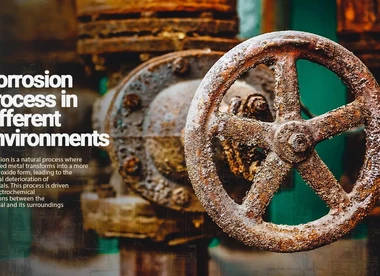
Corrosion process in different environments
Corrosion processes are divided into three groups in a more comprehensive classification: corrosion in aqueous solutions or environments, corrosion in molten salts and liquid metals, and corrosion in gases.
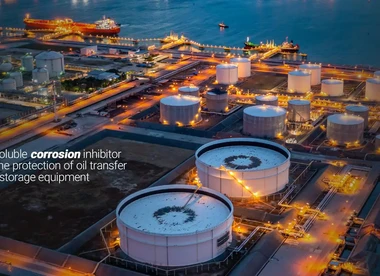
Oil-soluble corrosion inhibitor for the protection of oil transfer and storage equipment
Corrosion is a natural phenomenon that occurs as a result of the electrochemical reaction of metal with the surrounding environment. In the oil and gas industry, corrosion is one of the major problems that accounts for a huge amount of money annually. Part of these amounts are related to the corrosion of pipes or oil transmission lines. Effective ways to prevent corrosion of oil transmission and storage equipment are divided into two categories: physical and chemical solutions.

couponing
The coupon method or corrosion coupons is the simplest method of corrosion monitoring. Coupons are the oldest corrosion monitoring tool. Corrosion coupons are small pieces of metal or alloy of the material of interest that are immersed in the process medium and removed after a specified period of time and their weight or dimension loss is evaluated and examined.
Deaerators
Deaerators are mechanical devices that remove dissolved gases from the boiler feedwater. By reducing the concentration of oxygen and carbon dioxide in the solution, they minimize corrosion and protect the boiler from the effects of corrosive gases.
Envía tu opinión
Tu dirección de correo electrónico no será publicada.