

¿Por qué los sistemas industriales necesitan anticongelante/refrigerante en verano?
1405/03/02
Pasos para la limpieza química de torres de refrigeración: guía de implementación
1405/02/07
Tipos de sedimentos en sistemas de ósmosis inversa y métodos para identificarlos.
1405/02/05
Beneficios de utilizar soluciones especializadas de Abrizan Company para MED
1404/12/09
Microbial corrosion

Microbial corrosion is a term used as an abbreviation in Persian. The exact term for this corrosion is corrosion affected by microbiological factors and is introduced by the abbreviation MIC. Therefore, microbial corrosion can be defined as a type of corrosion that is intensified by the presence and activity of certain microorganisms.
Today, about one-fifth of the damage caused by corrosion in industries is related to microbial corrosion, which has received a lot of attention in recent years. Microbial corrosion is not actually corrosion, but a process that accelerates or initiates corrosion. This phenomenon can accelerate common types of corrosion. Accelerating microorganisms are able to increase the speed of common corrosion by ten times.
Microorganisms affect the corrosion rate of metal by adhering to metal surfaces and forming a thin layer of living and non-living organisms called biofilm. By forming biofilms on metal surfaces, microorganisms not only cause corrosion but also improve the conditions of the metal-environment interface in terms of corrosion. This shows the dual effect of biofilms formed on metal surfaces, which on the one hand accelerate and on the other hand moderate the corrosion rate.
The formation of biofilms on metal is the result of a microbial accumulation process. Microbial accumulation can quickly cause changes in ion concentration, environmental pH, and oxidation and reduction potential of the environment, and change the behavior of the metal against corrosion and the parameters determining its corrosion rate. These effects vary and range from intensification of the corrosion rate to prevention of corrosion. Any microbial process that facilitates one of the anodic or cathodic reactions participating in the corrosion process or causes temporary separation of the anodic and cathodic cells generally accelerates corrosion.
Microbial corrosion occurs in various industries, the most important of which are the oil and gas industries, water and wastewater industries, nuclear power plants, aircraft manufacturing industries, and metalworking industries.
To effectively control the function of microorganisms in accelerating corrosion, it is necessary to both identify the microorganisms in question and determine methods to prevent their growth.
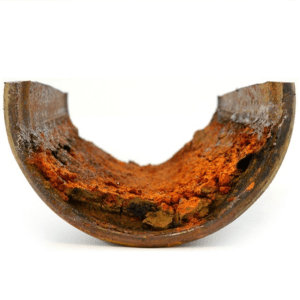
Methods for preventing microbial corrosion
The best way to prevent microbial corrosion is to prevent the growth of biofilm. When biofilm is formed, its resistance to germicides also increases, and if this biofilm is not completely removed, it can grow rapidly. Therefore, identifying and monitoring microorganisms can be a good guide to reducing the damage caused by microbial corrosion.
- Using an adequate amount of germicide is a solution in some cases. For this purpose, microbial counting and the use of biosensors help to obtain a criterion for determining the amount of germicide required.
- Using corrosion-resistant alloys such as titanium and its alloys, which have been used in various industries for many years.
- Using various protective coatings or rutile linings on metal, sometimes protective coatings that contain germicides can also be used.
- Using the cathodic protection method.
- Using inhibitors.
Another important method for preventing microbial corrosion is biological protection mechanisms, in which biofilms are often formed, and corrosion is controlled by eliminating conditions suitable for the growth of corrosive bacteria or conditions favorable for electrochemical corrosion.
compartir :
¿Por qué los sistemas industriales necesitan anticongelante/refrigerante en verano?
1405/03/02Pasos para la limpieza química de torres de refrigeración: guía de implementación
1405/02/07Tipos de sedimentos en sistemas de ósmosis inversa y métodos para identificarlos.
1405/02/05Beneficios de utilizar soluciones especializadas de Abrizan Company para MED
1404/12/09
Artículos relacionados
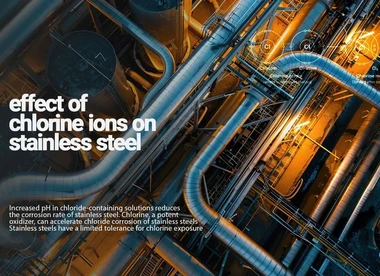
Effect of chlorine ions on stainless steels
The effect of chlorine and chloride parameters on the corrosion of stainless steels and the parameters affecting their corrosion rate, as well as the acceptable limits of chlorine ion levels in water and the differences in the effects of free chlorine and chloride on the corrosion of corrosion-resistant steels, are stated.
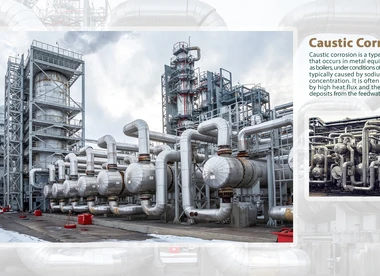
Caustic corrosion
Localized corrosion caused by the concentration of caustic or alkaline salts, which usually occurs under conditions of high evaporation or heat transfer. Caustic salt or caustic soda is one of the most widely used ionic compounds and is used in various industries including water treatment, cardboard and paper production, oil and refinery industries, aluminum production industries, food industries, alcohol production and glass.
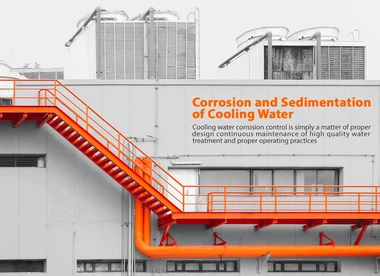
Corrosion and deposition of cooling water based on API 571
It refers to general or localized corrosion of carbon steels and other metals caused by dissolved salts, gases, organic compounds, or microbiological activity.
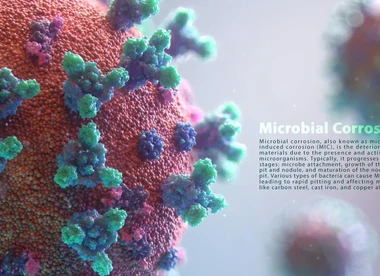
Microbial corrosion based on API 571
Microbial corrosion is a type of corrosion caused by living organisms such as bacteria, algae, or fungi. This type of corrosion is often associated with tubercles or slimy organic materials.
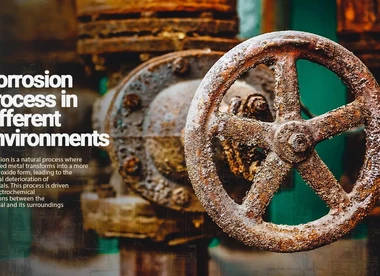
Corrosion process in different environments
Corrosion processes are divided into three groups in a more comprehensive classification: corrosion in aqueous solutions or environments, corrosion in molten salts and liquid metals, and corrosion in gases.
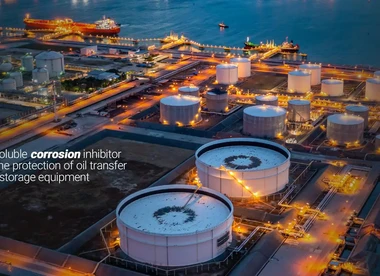
Oil-soluble corrosion inhibitor for the protection of oil transfer and storage equipment
Corrosion is a natural phenomenon that occurs as a result of the electrochemical reaction of metal with the surrounding environment. In the oil and gas industry, corrosion is one of the major problems that accounts for a huge amount of money annually. Part of these amounts are related to the corrosion of pipes or oil transmission lines. Effective ways to prevent corrosion of oil transmission and storage equipment are divided into two categories: physical and chemical solutions.

couponing
The coupon method or corrosion coupons is the simplest method of corrosion monitoring. Coupons are the oldest corrosion monitoring tool. Corrosion coupons are small pieces of metal or alloy of the material of interest that are immersed in the process medium and removed after a specified period of time and their weight or dimension loss is evaluated and examined.
Deaerators
Deaerators are mechanical devices that remove dissolved gases from the boiler feedwater. By reducing the concentration of oxygen and carbon dioxide in the solution, they minimize corrosion and protect the boiler from the effects of corrosive gases.
Envía tu opinión
Tu dirección de correo electrónico no será publicada.