

¿Por qué los sistemas industriales necesitan anticongelante/refrigerante en verano?
1405/03/02
Pasos para la limpieza química de torres de refrigeración: guía de implementación
1405/02/07
Tipos de sedimentos en sistemas de ósmosis inversa y métodos para identificarlos.
1405/02/05
Beneficios de utilizar soluciones especializadas de Abrizan Company para MED
1404/12/09
Preventing corrosion of ships and offshore installations

Undoubtedly, one of the main costs of the country's maritime industries, a large part of which remains hidden in the annual damage estimates, is the damage and costs of corrosion. Preventing corrosion and its obvious and hidden costs using scientific and specialized methods will lead to great growth and development in the country's industries.
Although the ship's hull is covered with special and resistant paints, the formation of small cells in the appropriate seawater environment can increase rapidly and, by producing high currents in this corrosive environment, cause severe corrosion in the hull. This problem exists in addition to the ship's hull and the tankers inside it, in all marine structures such as piers, oil and petrochemical platforms, etc. Although currently unscientific and unspecialized methods (traditionally) are used to prevent corrosion, unfortunately, advanced methods with today's knowledge have not been given serious attention yet. This article aims to review modern methods of preventing ship corrosion.
Design and maintenance of ships require knowledge of corrosion and information on the characteristics and life span (fatigue life, application of HTS (High Thermal Stability)) and life-related defects of single and double hull tankers, easy and simple inspection (easy access for inspection and repair), quality of construction and equipment (quality of finish,) and tank load (empty space above the tank water). Metals that consume higher energy in their production process are more susceptible to corrosion and have lower electrical potential.
Types of ship and offshore facility corrosion and influencing factors There are two types of atmospheric and submerged corrosion (surrounded by seawater) in ships, and the three important factors necessary to cause these corrosions are water and dissolved substances and pollutants in water (such as salt) and oxygen. Corrosion is initially electrochemical in nature and is associated with a chemical reaction accompanied by the passage of electricity. For this phenomenon to occur, there must be an electrical potential difference between the different surfaces of the layers.
Main factors affecting corrosion rate
- Permeation
- Temperature
- Conductivity
- Type of ions
- Acidity and basicity
- Electrochemical potential
Permeation and diffusion:
Bare, unprotected steel corrodes at a higher rate than steel coated with a layer of rust because the diffusion of reactants from the metal surface is much easier and the corrosion rate is hardly controlled by the diffusion of oxygen from water to the metal surface. Surfaces coated with a thin, conductive, moist layer, such as those occupied in ballast tanks, corrode more rapidly than submerged surfaces. Also, the upper surfaces of ballast tanks and above the double-walled bottoms, where air is trapped, tend to corrode more than fully submerged surfaces where there is less available oxygen.
Temperature:
The rate of diffusion and diffusion depends on temperature, so that metals corrode at a higher rate at higher temperatures than at lower temperatures, which is why surfaces below decks and areas connected to engine rooms or hot cargo corrode more quickly; of course, in modern double-hulled tankers with completely separated ballast tanks, the empty tanks act as an insulator from the sea and the cargo in them retains heat for a longer period of time, so that the side in the ballast tanks corrodes more quickly than in single-hull tanks.
Conductivity:
For corrosion to occur, there must be a conducting interface between the two parts of the corrosion reaction. Corrosion does not occur in distilled water, and the corrosion rate increases with increasing conductivity due to the presence of more ions in the solution. The corrosion rate of steel in the marine and shipbuilding industries reaches a maximum value close to the normal ionic capacity of seawater.
Types of ions:
Some types of ions present in seawater or in cargo are more corrosive than others. Chloride ions, as well as ions containing sulfate and sulfur, are usually more destructive, causing major problems. For example, chloride ions destroy the protective properties of any rust by preventing the formation of dense, uniform protective oxides, and sulfur ions are incorporated into the rust itself in reactions that produce excess electrons. Sulfur can originate from the neutral gas system and from cargoes such as crude oil in the tanks of ships carrying this cargo.
Factor controlling the rate of corrosion: pH In seawater, at about pH 8, the reaction that balances the decomposition (dissolution) of iron is the reduction of dissolved oxygen to form hydroxide ions. If the pH drops to zero (meaning it becomes acidic), the excess hydrogen ions present can enter into a cathodic reaction to produce hydrogen. Hydrogen and hydrogen ions diffuse very quickly, causing the steel to corrode more rapidly. If the pH rises to 14 (meaning it becomes basic), there is excess hydroxyl and corrosion stops. Also, many blisters are found in ballast tanks, especially in the double-walled bottoms, which are increasingly alkaline so that the steel underneath is very bright and shiny.
Potential:
Each metal has a specific electrochemical potential when immersed in a conducting liquid. This concept is called half-potential because it can be measured by comparison with another known reference, and these common reference electrodes are the saturated white mercury electrode (SCE), silver chloride/silver, and copper sulfate/copper. Of course, the potential that a metal has can be changed by connecting it to another dissimilar metal (using a sacrificial anode) or by applying an external potential (immersed current cathodic protection), which is the basic concept for corrosion prevention methods.
Microbiological corrosion:
Examination of some types of early double-hull tankers shows additional corrosion at the bottom of the cargo tanks where
The black sludge is predominantly found with a hydrogen sulfide odor. These sludges indicate the presence of sulfate-reducing bacteria 4. This bacteria has an activity threshold above 35 C, which is why in single-hull seawater tankers the steel is usually cooled below this temperature and therefore does not cause any particular problem. This corrosion usually appears as localized pits that are filled with a product consisting of iron compounds, so the design of the tanks should be such that there is no space for stagnant water and sludge to accumulate.
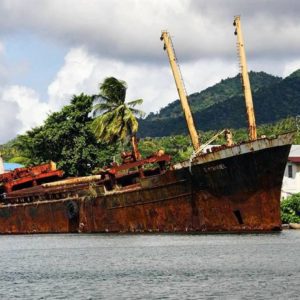
Corrosion Control in Ships
New Ways to Prevent Corrosion Considering the points raised, two methods can finally be proposed for controlling corrosion in ships:
- Changing the Corrosive Environment (Inhibitors - Cathodic Protection)
- Prevention and Interference with the Corrosive Environment (Coatings)
Inhibitors Corrosion inhibitors are used in areas where the electrolyte solution is of a controllable and known quantity. In ships, these inhibitors are used in equipment (boilers, tanks and pipes). There are two types of inhibitors: anodic and cathodic. Anodic inhibitors are used by migrating to the anode and reacting to form salts that act as a protective barrier. Examples of these are chromates, nitrites, phosphates and soluble oils. Cathodic inhibitors migrate to the cathode and either prevent the absorption of oxygen or the transformation of hydrogen. Examples of such compounds are salt compounds of magnesium, zinc, nickel or arsenic.
Cathodic protection:
This method was first proposed by Michael Faraday and Humphrey Davy and his colleagues to protect ships against corrosion in 1824, when zinc metal protective sheets were attached to the copper-plated hulls of naval vessels to reduce copper corrosion (the first vessel protected in this way was the Samarang 9). The principle of cathodic protection is to convert all anodes into cathodes by polarizing them to the same electrical potential as the cathode. There are two methods in this direction, the first is sacrificial anodes and the second is the application of external electric current.
Sacrificial anode:
In this method, a low potential material is brought into electrical contact with the metal surface to be protected. The low potential material is then anodized and corroded. Common materials used are magnesium, zinc, and aluminum.
Paints:
Paints are a mixture of many raw materials, the main components of which include:
- Base paint (other terms include: carrier, intermediate, resin, film former, polymer)
- Pigment or co-pigment
- Solvent
The first two form the final dry paint film, and the solvent is only used to facilitate application and form the initial film. This solvent leaves the paint film by evaporation and can therefore be considered a costly waste product. Basecoats Basecoats (or resins) are the constituent layers of the paint components that determine the properties of the coating, both physically and chemically. Paints are usually named after the components that make up their basecoats. (e.g. epoxy paints, chlorinated resin paints, alkaloid paints)
Basecoats are classified into two classes:
- Modifiable: In modifiable coatings, there is a chemical reaction
- Non-modifiable: In non-modifiable coatings, there is no chemical reaction, only the solvent is absent.
Changeable base colors In the first stage, the solvent is removed from the shell by evaporation and the dryness of the shell is determined by touch and in the second stage, the shell gradually becomes chemically complex by reactions: 1 - Reaction with atmospheric oxygen, known as oxygen 2 - Reaction with a chemical hardening agent 3 - Reaction with water present in the form of moisture in the atmosphere 4 - Artificial heat 5 - Radiation recovery (e.g., ultraviolet).
Non-changeable base colors: In these base colors, simple solutions of various resins or polymers are dissolved in suitable solvents and drying is by evaporation of the solvent and there is no chemical change. General types of these base colors include chloride resin, vinyl, bitumen and cellulose.
Pigments and pigments:
Pigments and pigments are used in the form of fine powders that are dispersed in the form of base colors with various particle sizes. These materials are divided into the following types:
- Anti-corrosion pigments
- Protective pigments
- Coloring pigments
- Pigments
In anti-corrosion pigments, these materials prevent metal corrosion using chemical and electrochemical means (chemical inhibitor). Such as red lead and zinc, zinc phosphate and zinc chromate. In protective pigments, these materials reduce the ability to penetrate the paint shell by creating a tortuous penetration path, such as aluminum and micaceous iron oxide. Ship corrosion
In coloring pigments, these pigments cause permanent color, such as white titanium dioxide and iron oxide, yellow, red, black. Pigments: These materials improve the properties of the shell (e.g. hardness). These materials are such as crystalline silica and bauxite.
Solvents: Solvents in paints are mainly used to simplify application and their function is to dissolve the base color and reduce the viscosity of the paint on the surface, which is suitable for various application methods, i.e. after application, the solvents evaporate and therefore they are costly waste materials.
A notable point about the different types of paints for submerged parts is that not all types of paints are suitable for use in permanent or partial submerged parts, for example alkyds, and of course some types of paints are better than others for permanent or partial immersion.
Conclusion: Various factors such as penetration, temperature, conductivity, type of ions, etc. are effective in accelerating ship corrosion, and in this regard, methods such as inhibitors and cathodic protection (submerged current and sacrificial anode) and the effect of coatings are suggested, which can prevent the penetration of materials necessary for corrosion to occur on the desired metal with different types of pigments, and finally, the best coatings are suggested for different parts of the ship, including decks and ballast tanks, etc.
compartir :
¿Por qué los sistemas industriales necesitan anticongelante/refrigerante en verano?
1405/03/02Pasos para la limpieza química de torres de refrigeración: guía de implementación
1405/02/07Tipos de sedimentos en sistemas de ósmosis inversa y métodos para identificarlos.
1405/02/05Beneficios de utilizar soluciones especializadas de Abrizan Company para MED
1404/12/09
Artículos relacionados
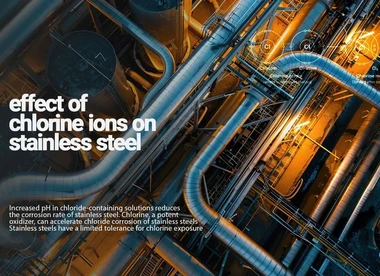
Effect of chlorine ions on stainless steels
The effect of chlorine and chloride parameters on the corrosion of stainless steels and the parameters affecting their corrosion rate, as well as the acceptable limits of chlorine ion levels in water and the differences in the effects of free chlorine and chloride on the corrosion of corrosion-resistant steels, are stated.
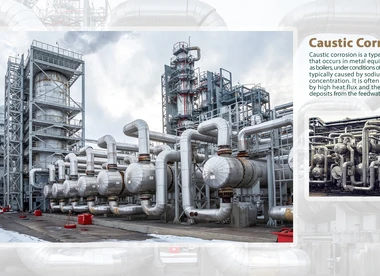
Caustic corrosion
Localized corrosion caused by the concentration of caustic or alkaline salts, which usually occurs under conditions of high evaporation or heat transfer. Caustic salt or caustic soda is one of the most widely used ionic compounds and is used in various industries including water treatment, cardboard and paper production, oil and refinery industries, aluminum production industries, food industries, alcohol production and glass.
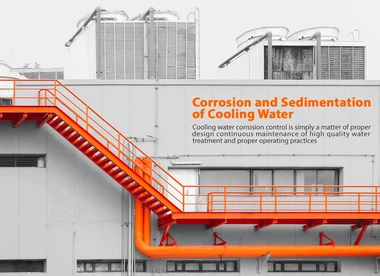
Corrosion and deposition of cooling water based on API 571
It refers to general or localized corrosion of carbon steels and other metals caused by dissolved salts, gases, organic compounds, or microbiological activity.
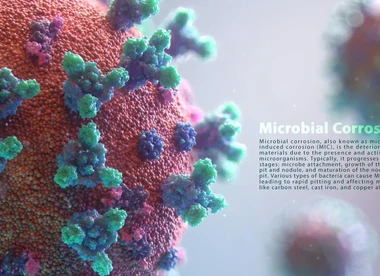
Microbial corrosion based on API 571
Microbial corrosion is a type of corrosion caused by living organisms such as bacteria, algae, or fungi. This type of corrosion is often associated with tubercles or slimy organic materials.
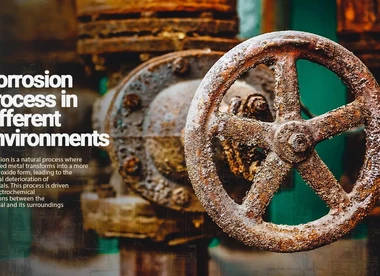
Corrosion process in different environments
Corrosion processes are divided into three groups in a more comprehensive classification: corrosion in aqueous solutions or environments, corrosion in molten salts and liquid metals, and corrosion in gases.
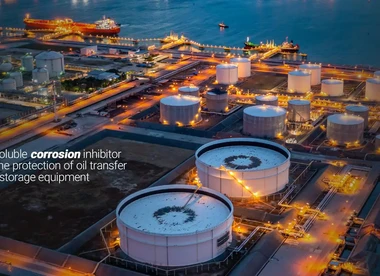
Oil-soluble corrosion inhibitor for the protection of oil transfer and storage equipment
Corrosion is a natural phenomenon that occurs as a result of the electrochemical reaction of metal with the surrounding environment. In the oil and gas industry, corrosion is one of the major problems that accounts for a huge amount of money annually. Part of these amounts are related to the corrosion of pipes or oil transmission lines. Effective ways to prevent corrosion of oil transmission and storage equipment are divided into two categories: physical and chemical solutions.

couponing
The coupon method or corrosion coupons is the simplest method of corrosion monitoring. Coupons are the oldest corrosion monitoring tool. Corrosion coupons are small pieces of metal or alloy of the material of interest that are immersed in the process medium and removed after a specified period of time and their weight or dimension loss is evaluated and examined.
Deaerators
Deaerators are mechanical devices that remove dissolved gases from the boiler feedwater. By reducing the concentration of oxygen and carbon dioxide in the solution, they minimize corrosion and protect the boiler from the effects of corrosive gases.
Envía tu opinión
Tu dirección de correo electrónico no será publicada.