

¿Por qué los sistemas industriales necesitan anticongelante/refrigerante en verano?
23/05/2026
Pasos para la limpieza química de torres de refrigeración: guía de implementación
27/04/2026
Tipos de sedimentos en sistemas de ósmosis inversa y métodos para identificarlos.
25/04/2026
Beneficios de utilizar soluciones especializadas de Abrizan Company para MED
28/02/2026
Corrosion engineering (damages and costs due to corrosion)

Introduction to the phenomenon of corrosion
As we know, everything in nature returns to its origin, for example, iron is found in nature in the form of oxides (Fe 4O3), (FeO) and (Fe 3O2), which is iron ore. (Combined affinity of iron and oxygen together) The science of corrosion engineering tries to control corrosion in industries and prevent financial and human losses and losses caused by it through a set of factors such as the use of coatings, metallurgy, material selection, cathodic protection, inhibitors and other methods.
All disciplines → Construction
Corrosion Engineering → Prevention of destruction
What is corrosion?
The destruction of metals due to chemical and electrochemical interactions is called corrosion, which causes significant financial losses to industries every year. The task of corrosion engineers is to reduce this loss by considering all possibilities, and conducting research and understanding the issues is one of the most important points in corrosion control.

Definition of corrosion
Many definitions have been provided to better understand corrosion:
- Reaction of metals and alloys with the surrounding environment
- Deterioration of metals with oxygen and other chemicals
- Destruction of materials due to non-mechanical factors
- Electrochemical reaction of metals with the surrounding environment
- Photo of extractive metallurgy
Perhaps the best definition of corrosion can be provided as follows:
“Corrosion is the destruction, deterioration or change and transformation in the properties and characteristics of materials (especially metals) and as a result of their reaction with their surrounding environment”
Corrosion from an engineering perspective:
In order for a corrosion engineer to perform his duties well, he must acquire the necessary skills in the following areas:
- Protection of metals and alloys in the environments in which they are used (cathodic and anodic protection)
- How to use various metallic and non-metallic coatings in different industries
- Preparation of corrosion inhibitors, plating materials and improving their quality
- Modification and improvement of the properties of alloys used in industry in terms of corrosion
- Monitoring of corrosion and methods of corrosion monitoring
Corrosion engineering
The main task of corrosion engineering is to provide a method The prevention of corrosion problems and providing solutions for them.
Therefore, studying and researching the selection of suitable materials for industrial units, modern methods of corrosion monitoring and control, evaluation of coatings and inhibitors, corrosion management, development of inspection instructions based on risk, and analysis of component failure are considered to be the most important tasks of corrosion engineering.
Estimation of corrosion costs
Investing in corrosion control is a form of profitability. Not paying attention to corrosion problems in every industrial and manufacturing unit leads to hidden costs that are impossible to avoid.
Corrosion economics
The first step in corrosion economics is to choose an appropriate method to minimize corrosion costs. These costs can include: production and equipment costs, loss of valuable products, undesirable product appearance, environmental costs, etc.
The importance of statistics in determining corrosion damage
Without access to statistics and information, prioritization and development of a comprehensive policy to combat corrosion in order to maintain and protect industrial equipment is not possible.
Is corrosion damage greater or natural disaster damage?
According to the National Society of Corrosion Engineers, the annual cost of natural disasters in the United States, including floods, hurricanes, earthquakes, etc., is $17 billion. It is observed that corrosion damage is more than 16 times the cost of natural disaster damage.
If we want to make a comparison for the natural and economic process of corrosion, we can compare it with phenomena such as earthquakes, hurricanes, floods, and volcanoes, with the difference that we are forced to accept the aforementioned phenomena, but corrosion can be predicted and controlled. This shows the importance and necessity of paying attention to the phenomenon of corrosion and choosing appropriate methods to deal with it.
Lack of awareness of the factors that cause corrosion and lack of familiarity with the methods of protecting industrial equipment and facilities have made the destruction and destruction of metals in industries an indisputable fact and an inevitable phenomenon.
Ignorance of the importance and role of corrosion in life and the workplace causes billions of dollars in losses to the world economy every year.
Examples of the cost of corrosion
In this section, examples of corrosion costs in several countries are summarized as follows:
- In the UK, more than 40 tons of metal are corroded every hour.
- Switzerland 15 billion francs
- Finland 300 million dollars (only in the automotive industry)
- America more than 270 billion dollars per year
Cost of corrosion in Iran
Given that there are no documented statistics on the direct and indirect costs of corrosion in the country, and any figures and numbers presented in reports, quarterly reports, etc., are calculated solely based on the use of common methods in industrial countries such as the United States, Japan, etc., which are based on a percentage of gross national product, it can be said that the cost of corrosion in Iran is estimated at 3 to 5 percent of the country's gross national product, equivalent to 3200 billion tomans per year.
Corrosion slowly but continuously wastes national wealth, and therefore the catastrophic dimensions of corrosion in terms of material loss, energy, and environmental damage are not precisely known. However, by recognizing the problems, obstacles, and ways to reduce the effects of corrosion and prevent the waste of financial and human resources, the cost of damage caused by corrosion in industries can be minimized.
Corrosion Cost Assessment Methods
The Ollig Method, which bases estimates on corrosion protection methods.
The Hoar Method, which provides estimates based on different industrial sectors.
The in/out method, which uses the input-output matrix to provide initial estimates.
Corrosion Damage Assessment
The damage caused by corrosion has a wide range of dimensions, which can cause significant human and financial losses if not addressed. Corrosion in various factories and industries causes leakage of valuable materials, unnecessary stoppage of production processes, reduced production efficiency, premature replacement of parts, and environmental damage, which also threatens the safety of equipment.
Aspects of Economic Damage
Accurately estimating corrosion losses is very difficult due to the scope and scope of the problems, the amount of damage caused, the costs required to control corrosion, and so on.
Classification of Costs Due to Corrosion
Corrosion costs can be divided into two parts:
a) Direct costs
Direct costs of corrosion control include inspection, use of inhibitors, corrosion monitoring, coating maintenance, replacement of corroded parts, repair, maintenance and reconstruction of machinery. In economic evaluations of corrosion, most research and studies have focused on direct costs.
b) Indirect costs
Indirect costs include increased repair times or increased level of changes, production delays and unreasonable shutdowns of production units.
In fact, the real costs of industrial component and equipment failure are much higher than the costs of replacing damaged parts. The indirect costs of component failure can be much heavier than the direct costs. Unfortunately, estimating indirect costs in different industrial sectors is very difficult.
Factors that cause indirect costs of corrosion
Some of the factors that because indirect costs include:
- Downtime of production line machinery and equipment due to the need to replace and rebuild parts that have corroded.
- Leakage of toxic substances and environmental pollution
- Loss of materials as a result of corrosion of their storage tanks
- Unpredictable repairs and premature replacement of parts
- Decrease in quality in the productivity of equipment and machinery
compartir :
¿Por qué los sistemas industriales necesitan anticongelante/refrigerante en verano?
23/05/2026Pasos para la limpieza química de torres de refrigeración: guía de implementación
27/04/2026Tipos de sedimentos en sistemas de ósmosis inversa y métodos para identificarlos.
25/04/2026Beneficios de utilizar soluciones especializadas de Abrizan Company para MED
28/02/2026
Artículos relacionados
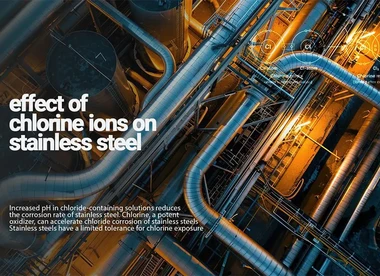
Efecto de los iones cloruro en los aceros inoxidables
Se expone el efecto del cloro y de los cloruros en la corrosión de los aceros inoxidables, así como los factores que influyen en su velocidad de corrosión; asimismo, se abordan los límites admisibles de las concentraciones de iones cloruro en el agua y las diferencias entre los efectos del cloro libre y de los cloruros en la corrosión de los aceros resistentes a la corrosión.
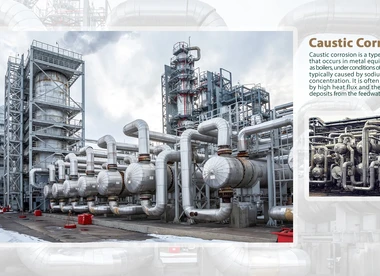
Corrosión cáustica
Corrosión localizada provocada por la concentración de sales cáusticas o alcalinas, la cual suele producirse en condiciones de alta evaporación o transferencia de calor. Las sales cáusticas —o la sosa cáustica— constituyen uno de los compuestos iónicos más utilizados; se emplean en diversos sectores, tales como el tratamiento de aguas, la producción de cartón y papel, la industria petrolera y de refinación, la fabricación de aluminio, la industria alimentaria, la producción de alcohol y la industria del vidrio.
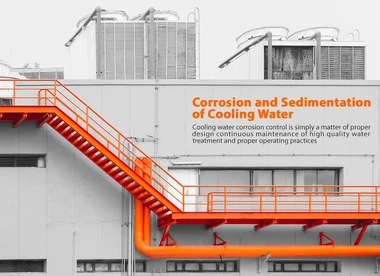
Corrosión y formación de depósitos en sistemas de agua de refrigeración, según la norma API 571
Se refiere a la corrosión general o localizada de los aceros al carbono y otros metales, causada por sales disueltas, gases, compuestos orgánicos o actividad microbiológica.

Corrosión microbiana según API 571
La corrosión microbiana es un tipo de corrosión causada por organismos vivos, tales como bacterias, algas u hongos. Este tipo de corrosión suele estar asociado a tubérculos o a materiales orgánicos viscosos.
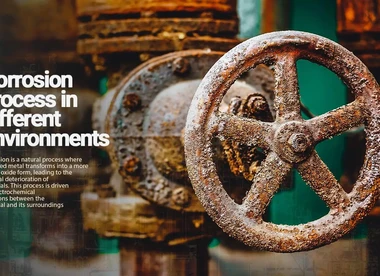
Proceso de corrosión en diferentes entornos
En una clasificación más exhaustiva, los procesos de corrosión se dividen en tres grupos: corrosión en soluciones o medios acuosos, corrosión en sales fundidas y metales líquidos, y corrosión en gases.
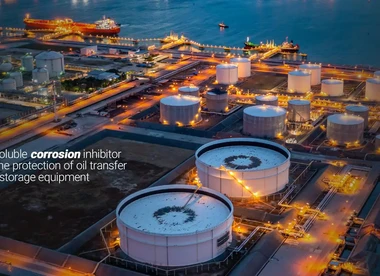
Inhibidor de corrosión soluble en aceite para la protección de equipos de transferencia y almacenamiento de petróleo
La corrosión es un fenómeno natural que se produce como resultado de la reacción electroquímica de un metal con el entorno que lo rodea. En la industria del petróleo y el gas, la corrosión constituye uno de los principales problemas, lo que supone un coste económico enorme cada año. Parte de estos costes se debe a la corrosión de tuberías o líneas de transporte de petróleo. Los métodos eficaces para prevenir la corrosión en los equipos de transporte y almacenamiento de petróleo se dividen en dos categorías: soluciones físicas y soluciones químicas.

uso de cupones
El método de cupones —o uso de cupones de corrosión— es la técnica más sencilla para el monitoreo de la corrosión. Los cupones constituyen la herramienta de monitoreo de la corrosión más antigua. Consisten en pequeñas piezas de metal o aleación —del mismo material que se desea analizar— que se sumergen en el medio del proceso; tras un periodo de tiempo determinado, se retiran para evaluar y examinar la pérdida de peso o de dimensiones que hayan experimentado.

Deaerators
Deaerators are mechanical devices that remove dissolved gases from the boiler feedwater. By reducing the concentration of oxygen and carbon dioxide in the solution, they minimize corrosion and protect the boiler from the effects of corrosive gases.
Envía tu opinión
Tu dirección de correo electrónico no será publicada.