

¿Por qué los sistemas industriales necesitan anticongelante/refrigerante en verano?
1405/03/02
Pasos para la limpieza química de torres de refrigeración: guía de implementación
1405/02/07
Tipos de sedimentos en sistemas de ósmosis inversa y métodos para identificarlos.
1405/02/05
Beneficios de utilizar soluciones especializadas de Abrizan Company para MED
1404/12/09
Physical and chemical descaling methods

Descaling Methods
In industries such as oil, gas and petrochemicals, there is always an attempt to prevent the formation of scale by using various methods in equipment such as heat exchangers and steam boilers. In this regard, a lot of money is spent on chemical materials and additives.
However, most industrial heat exchangers are subject to scaling for various reasons such as low water quality in different regions. These scales are mostly formed in the exchanger tubes. To reduce the losses of the scale phenomenon, the exchanger must be continuously monitored for performance and cleaning.

The Shell and Tube Exchanger Manufacturers Association recommends that an allowable amount of fouling be considered in the design of exchangers so that it does not have a significant impact on the production process. However, in all cases, the exchanger should be cleaned at appropriate intervals.
Different types of fouling in industry
In industrial processes, fouling has different types, some of which are:
- Sedimentation of fine suspended particles
- Sedimentation due to corrosion
- Biological fouling
- Sedimentation due to the formation of solid crystals
- Sedimentation due to a chemical reaction
- Sedimentation due to temperature changes such as freezing
Increase in costs due to the formation of fouling
Given that heat exchangers are an important part of various processes, if fouling forms in them and to maintain the amount of heat transfer, it is necessary to increase the temperature or flow of the hot fluid. This increase in temperature or flow can lead to an increase in the cost of energy input to the process or a decrease in production. In both cases, costs are imposed on the process, which are called fouling costs. To make appropriate economic decisions, these costs should be calculated at different times and in proportion to the amount of heat transfer caused by the deposit.
Appropriate times for cleaning heat exchangers
In general, the cleaning time should be calculated according to the effect of the deposit on the process, in order to achieve the optimal amount of cleaning time. Cleaning at short intervals increases the total time spent on exchanger repairs. Therefore, in addition to increasing cleaning costs, this also reduces the overall income by reducing the products produced by the complex.
n the other hand, cleaning at long intervals increases the energy requirement to maintain the temperature of the fluids due to the increase in deposits. In addition, in some cases, excessive clogging of the exchangers can disrupt the production of the industrial complex. Therefore, to increase the efficiency of the deposited heat exchangers, they should be cleaned at certain intervals.
escaling returns the inner surface of the tubes to its original state (which is actually the metal surface) and usually increases its durability. Because after each cleaning, a thin layer of oxide forms on the surface of the tube, which prevents corrosion. Cleaning of the exchanger tubes is only done when the exchanger is not operating.
Cleaning methods in heat exchangers
Different methods are used to clean heat exchangers, including mechanical and chemical washing. In general, the types of scale removal methods are:
- Mechanical cleaning
- Chemical cleaning
Each of these methods is briefly explained below.
Mechanical descaling methods
The types of mechanical washing methods for sediment include:
- Reverse flow
- Water jet (water pressure)
- Mechanical hydrophoresis
- Abrasive blasting
Reverse flow descaling
One method of descaling is to stop and close the unit and clean its exchangers. However, each time the unit is shut down and restarted, a large amount of energy, raw materials, time, product production, etc. is wasted. For this reason, there is a simpler way that can be used and effective several times before the unit is stopped for repairs. In this way, the direction of the cooling water inlet and outlet is temporarily reversed for only a few minutes. This is done by opening and closing a few valves. Most of the sediment is removed with this method and heat transfer close to the designed value can be used for a while.
f course, each time this is done, the heat transfer recovery will be less than the previous time. The same is true for the recovery of the water path pressure drop. Depending on the design of the cooler, one of the two factors, heat transfer reduction or pressure drop increase, can have a greater negative impact on the continued operation of the relevant chemical unit, but usually the heat transfer reduction is detected earlier. To facilitate reverse flow, especially in units with a large number of coolers, a four-way valve is used.
Descaling by water jet method
Among the various cleaning methods, the use of high-pressure water is the most common. Washing with water is time-consuming because the water pressure (jet) gently cleans the tubes. It should be noted that in this cleaning method, lack of calm and precision causes damage to the tubes or their retaining plate. Of course, most of this damage becomes apparent after the converter is restarted. The water pressure (water jet) method is usually used for final cleaning.
Disadvantages of descaling by water pressure (water jet) method
Descaling using water pressure (water jet) Although it is a suitable method in many cases, it has disadvantages and limitations, which are:
- High water consumption
- High energy consumption
- No descaling of partially or completely blocked pipes
- No descaling of U-shaped pipes
Mechanical hydrophresis descaling method
The mechanical hydrophresis method is used for very hard deposits. Under normal conditions, it is very difficult to separate these deposits. For this reason, in this method, the deposits inside the pipes are first separated by suitable drills and special brushes, and then a high-pressure air compressor is used to remove them.
Advantages of mechanical hydrophresis descaling
Among the advantages of this method, we can mention the high safety of its tool for working inside the complex, high speed, power and efficiency, the ability to change the speed, low costs, the possibility of manufacturing and providing all its accessories within the country, the possibility of using two nozzles at the same time, the possibility of the operator working with the device remotely, easy and fast repair and maintenance, and its high quality and strength.
Disadvantages of mechanical hydrophresis descaling
The tool used in this method is not flexible due to its strong power transmission pipes, and when it encounters hard sediments, it can break the drill and damage the inner wall of the pipe. Due to the small size of the water exit holes from the tool tip, friction and thermal stress increase with the increase in the number of holes taken, thus causing the drill to break and damage the pipe.
Abrasive cartridge descaling
In this method, cartridges are fired into the pipe using a compressed air gun. The abrasive cartridges are made of plastic and quickly sweep the inner wall of the pipe. Using sponge bullets with a smooth surface in heat exchanger pipes has better results in reducing sediment. The diameter of the sponge bullets is slightly larger than the inner diameter of the pipe, so that one bullet is fired every 5 to 10 minutes.
Disadvantages of abrasive cartridge descaling
This method is not applicable to half- or completely clogged pipes or to hard sediments.
Chemical Descaling
To chemically clean equipment, the type of deposits (whether deposits from process fluids or deposits from corrosion) must first be determined. In this method, depending on the type of deposit, various chemicals are used. In the chemical cleaning method with acids, corrosion inhibitors are used to prevent the adverse effects of acid on the metal surface.
he acid used in these materials may be inorganic, organic, or a mixture of both, depending on the type of deposit and the metallurgy of the system. Each deposit must be removed from the surfaces according to its chemical nature and relevant physical properties. Most descaling solutions are based on organic and inorganic acids. Among the mineral acids, HCl and H2SO4 acids are most commonly used. Citric acid, acetic acid, and EDTA are also often used as organic acids.
Hydrochloric acid is one of the most important acids used in chemical cleaning. The choice of corrosion inhibitor depends on the concentration, temperature, pickling time, system metallurgy, and type of pickling.
Disadvantages of chemical washing descaling
This method has disadvantages, which include:
- Damage to the equipment body
- High water consumption
- High energy consumption
- Danger from working with chemicals
- Pollution of surface and groundwater by petroleum or chemical substances
- Failure to comply with environmental issues
- Failure to descaling partially or completely blocked pipes
compartir :
¿Por qué los sistemas industriales necesitan anticongelante/refrigerante en verano?
1405/03/02Pasos para la limpieza química de torres de refrigeración: guía de implementación
1405/02/07Tipos de sedimentos en sistemas de ósmosis inversa y métodos para identificarlos.
1405/02/05Beneficios de utilizar soluciones especializadas de Abrizan Company para MED
1404/12/09
Artículos relacionados
Tipos de sedimentos en sistemas de ósmosis inversa y métodos para identificarlos.
Guía técnica para ingenieros: Diagnostique con precisión los depósitos de ósmosis inversa (carbonato de calcio, sílice, biopelícula) y seleccione una solución de limpieza eficaz.
Limpieza inteligente e ininterrumpida de intercambiadores de aceite: proyecto piloto CIP en Gachsaran
Reducción de la caída de presión de 4,5 a 0,5 bar mediante limpieza química *in situ* (CIP). Una solución inteligente para intercambiadores de aceite que no requiere detener la unidad.
Complete guide to chemical washing of industrial equipment Methods, detergents and safety tips
A comprehensive guide to chemical cleaning and descaling of industrial equipment — a variety of methods, detergents, safety tips, and an introduction to the MDA0102 cold miter as a safe, on-line solution. Increase efficiency, reduce costs, and protect equipment.
Formación de sedimentos en calderas
El agua de alimentación de la caldera debe estar libre de dureza. En ocasiones, debido a un funcionamiento inadecuado o insuficiente del dispositivo de medición de dureza, o a la falta de regeneración oportuna de las resinas, se introduce cierta dureza en el agua de alimentación de la caldera. El aumento de la temperatura del agua en la caldera reduce la solubilidad de los solutos disueltos. El agua cercana a las superficies calientes se satura, lo que favorece la sedimentación de sustancias menos solubles y, finalmente, la formación de sedimentos.
Retire la solución de sedimentos Mitreh
Mitreh es una solución superior para el tratamiento de incrustaciones en diversas industrias. La solución de eliminación de incrustaciones Mitreh, un producto revolucionario de Abrizan Industrial Research Company, es una alternativa eficaz a los métodos tradicionales. Este producto ofrece una solución integral al problema de las incrustaciones en diversas industrias, superando las limitaciones de los métodos físicos y químicos existentes.
Eliminación de sedimentos de agua dulce en zonas costeras (MED)
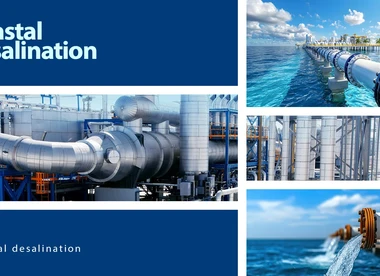
Uno de los métodos para producir agua dulce para uso industrial es el uso de plantas desalinizadoras térmicas multietapa para desalinizar agua de mar. Debido al alto contenido de compuestos solubles e insolubles en el agua de mar y al fuerte choque térmico en los equipos de desalinización, la sedimentación en estos equipos es inevitable. Por esta razón, es necesario realizar una limpieza periódica de los sedimentos en las plantas desalinizadoras.
Sedimentos y problemas causados por ellos en las instalaciones
Cuando se utiliza agua como fluido térmico, las sales y la dureza presentes en ella se separan debido al choque térmico y se depositan en las superficies, formando sedimentos. Estos sedimentos son uno de los factores más importantes de erosión y corrosión en las instalaciones de calefacción y refrigeración.
Métodos para prevenir la formación de sedimentos
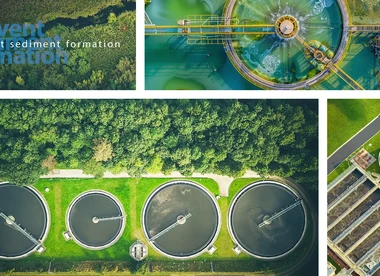
El método más importante para prevenir la formación de sedimentos es mejorar la calidad del agua utilizada en diversas industrias. Este método se lleva a cabo de diversas maneras, como mediante la sedimentación, la filtración, la desaireación, el desengrasado, el enjuague subacuático y el ablandamiento del agua.
Envía tu opinión
Tu dirección de correo electrónico no será publicada.