

Why do industrial systems require anti-freeze/coolant in the summer?
1405/03/02
Cooling Tower Chemical Cleaning Steps — Implementation Guide
1405/02/07
Types of sediments in RO systems and methods for identifying them
1405/02/05
Benefits of using specialized solutions from Abrizan Company for MED
1404/12/09
Sediment formation in boilers

Scale in Steam Boilers
The feed water of the steam boiler must be free of hardness. Sometimes, due to a short or improper operation of the softener or the failure to regenerate the resins in time, some hardness enters the feed water of the boiler. Increasing the temperature of the water in the steam boiler reduces the solubility of water salts. The water adjacent to the hot surfaces becomes saturated and conditions are created for the deposition of poorly soluble substances. The scale formed in steam boilers is a heat insulator. If the tube wall is covered with scale, the thermal efficiency of the boiler decreases. As a result, the heat absorption from the combustion gases decreases, energy is wasted and steam production decreases. In order to compensate for the decrease in steam production, the fuel and thermal load of the boiler increase. Under these conditions, the tubes melt and lose their resistance. In order to prevent a change in the steam temperature of 260 C, it is necessary to increase the temperature of the thermal surface of the scale by about 110 C compared to the clean surface.
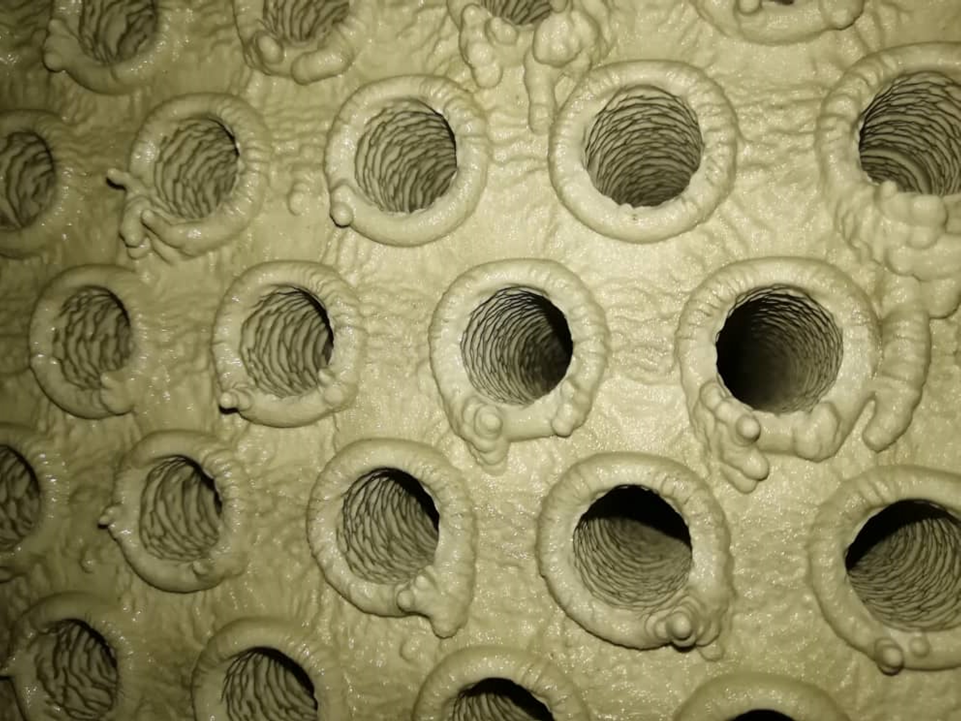
Effect of scale on boiler thermal surfaces
The type of scale and its composition and what type of scale will be formed in the boiler with a given water feed cannot be predicted. Even with the same type of water, the type of scale varies from place to place. The chemical composition of several types of scale is shown below. A 5 mm thick scale increases fuel consumption by 8%. Under these conditions, an additional 20,000 liters of fuel are required for a plant that consumes 250,000 liters of fuel per year.
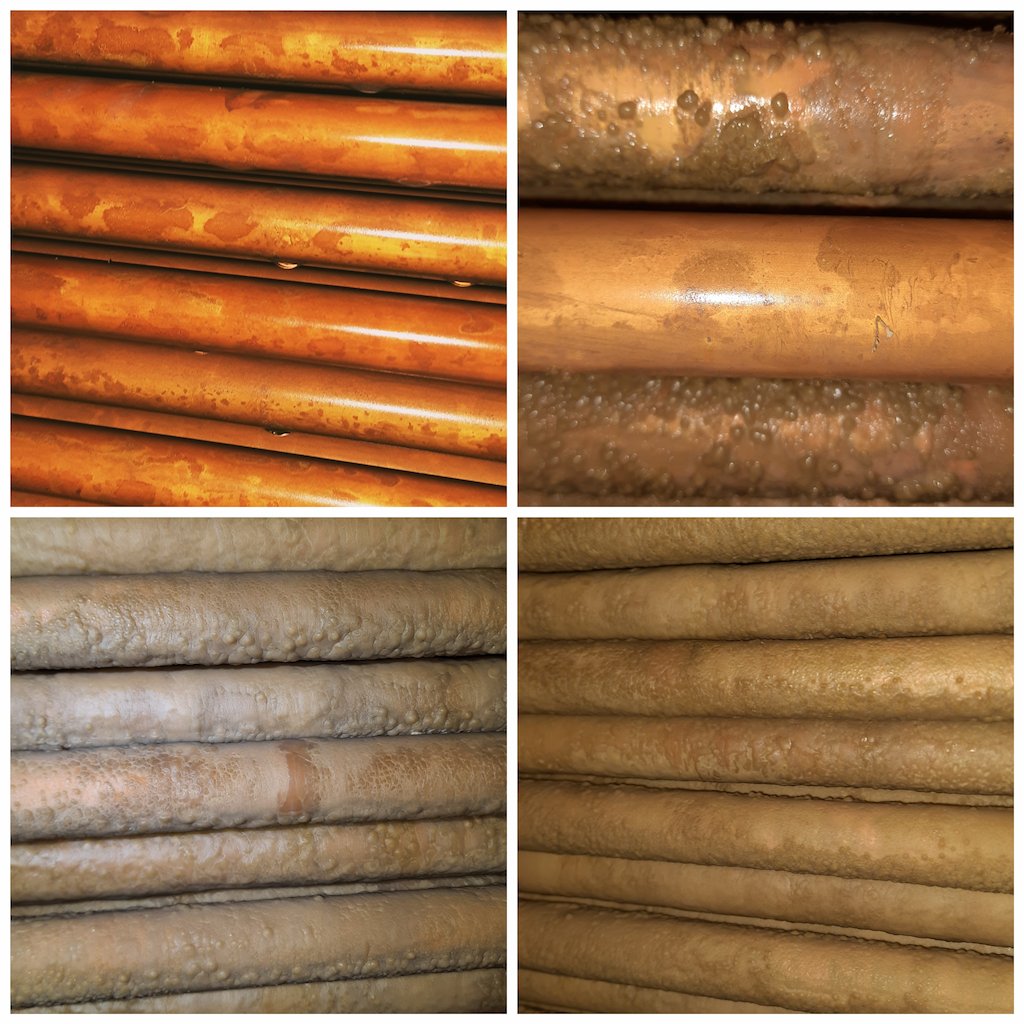
Chemical composition of some of the deposits observed in the boiler:
- Calcium sulfate (CaSO4)
- Calcium carbonate (aragonite) (Caco3)
- Serpentine (3MgO.2SiO2.H2O)
- Xenotellite (5Caco.5SiO2.H2O)
- Analite (Na2O.Al2O3.4SiO2.2H2O)
- Magnesium phosphate (Mg5(PO4)3OH)
- Brusite (Mg(OH)2)
- Hematite (Fe2O3)
- Magnetite (Fe3O4)
- Hydroxyapatite (CCa10(OH)2(PO4)6)
- Pectolite (Na2O.4CaO.6SiO2.H2O)
Prevention of deposit formation in boilers
In order to reduce and prevent deposit formation in boilers, the following is recommended:
- When operating the softener, take sufficient care in its regeneration and maintenance To prevent the passage of hard water.
- The residual hardness in the boiler feed water should be controlled by adding appropriate chemicals (such as phosphates and dispersants). These compounds combine with the residual hardness in an alkaline environment and produce insoluble sludge-like materials that do not stick to the boiler walls or pipes.
- With timely and adequate management, the concentration of salts inside the boiler should be controlled.
- The amount of chemical anti-scale chemicals injected into the boiler feed water should be adjusted so that their residual in the boiler is at the desired level to prevent scale formation in the boiler.
share :
Why do industrial systems require anti-freeze/coolant in the summer?
1405/03/02Cooling Tower Chemical Cleaning Steps — Implementation Guide
1405/02/07Types of sediments in RO systems and methods for identifying them
1405/02/05Benefits of using specialized solutions from Abrizan Company for MED
1404/12/09
Related articles
Types of sediments in RO systems and methods for identifying them
Technical guide for engineers: Accurately diagnose RO deposits (calcium carbonate, silica, biofilm) and select an effective cleaning solution.
Smart non-stop oil exchanger cleaning: CIP pilot in Gachsaran
Reducing pressure drop from 4.5 to 0.5 bar with chemical cleaning in place (CIP). A smart solution for oil exchangers without the need to stop the unit.
Complete guide to chemical washing of industrial equipment Methods, detergents and safety tips
A comprehensive guide to chemical cleaning and descaling of industrial equipment — a variety of methods, detergents, safety tips, and an introduction to the MDA0102 cold miter as a safe, on-line solution. Increase efficiency, reduce costs, and protect equipment.
Physical and chemical descaling methods
In industries such as oil, gas and petrochemical, there is always an attempt to prevent the formation of deposits using different methods in equipment such as heat exchangers and boilers. In this field, a lot of money is spent on chemical materials and additives. But most industrial heat exchangers are exposed to sedimentation due to various reasons such as the low quality of water in different areas. These deposits are mostly formed in the pipes of the converters. In order to reduce the losses caused by sedimentation, the converter must be continuously monitored and cleaned.
Remove the sediment solution Mitreh
Mitreh is a superior solution for dealing with scale in various industries. Mitreh scale removal solution, a revolutionary product from Abrizan Industrial Research Company, is an efficient alternative to traditional scale removal methods. This product offers a comprehensive solution to the scale problem in various industries by overcoming the limitations of existing physical and chemical methods.
Coastal freshwater sediment removal (MED)
One of the methods of producing fresh water for industrial use is the use of multi-stage thermal desalination plants to desalinate seawater. Due to the high content of soluble and insoluble compounds in seawater and the high temperature shock in desalination packages, sedimentation in these packages is unavoidable. For this reason, periodic sediment removal from desalination plants should be performed.
Sediment and problems caused by it in facilities
When water is used as a thermal fluid, the salts and hardness in the water are separated due to the temperature shock and settle on the surfaces, forming deposits. These deposits are one of the most important factors of erosion and corrosion in heating and cooling installations.
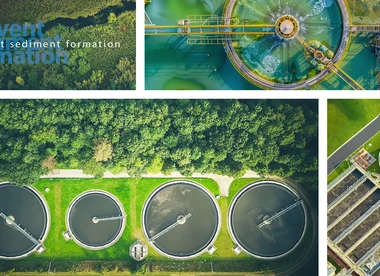
Methods to prevent sediment formation
The most important method for preventing sediment formation is to improve the quality of water used in various industries. This method is carried out in various forms such as sedimentation, filtration, deaeration, degreasing, using the under-water rinsing method, and softening the water used.
Submit your opinion
Your email address will not be published.