

Why do industrial systems require anti-freeze/coolant in the summer?
1405/03/02
Cooling Tower Chemical Cleaning Steps — Implementation Guide
1405/02/07
Types of sediments in RO systems and methods for identifying them
1405/02/05
Benefits of using specialized solutions from Abrizan Company for MED
1404/12/09
Methods to prevent sediment formation

How to prevent sediment formation?
The most important method to prevent sediment formation is to improve the quality of water used in various industries. This method is carried out in various forms of sedimentation, filtering, deaeration, degreasing, using the under-rinsing method and softening of water used. Physical methods are of great importance for improving water quality in process equipment and devices of industries, such as the oil, gas and petrochemical industries. The following is a brief explanation of each of these methods:
Sedimentation of sediments:
The first stage of water clarification is the sedimentation method. In this method, the concentration of mud, silt and suspended matter in the water is reduced by using sedimentation ponds or the water is passed through large tanks at a low speed and made clear. Sedimentation is more suitable for muddy water.
Sedimentation filtration:
Usually, filtration should be carried out after sedimentation to remove remaining suspended particles. Industrial filters are made up of layers of fine-grained sand, which become coarser from top to bottom. Water enters from the top and exits from the bottom. Water can be filtered using its own weight or under pressure, but in industry, pressure filters are more commonly used.
Usually, the filter material is sand and silica stone with a purity of 98%. The grain size is from 0.35 to 1 mm. This small size separates all suspended materials on the filter surface, in addition, a microbiological layer may be formed at the interface between water and sand. The bottom of the filter is usually made of plastic, and 60 to 90 plastic pipes (nozzles) are placed per square meter to discharge the filtered water. Their ends are placed in the filtered water below the filter.
Water deaeration method:
Most of the corrosive gases dissolved in water such as CO2 and oxygen can be removed through deaeration. Open heaters 1 are suitable for deaeration of water to produce low-pressure steam. However, if steam with a pressure higher than 27 bar is required, deaeration heaters of the spray type 2 are usually used.
Physical deaeration of water:
Deaeration is carried out by two methods: physical and chemical. In the physical method, the removal of oxygen and carbon dioxide can be done by heating the water. This reduces the concentration of oxygen and carbon dioxide in the liquid phase, and the gases dissolved in water are removed from the liquid phase to the gas phase. Physical deaeration is the most economical method of deaeration. This is done at the boiling point of water and at the internal pressure of the deaerator. Deaerators can also operate under pressure or at vacuum pressure.
Chemical deaeration of water:
In the chemical deaeration method (deoxygenation), in order to remove oxygen and prevent corrosion of steam boilers, using substances such as sodium sulfite or hydrazine, oxygen gas is removed, compounds such as sodium sulfate or nitrogen and water are produced. In order to increase the efficiency of equipment in various industries and prevent corrosion in this equipment, Abrizan Company has provided various types of deaeration solutions to the oil and gas, petrochemical and related companies.
What points should be observed in deaeration of water?
Due to the volatility of CO2 and the thermal destruction of carbonate, the pH of deaerated water is about 8.5-9.5.
The concentration of bicarbonate entering steam boilers should be kept as low as possible because in addition to the formation of carbonate deposits, it reduces the concentration of CO2. Oxygen dissolved in water causes metal oxidation. This type of corrosion is intensified at temperatures above 60°C, causing perforation of pipes and tanks in a short time. If carbon dioxide, resulting from the decomposition of bicarbonates in the water, is not removed from the boiler feed water by an air separator, corrosion of the pipelines will occur. Deposits such as Fe2O3 and Fe3O4, which are products of various metal corrosion, are another type of deposit.
Degreasing of deposits:
The design of various types of oil-water separators (grease separators) is based on the difference in density. Gravity grease separators are usually used to remove and remove oil, grease and oil. Therefore, in practice, the efficiency of a gravity separator depends on the precise hydraulic design of the separator and the water retention time. The API grease separator system is actually an oil-water separator designed under API standards. This system is widely used in refineries and many industrial units.
Boiler scale underwashing:
Underwashing is the process of removing water saturated with suspended solids and dissolved salts from the boiler. The water removed from the boiler in this way is replaced by new feed water that contains fewer dissolved substances.
Water softening to prevent scale formation:
Water softening means reducing calcium and magnesium ions, which is done by two methods: chemical precipitation and the use of ion exchange resins. Other methods of preventing scale formation in thermal systems include acid injection, side-stream treatment, and the use of chemical inhibitors.
Ion exchange methods are based on the reversible exchange of ions between a solution and a solid phase. The solid phase is insoluble in water and has groups in the form of acidic or basic bases. These bases are the main agents of ion exchange. Ion exchange resins are of organic origin and consist of high molecular weight polymers. Ionic exchange groups include anionic and cationic groups. For example, and to clarify ion exchange reactions, consider acid and base resins as H R and OH R. According to the following reactions, sodium and chloride ions are exchanged with hydrogen and hydroxide ions.
R R → Na + HCl H + NaCl
R R → Cl + H2O OH + HCl
share :
Why do industrial systems require anti-freeze/coolant in the summer?
1405/03/02Cooling Tower Chemical Cleaning Steps — Implementation Guide
1405/02/07Types of sediments in RO systems and methods for identifying them
1405/02/05Benefits of using specialized solutions from Abrizan Company for MED
1404/12/09
Related articles
Types of sediments in RO systems and methods for identifying them
Technical guide for engineers: Accurately diagnose RO deposits (calcium carbonate, silica, biofilm) and select an effective cleaning solution.
Smart non-stop oil exchanger cleaning: CIP pilot in Gachsaran
Reducing pressure drop from 4.5 to 0.5 bar with chemical cleaning in place (CIP). A smart solution for oil exchangers without the need to stop the unit.
Complete guide to chemical washing of industrial equipment Methods, detergents and safety tips
A comprehensive guide to chemical cleaning and descaling of industrial equipment — a variety of methods, detergents, safety tips, and an introduction to the MDA0102 cold miter as a safe, on-line solution. Increase efficiency, reduce costs, and protect equipment.
Physical and chemical descaling methods
In industries such as oil, gas and petrochemical, there is always an attempt to prevent the formation of deposits using different methods in equipment such as heat exchangers and boilers. In this field, a lot of money is spent on chemical materials and additives. But most industrial heat exchangers are exposed to sedimentation due to various reasons such as the low quality of water in different areas. These deposits are mostly formed in the pipes of the converters. In order to reduce the losses caused by sedimentation, the converter must be continuously monitored and cleaned.
Sediment formation in boilers
Boiler feed water should be free of hardness. Sometimes, due to the short or improper operation of the hardness device or the failure to regenerate the resins in time, some hardness enters the boiler feed water. Increasing the water temperature in the boiler reduces the solubility of water solutes. The water near the hot surfaces becomes saturated and the conditions for deposition of less soluble substances are provided and eventually sediment is formed.
Remove the sediment solution Mitreh
Mitreh is a superior solution for dealing with scale in various industries. Mitreh scale removal solution, a revolutionary product from Abrizan Industrial Research Company, is an efficient alternative to traditional scale removal methods. This product offers a comprehensive solution to the scale problem in various industries by overcoming the limitations of existing physical and chemical methods.
Coastal freshwater sediment removal (MED)
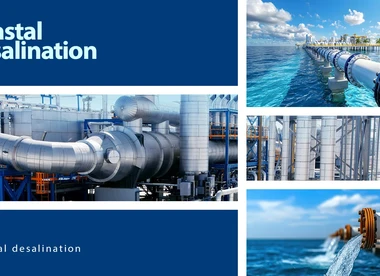
One of the methods of producing fresh water for industrial use is the use of multi-stage thermal desalination plants to desalinate seawater. Due to the high content of soluble and insoluble compounds in seawater and the high temperature shock in desalination packages, sedimentation in these packages is unavoidable. For this reason, periodic sediment removal from desalination plants should be performed.
Sediment and problems caused by it in facilities
When water is used as a thermal fluid, the salts and hardness in the water are separated due to the temperature shock and settle on the surfaces, forming deposits. These deposits are one of the most important factors of erosion and corrosion in heating and cooling installations.
Submit your opinion
Your email address will not be published.