

What is a chiller and what are its types? A comprehensive guide to choosing the best cooling system
1404/11/20
The difference between industrial antifreeze and automotive antifreeze – why shouldn't you use it in a package?
1404/11/18
Why doesn't regular antifreeze work after one season?
1404/11/13
International standards for maintaining and cleaning desalination plants
1404/11/11
Can antifreeze also prevent the formation of deposits and corrosion?

Can antifreeze also prevent scale and corrosion?
Yes, but only if it is specifically formulated for this purpose. Conventional antifreezes (such as pure ethylene glycol or propylene glycol) alone cannot prevent corrosion or scale. In fact, without the right additives, these fluids can even exacerbate corrosion. Multi-purpose antifreezes that contain corrosion inhibitor packages and scale inhibitors can effectively protect circulating systems.
Why is the question “Is antifreeze also antiscale?” important?
Many engineers and maintenance personnel fill boilers, chillers, or cooling systems with antifreeze to prevent freezing during cold weather. But they often forget to ask whether this fluid also protects the long-term health of the system.
In practice, a circulating system filled with only base antifreeze (without additives) faces two serious threats:
- Corrosion: The water in the antifreeze, especially in the presence of dissolved oxygen, can cause rusting of steel, corrosion of copper and aluminum, and even pitting.
- Scaling: Minerals in water (even municipal water) or corrosion byproducts can precipitate as hard deposits (such as calcium carbonate or iron oxide) at high temperatures or in areas with low flow.
These two phenomena are mutually reinforcing: corrosion releases metal particles that act as nuclei for deposit formation, and the sediment in turn exacerbates localized corrosion by creating areas of differential flow.
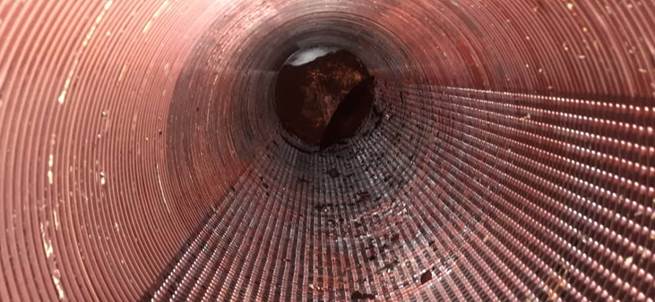
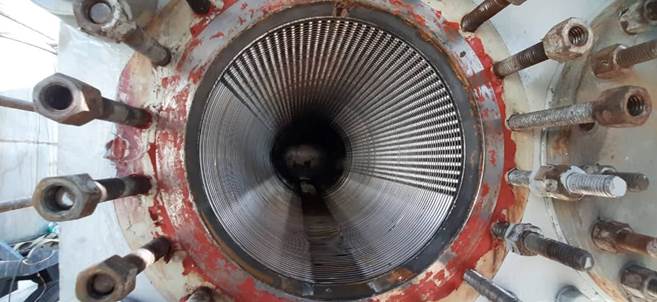
Comparison of healthy and fouled heat exchangers in cooling systems
How does antifreeze prevent corrosion and fouling?
A multi-purpose antifreeze does more than just lower the freezing point. These products are transformed into a comprehensive protection system by adding a series of specialized chemicals.
Corrosion Inhibitors
These additives prevent water and oxygen from directly contacting the metal by creating a thin, protective layer on the surface of metals. Common types include:
- Nitrites:Very effective for protecting ferrous steel.
- Silicates:Protect aluminum from corrosion.
- Phosphates:Suitable for steel and copper.
- Carboxylates:A type of organic inhibitor with a longer life that is used to protect a wide range of metals.
These agents work synergistically to protect all metals in a system (steel, copper, brass, aluminum)
Scale Inhibitors
These agents work by one of two mechanisms:
Crystal Modification:They change the structure of scale-causing crystals (such as calcium carbonate) so that instead of sticking to the surface, they remain in the system as a soft sludge and are washed away by the water flow.
Sequestration:They bind metal ions such as calcium and magnesium, preventing the formation of insoluble compounds.
In addition, some formulations contain dispersants that prevent the aggregation of fine particles and the formation of sludge.
When do you need a multi-purpose antifreeze?
A regular antifreeze may be sufficient in simple, short-term systems. But in the following situations, investing in a multi-purpose formulation is essential:
- Industrial closed-loop systems: such as chiller cooling systems, hot water boilers, or industrial process circulation systems.
- Presence of different metals: If your system is a mix of steel, copper, brass, and aluminum, you need a comprehensive protection package.
- Longer system life: If you plan to use the coolant for several years without changing it, long-life additives (such as carboxylates) are vital.
- Poor water quality: If you use hard water to dilute the antifreeze, the risk of scale formation is greatly increased.
How to choose the right multi-purpose antifreeze?
Choosing the right antifreeze is the key to optimal performance and long equipment life. When choosing, consider these points:
- System metals analysis:Make sure the selected formulation protects all metals in your system.
- Recommended concentration:Dilute the antifreeze according to the manufacturer’s instructions. Excessive concentration can reduce heat transfer efficiency, and low concentration will not adequately protect the system.
- Additive life:Some formulations (OAT - Organic Acid Technology) have a life of up to 5 years or more, while older formulations (IAT - Inorganic Additive Technology) require annual replacement.
- Laboratory-tested formulation:The best antifreezes are those that have successfully passed corrosion and thermal stability tests in accredited laboratories.
Important:Never mix different antifreezes. Combining different inhibitor technologies can cause the additives to clump or become ineffective.
❓❓❓ Frequently Asked Questions (FAQ) ❓❓❓
❓ Can I use automotive antifreeze in industrial systems?
No. Automotive antifreezes are designed for combustion engines and may contain substances that are not suitable for industrial systems (e.g. silicates that can deposit in heat exchangers). Always use industrial antifreezes with the appropriate technical specifications.
❓Does multi-purpose antifreeze require maintenance?
Yes. Even the best formulations degrade over time under the influence of temperature and oxygen. It is recommended to send a sample of the system fluid to a laboratory for analysis every year or two to ensure additive levels and pH.
❓Can antifreeze also prevent sludge?
Yes. Dispersants in advanced formulations keep fine particles and sludge in suspension and prevent them from accumulating in dead spots in the system.
Conclusion⭐⭐⭐⭐⭐
The answer to the main question of this article is clear: conventional antifreezes are not themselves effective in preventing deposits and corrosion. However, antifreezes that are intelligently formulated with corrosion inhibitor packages and anti-scaling agents can be an integrated solution to protect circulating systems from the three main threats—freezing, corrosion, and sludge.
If you need expert advice to identify the type of sediment or the optimal selection of chemicals, Abrizan specialists, with over 20 years of experience in advanced laboratories, are ready to provide customized solutions to various industries.
share :
What is a chiller and what are its types? A comprehensive guide to choosing the best cooling system
1404/11/20The difference between industrial antifreeze and automotive antifreeze – why shouldn't you use it in a package?
1404/11/18Why doesn't regular antifreeze work after one season?
1404/11/13International standards for maintaining and cleaning desalination plants
1404/11/11
Related Articles
The difference between industrial antifreeze and automotive antifreeze – why shouldn't you use it in a package?
Using automotive antifreeze in industrial packages or systems is dangerous! Find out why and what safe alternatives are available.
Why doesn't regular antifreeze work after one season?
Last year's antifreeze no longer works? Technical reason: The inhibitors are worn out. Solution + Smart Choice.
Does antifreeze reduce the thermal efficiency of the system?
Does using antifreeze in heating systems reduce efficiency? Scientific answer + solutions to compensate for performance loss.
Why is plain water not enough for home heating? — 4 scientific reasons
Plain water in the water heater causes deposits, corrosion, freezing, and boiling. How to prevent damage with specialized materials? A practical guide for the home
Antifreeze Calculation Guide for Villa Packages — Table + Practical Example
How to calculate the exact amount of antifreeze for a villa? Determine the amount of antifreeze step by step with the system volume and the temperature of the area. Prevent freezing.
Industrial antifreeze and anti-boiler: A complete guide to protecting heating and cooling systems
Why are industrial antifreeze and anti-scaling agents essential for circulating systems? A comprehensive guide to preventing freezing, scalding, corrosion and deposits in boilers, chillers and engine rooms
When to Replace System Antifreeze? — Testing and Replacement Guide
6 Signs Your Antifreeze Needs to Be Replaced + Proper Testing Methods at Home and in the Lab. Prevent Freezing and Corrosion.
Protecting Your Villa's Heating System Before Winter — The Complete Guide
How to protect your villa's heating system from freezing, corrosion, and damage before winter in 4 simple steps? Practical guide + antifreeze consumption table.
Submit your opinion
Your email address will not be published.