

MED Desalination Chemical Washing Steps — Implementation Guide
1404/12/02
The three main enemies of cooling towers: scale, corrosion, biofouling
1404/11/29
Can antifreeze also prevent the formation of deposits and corrosion?
1404/11/27
What is a chiller and what are its types? A comprehensive guide to choosing the best cooling system
1404/11/20
Protecting Your Villa's Heating System Before Winter — The Complete Guide

How to protect your home's heating system before winter?
Does your home sometimes take a long time to heat up in the cold, does it make a rumbling noise from the package, or does the system pressure drop quickly? These are signs that your system is not properly protected before winter. With a 4-step pre-winter program — including water analysis, antifreeze/antiboil injection, corrosion protection top-up, and physical inspection — you can prevent freezing, corrosion, and costly breakdowns. In this guide, you'll learn step-by-step how to prepare your home's heating system for winter.

Why does the villa heating system need protection before winter?
The villa heating system usually remains unused during the warm seasons. During this time:
- The circulating water stagnates in the pipes
- Dissolved oxygen attacks the metals
- Water salts gradually precipitate
- Local corrosion accelerates in the presence of humidity and fluctuating temperatures
When the system is turned on in the cold of winter, these hidden damages appear as pressure drops, leaks or even burst pipes.
Four essential steps before winter
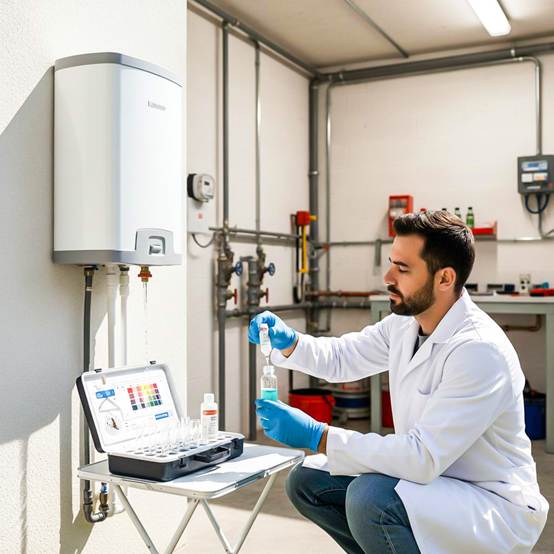
1. Analyze the quality of the circulating water (especially after summer)
- The pH of the water should be between 8.5 and 10
- High hardness indicates the risk of deposits on the heated walls
- The presence of a red or cloudy color is a warning of iron corrosion
Practical tip: If your villa is located in hard water areas (such as Alborz or Zagros), the risk of deposits is much higher.
2. Injecting or adding antifreeze and anti-boil
Antifreeze is not just for preventing frost. In villas used on warm winter days, anti-boil is also vital — as the temperature inside the package can reach over 100 degrees.
Usage guidelines based on minimum regional temperatures:
Minimum temperature (°C) | Mixing ratio (antidikh:water) |
0to 15- | 1liter for 2–3 liters of water |
15-to 23- | 1liter for 1–2 liters of water |
23-to 34- | 1liter for 1 liter of water |
34-to 48- | 1liter for 0.5–1 liter of water |
Technical tip: Antifreeze should also be anti-corrosion, anti-foam and anti-scaling — not just plain antifreeze. (What is Mitreh antifreeze?)
3. Multi-metal anti-corrosion finish
Villa systems are usually a combination of copper (pipes), steel (radiators) and cast iron (package). An effective anti-corrosion formulation should be able to protect all three metals at the same time.
If you use automotive anti-corrosion, the copper may be damaged.
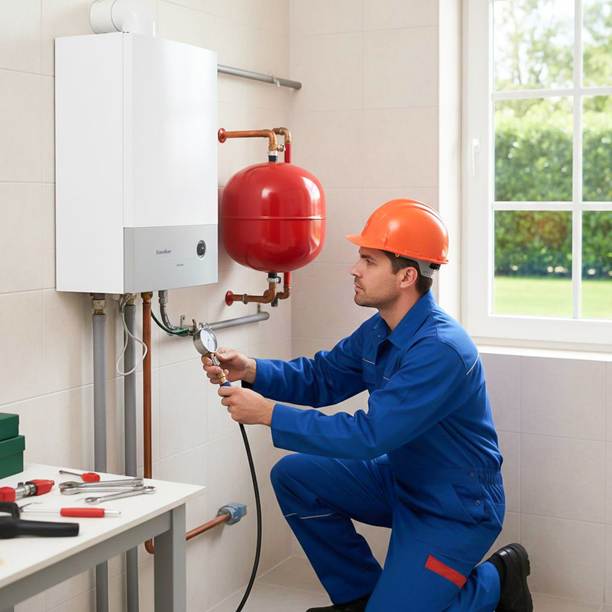
4. Physical inspection of the system
- Set the system pressure to 1.5 bar
- Check the expansion tank for leaks
- Clean the strainers and air vents
- Clean the radiators of dust (even a thin layer of dust reduces heat transfer by 10%)
❓❓❓ Common questions from villa owners (and practical answers) ❓❓❓
❓ Does a villa that is only used during the holidays need antifreeze?
Yes. Even if it is a week of severe cold, the water in the pipes will freeze and cause the pipe or package to burst. The antifreeze should protect at least up to the lowest historical record temperature in the area.
❓ Can I use plain water or car antifreeze?
No. Plain water causes corrosion. Car antifreeze is usually based on ethylene glycol and is not suitable for copper systems. It also lacks antifoam and anti-scaling agents.
❓ When should I perform the protection operation?
Late autumn (November to December) — before the night temperature drops below 5 degrees. In cold regions (such as Dizin or Saveh), this should be done by mid-October.
Conclusion: One week of summer = a trouble-free winter
Spending 30 minutes in the fall to analyze and inject chemicals can prevent winter repairs costing tens of millions. Your villa is only a place of peace when its systems are properly maintained.
If you are not sure about the type of water or the exact temperature of your area, use a professional consultation or water analysis. This small decision can add years to the life of your heating system.
If you need expert advice to identify the type of sediment or the optimal selection of chemicals, Abrizan Company specialists, with more than 20 years of experience in advanced laboratories, are ready to provide customized solutions to various industries.
share :
MED Desalination Chemical Washing Steps — Implementation Guide
1404/12/02The three main enemies of cooling towers: scale, corrosion, biofouling
1404/11/29Can antifreeze also prevent the formation of deposits and corrosion?
1404/11/27What is a chiller and what are its types? A comprehensive guide to choosing the best cooling system
1404/11/20
Related Articles
Can antifreeze also prevent the formation of deposits and corrosion?
Can antifreeze prevent deposits and corrosion? Short answer: Yes, but only if it is multi-purpose. A comprehensive guide to choosing industrial antifreeze.
The difference between industrial antifreeze and automotive antifreeze – why shouldn't you use it in a package?
Using automotive antifreeze in industrial packages or systems is dangerous! Find out why and what safe alternatives are available.
Why doesn't regular antifreeze work after one season?
Last year's antifreeze no longer works? Technical reason: The inhibitors are worn out. Solution + Smart Choice.
Does antifreeze reduce the thermal efficiency of the system?
Does using antifreeze in heating systems reduce efficiency? Scientific answer + solutions to compensate for performance loss.
Why is plain water not enough for home heating? — 4 scientific reasons
Plain water in the water heater causes deposits, corrosion, freezing, and boiling. How to prevent damage with specialized materials? A practical guide for the home
Antifreeze Calculation Guide for Villa Packages — Table + Practical Example
How to calculate the exact amount of antifreeze for a villa? Determine the amount of antifreeze step by step with the system volume and the temperature of the area. Prevent freezing.
Industrial antifreeze and anti-boiler: A complete guide to protecting heating and cooling systems
Why are industrial antifreeze and anti-scaling agents essential for circulating systems? A comprehensive guide to preventing freezing, scalding, corrosion and deposits in boilers, chillers and engine rooms
When to Replace System Antifreeze? — Testing and Replacement Guide
6 Signs Your Antifreeze Needs to Be Replaced + Proper Testing Methods at Home and in the Lab. Prevent Freezing and Corrosion.
Submit your opinion
Your email address will not be published.