

MED Desalination Chemical Washing Steps — Implementation Guide
1404/12/02
The three main enemies of cooling towers: scale, corrosion, biofouling
1404/11/29
Can antifreeze also prevent the formation of deposits and corrosion?
1404/11/27
What is a chiller and what are its types? A comprehensive guide to choosing the best cooling system
1404/11/20
Various methods of removing water oxygen from the boiler

Oxygen scavenger
In their working process, boiler systems encounter two gases, oxygen and carbon dioxide, dissolved in the water entering them. The presence of these gases causes corrosion in boilers and heating systems and will disable the device in the long term. Usually, dissolved oxygen in water is removed in two ways, physically and chemically. Mechanical and thermal deaeration, including physical methods and the use of chemicals such as DEHA, sodium sulfite, carbohydrazide and hydrazine, are chemical methods for removing oxygen.
Oxygen separation with a deaerator
A deaerator can remove most of the oxygen in the water by increasing the temperature of the water before it enters the boiler, but it is necessary that the remaining oxygen is separated and deactivated through chemicals.
Chemical deaeration (Scavenging)
Although mechanical and thermal deaerators are able to remove significant amounts of dissolved oxygen, the remaining dissolved oxygen must be removed by chemicals.
Review of oxygen scavenging chemicals
Water-soluble oxygen scavenging chemicals can be reviewed from 7 perspectives:
- Reaction with oxygen
- Passivation of the metal surface
- Decomposition under pressure and heat
- Volatility or Distribution rate
- Water-soluble solids
- Toxicity and environment
- Cost to the consumer
Sodium sulfite (Na2SO3)
The first method of deoxygenating boiler water that is used and its mechanism of action is as follows:
Na2SO3 + O2 + Heat 2Na2SO4
The above reaction is accelerated by increasing temperature, increasing pH, and the presence of a catalyst.
Sodium sulfite does not show any metal surface deactivation properties.
Boiler water soluble solids (TDS)
Sodium sulfite and sodium sulfate remain in the boiler water and increase the amount of water-soluble solids (TDS). In fact, with increasing TDS, the boiler concentration coefficient is at a lower level, requiring more make-up water, higher sub-water, and more energy loss. Higher TDS will also increase the possibility of carry-over in the boiler.
Effect of sodium sulfite on boiler corrosion
Sodium sulfite prevents oxygen corrosion in the inlet water path to the boiler, but it has no effect on the parts after the boiler. Sodium sulfite is converted into sulfur and sulfur dioxide (SO2) when decomposed. When SO2 dissolves in water, sulfuric acid is formed, which causes corrosion. Sodium sulfite is not able to prevent or reduce corrosion in the parts after the boiler due to its lack of volatility. It is also a product of the sulfate reaction, which can create sulfate salts and cause problems. This substance is not highly toxic, and since it is not volatile, it does not exist in the vapor or condensate phase, and can be used to produce steam for the textile and food industries.
How much sodium sulfite is used in a boiler?
The recommended dosage of 98% sodium sulfite is 8 parts sodium sulfite per part oxygen. However, for boilers below 600 psi, the residual sodium sulfite in the boiler water should be maintained in the range of 30 ppm to 50 ppm based on S03. It is usually used in boilers with pressures below 900 psi.
Hydrazine Oxygen Scavenger
Introduced to the market in the 1950s for oxygen removal, it has been widely used since the 1960s as a successful oxygen scavenger for high pressures. The rate of hydrazine reaction is directly proportional to the temperature, pH of the water, and the presence of a catalyst.
Hydrazine's effect on metals
Hydrazine is an excellent passivator for metal surfaces, in other words, it creates magnetite Fe3O4 with a dense and cohesive crystalline structure on the metal surface. This material acts as a barrier between water and the metal surface and minimizes the risk of corrosion.
3 N2H4 +6Fe3O4 → 4NH3+N2
When decomposed by pressure or heat, it turns into ammonia and nitrogen.
3N2H4+ Heat → 4NH3+N2
Although ammonia can attack copper parts and its alloys in the boiler feedwater or condensate path in the presence of oxygen, thus increasing the corrosion rate, the small amount of hydrazine remaining in the system can be used to escape oxygen, and this problem can be overcome.
Hydrazine volatility
The rate of dispersion is the ratio of vapor to liquid phase, i.e. for every 1 ppm of hydrazine in the liquid phase, there is 8% hydrazine in the vapor phase. It can be concluded that hydrazine is not likely to be present at greater distances downstream of the boiler, whereas ammonia is likely to be present at greater distances due to its dispersion coefficient of 10.
- Hydrazine does not increase the TDS of water.
- It is toxic (carcinogenic) and flammable, and anhydrous hydrazine is very unstable.
- Hydrazine is typically used in boilers with pressures of 900 psi and above.
DEHA (Diethyl Hydroxyl Amine)
It was introduced to the market in 1981 for use in boiler systems.
4 (C2 H5)2 NOH+ 9O2 → 8CH3COOH + 2N2 + 6H2O
If hydroxide is present in the boiler water, the acetic acid formed is neutralized and removed as sodium acetate by the water bath.
The relationship between the reaction rate of DEHA with oxygen
The reaction rate of DEHA with oxygen is directly proportional to the increase in temperature, pH, and the presence of a catalyst. DEHA begins to decompose at a pressure of about 21 bar. As a result of the decomposition of DEHA, two dialkylamines,
a) diethylamine and
b) ethylmethylamine
and also ammonia is formed, which products of decomposition increase the pH in the condensate phase and slightly reduce the amount of morpholine consumed.
DEHA Volatility Rate
In terms of volatility, DEHA, like other amines, is very volatile and has a dispersion rate of 16.2, so it goes with the steam phase to the stages after the boiler, preventing the corrosion of dissolved oxygen. The dispersion rate of 16 times DEHA compared to hydrazine causes better passivation of the areas after the boiler by it.
DEHA Toxicity
Dermal LD50- 1300 mg/kg for Rabbits
DEHA Standard Consumption Rate
DEHA is usually provided at a concentration of 85%. Its practical consumption rate in steam boilers is about 3.3 parts per part of oxygen.
HDMA is usually recommended as a suitable technical substitute for sodium sulfite up to pressures of 1100 PSI.
In selecting a chemical for absorbing oxygen in water, parameters such as reaction rate, temperature, operating pressure, residence time, pH of the feed water, etc. are important, appropriate to the industry in which the oxygen scavenger is used.
What is carbohydrazide?
Carbohydrazide is the chemical compound with the formula (N2H3) OC. It is a white solid soluble in water. It decomposes on melting. A number of carbazides are known in which one or more N-H groups are replaced by other atoms. They are widely used in pharmaceuticals, herbicides, plant growth regulators and vegetable dyes.
This compound is produced by the reaction of urea with hydrazine:
OC(NH2)2+2 N2H4 OC(N2H3)2+2 NH3
It can also be prepared by the reaction of other C1-precursors with hydrazine, such as carbonate esters. This can be prepared from fusogen, but this route produces the hydrazinium salt [N2H5Cl]. Carbohydrazide is also a suitable precursor. They can be obtained by the condensation of carbonic acid with hydrazine. Carbohydrazide is the simplest carbazide. Diphenylcarbazide is used as a reagent.
The structure of carbohydrazide
is non-planar molecular. All nitrogen centers are at least partially pyramidal, indicating a weakening of the C-N bond. The C-N and C-O distances are 1.36 and 1.25 Å, respectively.
Oxygen Removal with Carbohydrazide
Carbohydrazide is used to remove oxygen in boiler systems and prevent corrosion. A suitable precursor to polymers, carbohydrazide can be used as a hardener for epoxy-type resins.
What are the dangers of carbohydrazide?
Heating carbohydrazide may cause an explosion. Carbohydrazide is harmful to the eyes, respiratory system, and skin if swallowed. Carbohydrazide is toxic to aquatic organisms.
Mitreh Oxygen Depleting Solution
The selection of the appropriate oxygen scavenger depends on the operating conditions of the boiler. Also, for more information, please refer to the Abrizan Company products page and the oxygen scavenger section. The following are the oxygen scavenging solutions produced by Abrizan Company:
Row | Product code | Product name | Description |
1 | ME1132 | Oxygen scavenger | Boiler water with pressure less than 240PSI |
2 | ME1133 | Oxygen scavenger | Medium and high pressure boiler water |
3 | ME1134 | Oxygen scavenger | Boiler feed water with pressure less than 600PSI and can be used in food industry boilers |
share :
MED Desalination Chemical Washing Steps — Implementation Guide
1404/12/02The three main enemies of cooling towers: scale, corrosion, biofouling
1404/11/29Can antifreeze also prevent the formation of deposits and corrosion?
1404/11/27What is a chiller and what are its types? A comprehensive guide to choosing the best cooling system
1404/11/20
Related Articles
Corrosion prevention with deoxygenators
A scavenger reacts with dissolved oxygen in a system, preventing the reduction of oxygen to hydroxide ions. Although the interactions between the metal, the scavenger, the pH of the environment, and other dissolved components are complex, scavengers can be considered corrosion inhibitors, most of which involve chemical interactions between the metal and the inhibitor at the metal-water interface.
Harmful effects of hydrazine on humans
Despite the widespread industrial use of hydrazine, few documented studies have been conducted on its harmful effects in humans. Humans may be exposed to hydrazine in a variety of ways, including occupational exposure, ingestion of hydrazine-containing medications, cigarette smoking, or accidental exposure. Hydrazine is absorbed through the skin, lungs, and gastrointestinal tract and is rapidly distributed throughout the body. Acute human poisoning has been reported to include vomiting, multiple respiratory tract lesions, central nervous system, liver, and kidney damage.
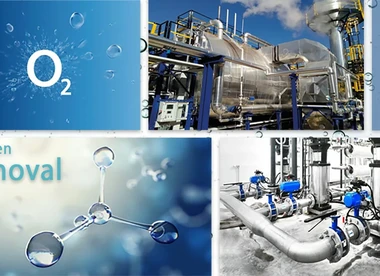
Oxygen scavengers
Oxygen scavengers, oxygen scavengers, oxygen absorbers, anti-oxygen or (oxygen scavenger) are used to remove oxygen in various industries. The oxygen scavenger reacts with dissolved oxygen and prevents the reduction of oxygen to hydroxide ions, thus acting as a corrosion inhibitor.
Submit your opinion
Your email address will not be published.