

MED Desalination Chemical Washing Steps — Implementation Guide
1404/12/02
The three main enemies of cooling towers: scale, corrosion, biofouling
1404/11/29
Can antifreeze also prevent the formation of deposits and corrosion?
1404/11/27
What is a chiller and what are its types? A comprehensive guide to choosing the best cooling system
1404/11/20
When to Replace System Antifreeze? — Testing and Replacement Guide

When should you replace or test your system’s antifreeze?
Antifreeze is injected once and forgotten. Most users don’t realize that the protective chemicals lose their effectiveness after 12 to 24 months — whether the system is in use or not. If your system’s antifreeze hasn’t been replaced in more than two years, it’s likely no longer preventing freezing, boiling, or corrosion. In this guide, we’ll look at 6 key signs to look for when you need to replace or test your antifreeze, and step-by-step analysis methods.
Why does your system’s antifreeze stop working after a while?
Industrial antifreeze is typically glycol-based (ethylene or propylene) and contains corrosion inhibitors, antifoams, and anti-scalants. But these compounds:
- Decompose under the influence of temperature (especially in heating systems)
- Over time, the pH of the system decreases and the environment becomes acidic
- Oxygen dissolved in water consumes the inhibitors
- In semi-open systems, moisture and incoming oxygen accelerate the degradation process
Conclusion: Old antifreeze is not only not protective, but can also cause corrosion.
6 key signs to replace or test antifreeze
1. More than 2 years have passed since the last replacement
- In domestic systems (villas, packages): maximum antifreeze life = 2 years
- In industrial systems with high temperatures: maximum = 12 months
- In heavy vehicles or machinery: maximum = 18 months (depending on operating conditions)
Note: Even if the system is not used, chemicals are degraded.
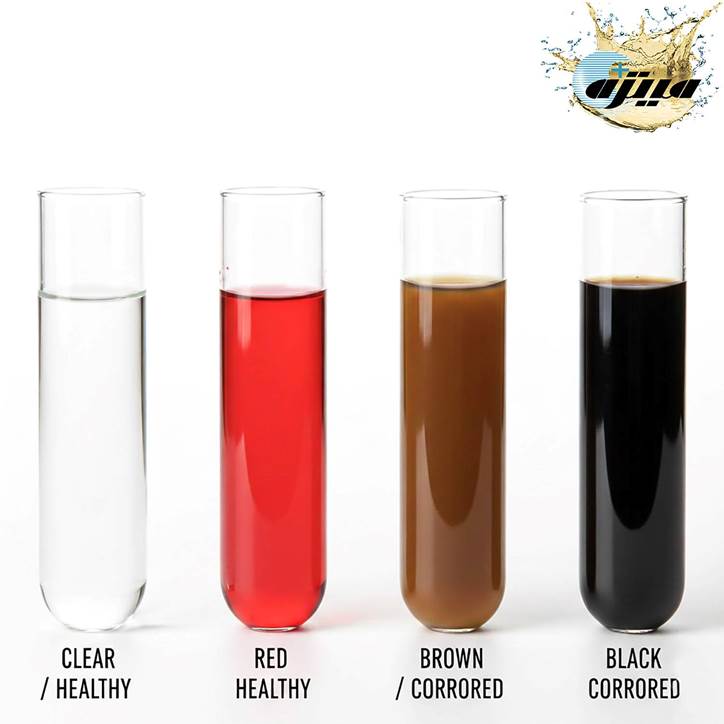
2. Antifreeze discoloration or clouding
- Healthy antifreeze is usually clear green, red, or orange
- If it turns brown, cloudy, or black:
- It is a sign of iron corrosion or the formation of metal oxides
- Antifreeze is no longer providing protection
3. Pressure drop or system temperature increase
If the package or boiler is slow to heat up or the temperature rises rapidly, it may be:
- Deposits have formed on the exchangers
- The antifreeze is no longer anti-scale
- Or the system's anti-boil has disappeared
4. A roaring or boiling sound in the system
This sound is a sign of local boiling of water in hot spots — that is, the boiling point of the antifreeze has decreased and is no longer able to control the temperature in summer or high loads.
5. Formation of deposits or sludge in the expansion tank
If white or red deposits are visible in the expansion tank or drain valves, the antifreeze is no longer able to control the water salts.
6. The pH of the system is less than 8.5
- pH above 10: risk of deposits
- pH below 8.5: risk of corrosion
- Good antifreezes maintain a pH between 8.5 and 10
- If the pH is less than 8, replace immediately
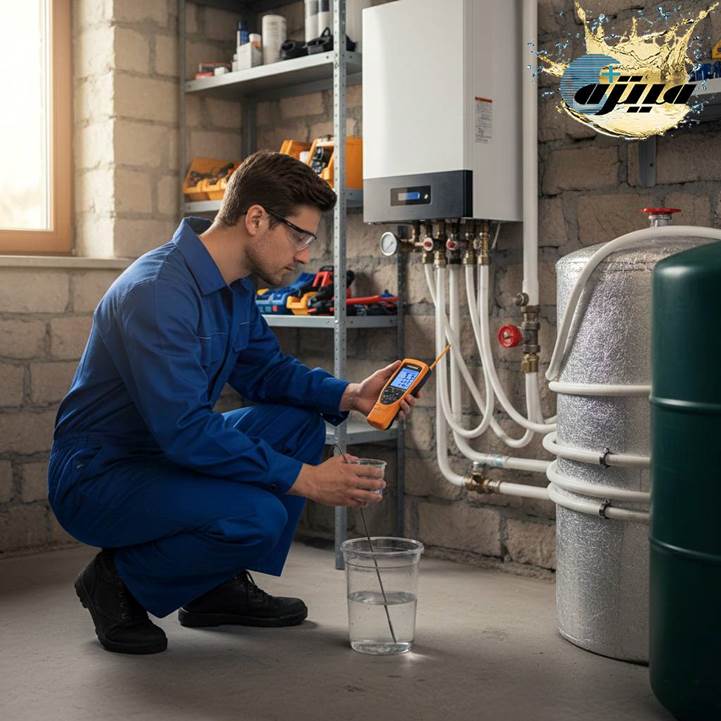
How to test the antifreeze system? (Three practical methods)
Method 1: Field kit test (for home users)
- Handheld kits are available that measure glycol concentration and pH
- Suitable for villas or home packages
- But have limited accuracy
Method 2: Laboratory analysis (for industry or major villas)
In the laboratory, the following parameters are checked:
- Exact glycol concentration (% by volume)
- pH and alkalinity
- Presence of corrosion ions (⁺Fe²⁺, Cu²⁺)
- Concentration of corrosion inhibitors (e.g. nitrite, molybdate)

Method 3: Freeze Point Test
- With simple devices (such as a refractometer), the actual freezing temperature of the antifreeze can be measured.
- If the freezing temperature is higher than the area's requirements, the antifreeze should be topped up or replaced.
❓❓❓ Common questions from users ❓❓❓
❓ Can I just top up the antifreeze, not replace it completely?
If the old antifreeze is healthy (pH > 8.5 and clear color), yes. However, if the antifreeze is more than 2 years old or shows signs of deterioration, a complete replacement + flushing of the system is recommended.
❓ Can car antifreeze be used in a villa package?
No. Car antifreeze is designed for aluminum and steel and may damage copper (in villa pipes). It also lacks antifoam and anti-scaling.
❓ What is the appropriate interval between antifreeze tests?
- Villa/Home: Every 12 months
- Industrial/Engine Room: Every 6 months
- Mobile Machinery: Every 6 months or 2000 hours of operation
✍️ Conclusion: Small Test = Prevent Major Failure
Antifreeze is an “active” substance — not a stagnant liquid. If left unattended, it not only does not protect the system, but also becomes a source of danger. With a simple annual test, you can prevent freezing in winter, boiling in summer, and chronic corrosion.
If you are unsure of the condition of your system’s antifreeze, take a water sample and have it tested for pH today. This small task can prevent thousands of dollars in repair costs.
If you need expert advice to identify the type of scale or the optimal selection of chemicals, Abrizan’s specialists, with over 20 years of experience in advanced laboratories, are ready to provide customized solutions to various industries.
share :
MED Desalination Chemical Washing Steps — Implementation Guide
1404/12/02The three main enemies of cooling towers: scale, corrosion, biofouling
1404/11/29Can antifreeze also prevent the formation of deposits and corrosion?
1404/11/27What is a chiller and what are its types? A comprehensive guide to choosing the best cooling system
1404/11/20
Related Articles
Can antifreeze also prevent the formation of deposits and corrosion?
Can antifreeze prevent deposits and corrosion? Short answer: Yes, but only if it is multi-purpose. A comprehensive guide to choosing industrial antifreeze.
The difference between industrial antifreeze and automotive antifreeze – why shouldn't you use it in a package?
Using automotive antifreeze in industrial packages or systems is dangerous! Find out why and what safe alternatives are available.
Why doesn't regular antifreeze work after one season?
Last year's antifreeze no longer works? Technical reason: The inhibitors are worn out. Solution + Smart Choice.
Does antifreeze reduce the thermal efficiency of the system?
Does using antifreeze in heating systems reduce efficiency? Scientific answer + solutions to compensate for performance loss.
Why is plain water not enough for home heating? — 4 scientific reasons
Plain water in the water heater causes deposits, corrosion, freezing, and boiling. How to prevent damage with specialized materials? A practical guide for the home
Antifreeze Calculation Guide for Villa Packages — Table + Practical Example
How to calculate the exact amount of antifreeze for a villa? Determine the amount of antifreeze step by step with the system volume and the temperature of the area. Prevent freezing.
Industrial antifreeze and anti-boiler: A complete guide to protecting heating and cooling systems
Why are industrial antifreeze and anti-scaling agents essential for circulating systems? A comprehensive guide to preventing freezing, scalding, corrosion and deposits in boilers, chillers and engine rooms
Protecting Your Villa's Heating System Before Winter — The Complete Guide
How to protect your villa's heating system from freezing, corrosion, and damage before winter in 4 simple steps? Practical guide + antifreeze consumption table.
Submit your opinion
Your email address will not be published.