


All about antifoam and defoamer

Abrizan Company Production
Abrizan Industrial Research Company, with more than twenty years of experience (1990) in the field of producing various types of food and industrial antifoams and defoamers, with extensive consulting and services to all related industries, continues its activities as one of the largest antifoam producers in Iran at the Malousjan industrial site with the most advanced production facilities and the most equipped analysis laboratory in the south of the country.
Abrizan Company Research and Development Unit
The Research and Development Department of Abrizan Industrial Research Company, with its wide range of advanced equipment and systems, is in a position to conduct the latest studies in the field of antifoams. Our research and development team, relying on its expertise, always tries to proceed in accordance with global standards, therefore, it offers highly efficient solutions in line with maximum compliance with standards, so that our antifoam products show the best performance.
Why use defoamers and antifoams?
- Antifoams are very effective in controlling foam, increasing productivity and reducing production costs.
- Defoamers enable you to fill tanks and pipelines to maximum capacity
- Defoamers prevent product overflow and waste
- Defoamers increase production efficiency
- Defoamers improve safety
What is the difference between Defoamers and Defoamers?
“Defoamer” and “Antifoam” are terms that are often used interchangeably to describe products designed to control or prevent foaming. But beyond the chemical formulation, their effects are different:
- Defoamers are used in emergency situations, when foam has already appeared, and must be completely removed immediately before damage can occur (Post-Defoaming).
- Antifoams are used to control the situation and prevent foam from forming (Pre-Defoaming).
- In essence, Defoamers are used to prevent foaming, while Defoamers remove existing foam.
But because some industries use a combination of both effects, the distinction between these terms is somewhat blurred.
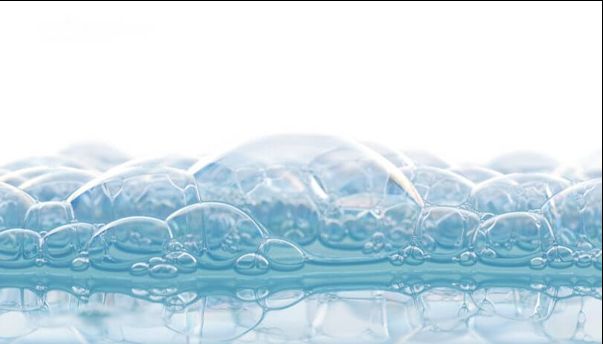
How do we test antifoam performance?
What we do here is to examine all the parameters that Abrizan’s customers may encounter. In different industries, entrapped air can be created through chemical, biological or, more often, physical reactions. The gas incorporated into the liquid, plus the nature of the antifoam, are the two main criteria we use to test our antifoams.
Vibration test – It is easy to perform and useful for quantitative comparison of effectiveness. But it usually requires further investigation.
Agitator test – An antifoam test that more accurately reflects many of the antifoam problems observed during dilution and formulation.
Air diffusion and return pump test – These tests are performed by an automated system, by which many parameters can be adjusted (temperature, pressure, pH, etc.) to recreate exact industrial conditions. In addition, this test is calibrated according to the ROSS-MILES method, which is set in the ASTM D1173 standard. The foam level is measured by light sensors and the time is set by the operator. Finally, the measurement can be achieved in a Static or Dynamic method. Using this test, the Abrizan laboratory team can find a solution for any type of foam problem.
How do I choose the best antifoam for my application?
Many questions and factors influence the selection of the right antifoam:
- What is it used for?
- What foams?
- Process flow?
- Temperature?
- pH?
- Operational and regulatory constraints?
- How to apply the antifoam?
For support and to make the best choice, turn to our experts. With years of experience, we believe we can handle it!
How antifoams work
While 95% of all foam problems occur in aqueous environments, pure water does not thermodynamically foam. The addition of surfactants and other surface-active substances makes the gas bubbles flexible and thus stabilizes the foam. Antifoam design is usually about finding the right balance between Hydrophobicity and Hydrophilicity. In fact, a defoamer or antifoam should be insoluble in the foam medium, and have low surface tension, so it spreads over the foam surface. However, higher dispersion leads to faster effectiveness, but may reduce stability.
What is an antifoam?
The carrier is usually an oil that is not soluble in the foaming medium. Oils have low surface tension and migrate to the air/liquid surface. The carrier may be vegetable oil, mineral oil, alcohol or silicone.
Hydrophobe Finely dispersed solids that move with the carrier on the surface and physically cause the bubble walls to break apart.
The diluent is usually water. Antifoams and defoamers are effective at low dosages (often less than 0.01%), so stable dilutions allow for better dosage control and thus cost savings for the user.
Which is better, an emulsion or a 100% active antifoam?
Actually, it depends! Emulsions by any definition contain a certain amount of water. They tend to be less viscous, are also less expensive and have very high rates of action, even in cases where turbulence is poor.
As a result, 100% active antifoams are concentrated to have a higher viscosity and also a higher unit cost. Deciding which one is best for you depends on your specific application and the degree of control you have over the use of the antifoam. With better control, 100% active formulations are often more cost-effective. For environments where it is difficult to control the dosage of antifoam, low emulsion levels may be a better option.
Antifoam in the Food Industry
One industry that is particularly affected by foaming is the sugar industry. In these industries, foaming occurs primarily in the early stages of the refining process, including the diffusion and stiffening stages. In fact, the operations performed during these two stages, including agitation, pumping, free fall of syrup, and injection of carbon dioxide gas, are the main causes of foaming.
Problems with Foaming
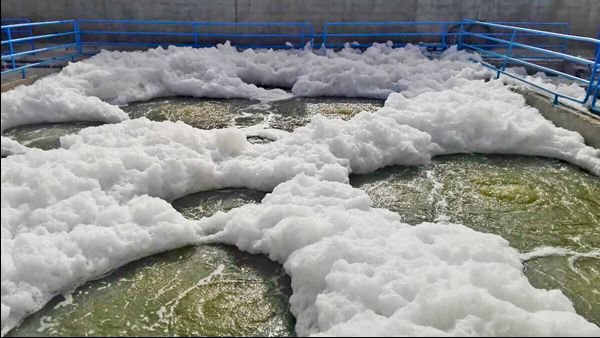
However, foaming can cause many problems and losses. Waste and overflow of food, reduced efficiency and process speed, reduced tank capacity, and even production stoppage are some of the problems caused by foam. Therefore, appropriate and efficient solutions must be considered to solve these problems.
Classification of antifoams based on formulation:
Oil-based liquid antifoams
The basis of oil-based antifoams is fatty acids, natural oils and fats, mineral oils, emulsifiers, dispersants, etc. These types of antifoams are widely used in defoaming aqueous systems because they form a good emulsion in water. The formulation of this type of antifoam depends on the process conditions, including pH, temperature, and concentration.
Silicone antifoams
These types of antifoams are not environmentally safe and cause pollution. In addition, their production requires advanced technology and equipment. However, they are very effective and strong in non-aqueous systems. Among the most common silicone antifoams is polydimethylsiloxane or PDMS.
Powdered antifoams
Powdered antifoams are not widely used due to the scarcity of raw materials and, as a result, the high cost.
However, due to differences in antifoam test methods, the effectiveness of a fixed sample may be confirmed in one laboratory while not accepted in another. Therefore, we recommend using a standard and approved scientific method.
Antifoam Review and Test Method for Its Effectiveness:
ASTM E2407-04
This test method is a qualitative method for evaluating liquid defoamers or antifoams in controlling undesirable foam in aqueous solutions. In this method, it is assumed that the antifoam has sufficient stability during the test. Of course, depending on the type of antifoam, how it is used and the quality assessment, there are several laboratory methods.
Standard Test Method for Defoamer or Antifoam Effectiveness
To check the effectiveness of a defoamer or antifoam, fill a clean volumetric cylinder (can be a 1000 ml cylinder) with 300-400 ml of the solution that we want to prevent from foaming, place it in a water bath and adjust the temperature. An anionic surfactant, such as sodium lauryl ether sulfate, can be used to stabilize the foam in a small amount inside the cylinder.
Then, using a compressed gas source, filtered air is introduced into the cylinder at a suitable flow rate (in liters per minute).
The gas flow rate is controlled with a suitable flow meter. The increase in foam volume is measured against the time of entry of compressed air into the cylinder until the foam volume reaches a maximum value (for example, 1000 ml). The time it takes for the foam to disappear without using antifoam is checked and the foam height is recorded.
This operation is repeated with the injection of antifoam and a comparison is made between the speed of foam disappearance and the effectiveness of the antifoam. If the time it takes for the foam to disappear with the antifoam is very high and no stable foam is left, the antifoam is performing well.
share :
Related Articles
Defoamer and its classification
An antifoam or defoamer is a chemical additive that reduces and prevents the formation of foam in industrial process fluids. The terms antifoam and defoamer are often used interchangeably.
Antifoam unit of water desalination by thermal methods
The high surface tension of sea water and the high probability of formation of foam in MED and MSF systems are unpredictable. These foams are usually formed when organic compounds increase in salt water or brine.
Amine unit antifoam
Chemicals that create instability on the floor and cause the foam to break are called antifoam or defoamer. These materials are used to prevent the production and construction of foam.
Submit your opinion
Your email address will not be published.