

MED Desalination Chemical Washing Steps — Implementation Guide
1404/12/02
The three main enemies of cooling towers: scale, corrosion, biofouling
1404/11/29
Can antifreeze also prevent the formation of deposits and corrosion?
1404/11/27
What is a chiller and what are its types? A comprehensive guide to choosing the best cooling system
1404/11/20
Water Parameter Analysis: A Complete Guide to Water Quality Control in Industry and the Environment.

Introduction: Is “Looking Clean” Water Really Healthy?
Many industrial managers, maintenance engineers, and even families are faced with this question:
“Our water is crystal clear, so why are boilers corroding? Why are heat exchangers failing? Why are cooling towers silting up?”
The answer is simple:the appearance of water is not a measure of its quality.
Water that appears harmless can contain mineral ions, dissolved gases, or invisible microorganisms that gradually:
- Create insulating layers of scale on internal surfaces
- Initiate subsurface corrosion
- Increase energy consumption by up to 40%
- Multiply repair costs
This is where water parameter analysis comes into play, not as a simple laboratory test, but as an intelligent tool for prediction and prevention.
In this article, we will provide a comprehensive overview of the three main categories of water parameters:
1. Physical parameters
2. Chemical parameters
3. Microbial parameters
And we will show how each of these parameters can affect the performance of industrial systems and human health.
Why is water analysis necessary?
Before making any decisions about water treatment, washing or use, you need to know what your water has.
Without analysis, any action, even if well-intentioned, can be:
- Useless (e.g. using anti-sludge for carbonate deposits)
- Destructive (e.g. using strong acid on unprotected steel)
- Cost-intensive (e.g. replacing equipment instead of finding the root cause of the problem)
Therefore, water parameter analysis is the foundation of any smart water management program.
1. Physical Parameters of Water: A Preliminary Look at Quality
Turbidity
Turbidity indicates the presence of suspended particles such as mud, silt, clay, or organic matter.
- Unit of Measurement: NTU (Nephelometric Turbidity Unit)
- Drinking Water Standard: Less than 1 NTU
- In Industry: High turbidity can cause nozzle blockage, reduced flow, and sludge formation.

Measuring water turbidity with a turbidimeter for quality control
Temperature
Water temperature has a direct impact on:
- Solubility of gases (such as oxygen and carbon dioxide)
- Rate of chemical reactions
- Growth of bacteria
- Efficiency of disinfection processes
Ideal temperature for most industrial processes: 10–15°C (50–60°F).
Higher temperature = increased risk of carbonate precipitation and corrosion
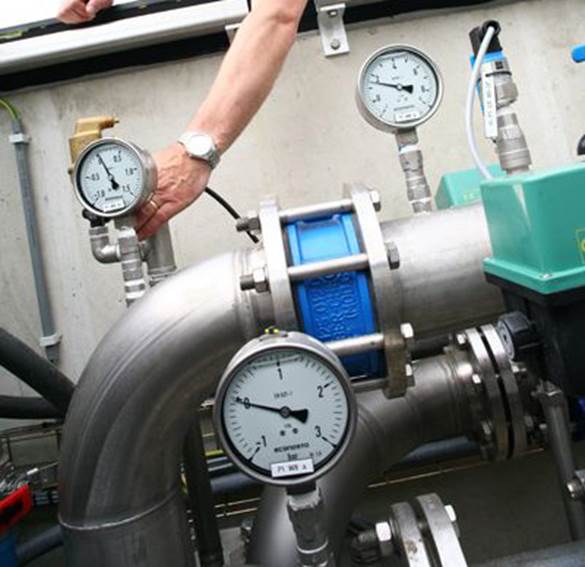
Measuring water temperature to control sedimentation in circulating systems
Color, taste and odor
- Color: Usually caused by the decomposition of plant matter (e.g. tannins) or metals (iron, manganese)
- Taste and odor: May indicate the presence of H₂S gases, chlorine or sulfur bacteria
Although these parameters are vital for drinking water, they can also be an early warning of contamination in industry.
Total Dissolved Solids (TDS) and Electrical Conductivity (EC)
- TDS (Total Dissolved Solids): The sum of dissolved minerals (calcium, magnesium, sodium, chloride, etc.)
- Freshwater: < 1500 mg/L
- Brackishwater: 1500–5000 mg/L
- Highly saline water: > 5000 mg/L
- Electrical Conductivity (EC): The higher the TDS, the higher the EC.
- Direct relationship with scale and corrosion risk
In thermal desalination systems (MED/MSF), TDS control is critical — as its increase leads to rapid scale formation on evaporator tubes.
2. Water chemical parameters: the beating heart of quality control
pH: acid-base balance
- pH < 7: acidic → risk of metal corrosion
- pH > 8.5: alkaline → risk of carbonate and silica scale
In boilers, pH should be between 8.5 and 10 to prevent both corrosion and scale formation.
Water Hardness
Hardness = Total Calcium and Magnesium Ions
- High Hardness → Calcium Carbonate (Limestone) Precipitation at High Temperature
- In Chillers and Exchangers, Even 50 ppm Hardness Can Create an Insulating Layer After a Few Months
Solution:
Reduce Hardness with Ionic Softeners or Use Scale Inhibitors
Dissolved Oxygen (DO) and Biological Oxygen Demand (BOD)
- High DO: Risk of Oxidative Corrosion in Steel Pipes
- High BOD: Indication of Organic Matter and Bacteria ← Microbiological Sludge Formation
In Cooling Towers, DO and BOD Control is Essential to Prevent Sludge and Biofilm.
Chlorine and Alkalinity
- Free chlorine: necessary for disinfection, but in high concentrations, causes stress corrosion in stainless steels
- Alkalinity: the capacity of water to neutralize acids — its balance with pH is key to preventing chemical fluctuations
3. Microbial parameters: the invisible enemy of equipment
Corrosion-causing bacteria (MIC)
- SRB (sulfate-reducing bacteria): H₂S production→severe corrosion
- IRB (iron-oxidizing bacteria): red sludge formation
These bacteria form protective layers in cooling towers and circulating water lines that hide corrosion — until it’s too late.
Algae and Viruses
- Algae: In the presence of light and nutrients, they clog nozzles
- Viruses: Less important in industry, but vital in drinking water units
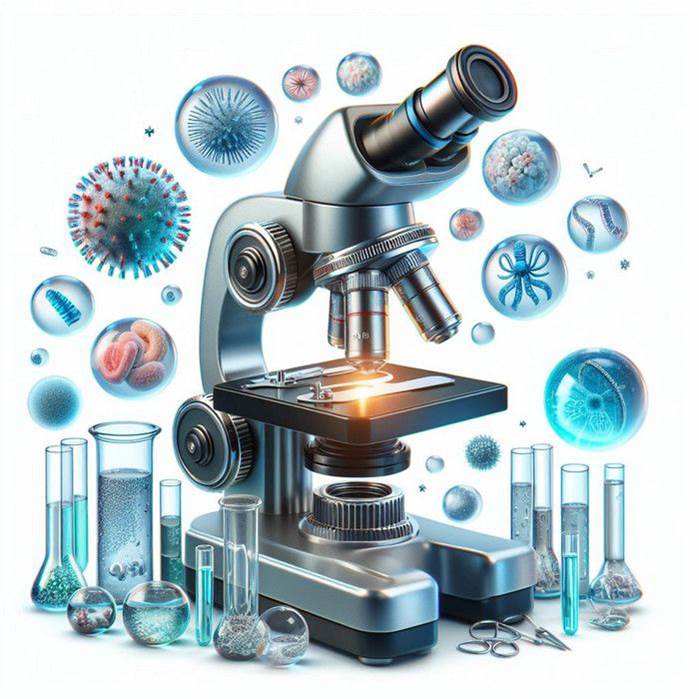
Microbial water analysis to detect dangerous algae and bacteria
Common user questions about water analysis
When should water be analyzed?
- Before starting any new system
- After each chemical flush
- Periodically (e.g. every 3 months)
- When you notice a decrease in efficiency or an increase in energy consumption
Can we do the water analysis ourselves?
Some parameters (e.g. pH, TDS) can be measured with simple kits, but for complex microbial, chemical parameters or for detecting the type of scale, you need a specialized laboratory.
What parameters are critical for boilers?
- pH (8.5–10)
- Hardness (< 0.05 ppm)
- Dissolved oxygen (< 7 ppb)
- TDS (controlled by continuous discharge)
How to turn analysis results into action?
Water analysis is not just a report — it is your roadmap.
According to the results:
- If the hardness was high → use a softener or scale inhibitor
- If the DO was high → use a deoxygenator or corrosion inhibitor
- If the BOD was high → disinfection and control of organic matter
- If the chloride was high → prevention of stress corrosion in stainless steels
Your actions should be targeted, tailored to the type of water and equipment.
Conclusion: Water analysis, a smart investment for the future
Analysis of water parameters is not just a laboratory test — it is a preventive strategy.
By accurately understanding water quality, you can:
- Prevent costly breakdowns
- Reduce energy costs
- Increase equipment reliability
- Multiply the useful life of systems
If you operate in an industrial unit, power plant, petrochemical plant or even large buildings, regular water analysis is not a cost, but a return on investment.
Do you want to know how your water affects your equipment?
Take the first step towards an efficient, safe and sustainable system with a comprehensive analysis. Free consultation with Abrizan experts
share :
MED Desalination Chemical Washing Steps — Implementation Guide
1404/12/02The three main enemies of cooling towers: scale, corrosion, biofouling
1404/11/29Can antifreeze also prevent the formation of deposits and corrosion?
1404/11/27What is a chiller and what are its types? A comprehensive guide to choosing the best cooling system
1404/11/20
Related Articles
What is the Langelier Index? A Complete Guide to Predicting Water Sedimentation and Corrosion
Find out if your water is prone to scaling or corrosion with Langelier Index (LSI), Reisnar and Pocurius. A practical guide for industries and water systems
Measuring Carbonate and Bicarbonate in Water: A Complete Guide to Alkalinity Control
Learn why water alkalinity with carbonate and bicarbonate is important, how to measure it, and what solutions there are to prevent scaling.
Measuring Iron (Fe) in Water: Why Can This Common Metal Disable Industrial Equipment?
Why is iron in water dangerous? Fe measurement method, limits, impact on equipment and control solutions + accurate laboratory analysis.
Orthophosphate - phosphate
Orthophosphates, pyrophosphates, metaphosphates, and other polyphosphates and organophosphates are phosphorus in natural waters and wastewaters that occur as phosphates. They are found in solution, in particulate or powder form, or in the form of aquatic organisms.
The origin and importance of magnesium
Magnesium is an essential element in chlorophyll and in red blood cells. Some magnesium salts are toxic if ingested or inhaled. Concentrations above 125 mg/L can also have a laxative and diuretic effect.
The origin and importance of iron
The solubility of iron ions is controlled by the concentration of carbonate. Since groundwaters are often oxygen-deficient, soluble iron in groundwaters is usually in the form of iron salts. Upon exposure to air or the addition of oxidants, iron is oxidized to the ferrous state and can be hydrolyzed to produce the insoluble red hydrated iron oxide.
Copper and its importance
Copper exists in its elemental state, but is also found in many minerals, the most important of which include sulfide compounds (such as chalcopyrite), as well as oxides and carbonates. Copper is widely used in electrical wiring, roofing materials, various alloys, pigments, cookware, plumbing, and the chemical industry. Copper salts are used in water supply systems to control biological growth in tanks and distribution pipes and to catalyze the oxidation of manganese.
Organic matter and its measurement
There are various methods for measuring the amount of organic matter in water. These methods include measuring the volatile fraction, measuring the total solids, BOD and COD. Because measuring the volatile fraction and measuring the total solids has a relatively large error, they are more often used than measuring the biochemical oxygen demand (BOD) and chemical oxygen demand (COD) to obtain the amount of organic matter in water.
Submit your opinion
Your email address will not be published.