

MED Desalination Chemical Washing Steps — Implementation Guide
1404/12/02
The three main enemies of cooling towers: scale, corrosion, biofouling
1404/11/29
Can antifreeze also prevent the formation of deposits and corrosion?
1404/11/27
What is a chiller and what are its types? A comprehensive guide to choosing the best cooling system
1404/11/20
Anti-corrosion conversion coatings

Coating
Another way to protect metal from corrosion is to use corrosion-resistant coatings. Coating refers to layers of thin materials that are coated on the surface of the metal to achieve goals such as improving surface resistance, improving corrosion resistance, aesthetic appearance and thermal insulation.
Usually, the purpose of coating the metal is to create a barrier to the corrosive environment, so that access to the metal surface becomes difficult for aggressive ions and corrosion reactions do not occur. The types of coatings used are divided into four groups: conversion coatings, metal coatings, organic coatings and inorganic coatings.
Anti-corrosion conversion coatings
Many metals tend to oxidize and a relatively stable layer of oxide is formed on them. Under certain conditions, this oxide layer is protective and prevents corrosion of the metal surface. In practice, using chemical or electrochemical methods, the oxide layer on metals is created or this layer is strengthened. This type of surface treatment is called creating conversion coatings.
Conversion coatings refer to coatings that are formed on the surface of metals by the reaction of atomic layers of metals with anions selected from a suitable medium. Conversion coatings are mainly used to protect metals against corrosion. Conversion coatings have a beautiful and attractive appearance and, due to their good surface absorption properties, they can be painted with a variety of organic and inorganic dyes. Conversion coatings can be created on almost all metals that have industrial applications, such as: aluminum, zinc, cadmium, iron, copper and its alloys, magnesium, silver, etc.
Also, by the phenomenon of electrolysis, iron is converted into black iron oxide (of course in a controlled manner), which is resistant to corrosion and is called blackening of iron or steel and is used in the manufacture of machine spare parts.
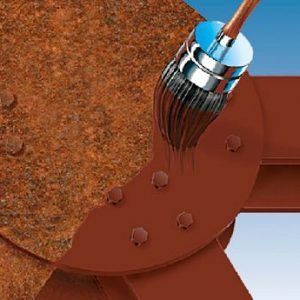
In general, the most important anti-corrosion conversion coatings can be divided into the following three main categories:
a) Phosphate coating
Phosphate coatings are protective coatings that were first introduced to the market in 1908. Phosphating is an effective method of preventing corrosion and is used for temporary protection, and is also applied as a primer before painting parts to increase paint adhesion.
The phosphate layer of the base metal provides some corrosion resistance, aids cold forming, and improves tensile strength, but is mostly used as a base for providing paints in products such as car bodies and refrigerator bodies. Phosphate coating improves paint adhesion and delays the development of any corrosion under the paint layer.
Coating is an operation used to apply phosphate conversion coatings to metal surfaces such as iron, steel, galvanized steel, aluminum, zinc electrolytic coatings, cadmium, stainless steel and magnesium alloys.
In general, the phosphating process is carried out by two methods: immersion and spray. The phosphating method is usually determined by the shape and size of the parts. Small parts such as bolts, nuts, nails, etc.
They are coated in a rotating tank and also by immersion in a phosphate solution. Large parts such as the body of a refrigerator are phosphated on a conveyor belt and by spraying the solution.
Phosphate coatings are created by immersing steel parts in a dilute, hot solution of phosphoric acid and forming an iron phosphate layer. The phosphate coating that is created on steel and similar materials has a crystalline structure and its crystal size is a few microns. Usually, in phosphate coatings, coarser crystals cause the coating to be thicker, and the thickness of the coating depends on factors such as the phosphate solution, temperature, duration of operation, type of steel, and surface preparation method.
The thickness of such coatings is in the range of one to twenty micrometers. Considering the structure of phosphate coatings, when such coatings absorb oil, grease, and soap, their corrosion resistance and special applications increase. For example, in cold deformation of steels, they form a phosphate coating on them. This coating, along with the absorption of oil and soap, has a lubricating effect.
In order to obtain a suitable and uniform phosphate coating, the metal surface must be cleaned of any contamination such as grease, fat, and corrosion products. For this purpose, conventional surface preparation methods (mechanical cleaning, degreasing, and acid washing) can be used. The main process of phosphate coating formation is the deposition of a divalent metal and phosphate ions on the metal surface. The dissolution of the base metal in the phosphating solution increases the pH at the metal-electrolyte interface, which causes the precipitation of phosphate salts on the metal surface.
The mechanism of steel phosphating shows that changes in the acidity of the bath are very effective on the coating rate and reaction kinetics. Additives in the phosphating bath, such as some amines or organic sulfur compounds, also affect the acidity of the phosphating bath, and this action causes a change in the coating rate and the amount of coating formed.
The main components of phosphating baths are divided into the following three categories according to the type and type of phosphate coating:
- Phosphoric acid
- Metal salt of phosphoric acid
- Accelerator
Although most phosphating baths are acidic, due to the presence of non-polarizing and oxidant substances, hydrogen embrittlement is not achieved and hydrogen does not affect the metal.
The accelerator's job is to oxidize the resulting hydrogen and remove it from the surface, allowing the solution to come into contact with the surface and create a uniform coating. Accelerators also have an oxidizing effect on the iron ions dissolved in the bath, increasing the life of the bath.
The phosphating process is very sensitive, and various factors such as the conditions of the metal surface preparation, the chemical composition of the bath, pH, temperature, phosphating time, grain size, and many other chemical and metallurgical parameters affect the properties of the resulting coating.
Types of Phosphate Coatings
Commercial phosphate coatings include iron, zinc, manganese, calcium phosphates or a mixture of these, which, of course, improve their properties by adding elements such as nickel to the phosphate baths. Phosphate coatings mostly have a crystalline structure and the size of these crystals reaches several microns, and larger crystals usually have a thicker coating.
- Iron phosphate coating: These coatings are in the form of fine crystals and are blue or bluish-brown in color, and their main role is to stabilize paint layers.
- Zinc phosphate coating: The color of these coatings varies from light to dark gray, and their role is to stabilize paint or oil, and increase the wear resistance of the surface of the part. The application of zinc phosphate coatings is seen in the body of the spark plug, car wheel nut, and piston pin.
- Manganese phosphate coating: These types of coatings provide resistance to wear and corrosion. Its color is black or brownish black and its main application is in places where there is friction, such as internal combustion engines.
b) Chromate coatings
The chemical and electrochemical treatment of metals in solutions in which chromic acid, chromate or dichromate are the main part of the solution is called chromating. The result of such an operation is the creation of a protective coating consisting of trivalent and hexavalent chromium compounds on the metal surface. The thickness of chromate coatings is about one micrometer. For decorative coatings, the thickness of chromium is 0.25 microns, and to create wear resistance, the thickness of the coating reaches up to 400 microns.
Very thin chromium coatings are porous, with increasing thickness, porosity decreases, but after a certain thickness, compounds are formed in the coating and the resistance to pitting corrosion decreases.
Chrome coatings are not suitable for protecting the part against strong acids. Strong acids such as hydrochloric acid strongly attack the metal and destroy the coating. In chromate coatings, corrosion resistance depends on the chemical composition and the depth of the penetration layer. When a solid solution of chromium-iron is formed, greater corrosion resistance is achieved.
Chromate coatings can be created in two ways:
- The chemical method, which involves immersing the part in chromate solutions.
- The electrochemical method, which involves immersing the part in the solution and applying an electric current from an external source.
Chromate coatings have the following properties:
- Increase the corrosion resistance of the metal or metal protective coatings.
- Chromate coatings will protect the base metal from the penetration of corrosive substances that may pass through the pores of the organic coatings.
- Reduce surface damage such as surface scratches.
- Increase the adhesion of paint and other organic coatings.
Mechanism of formation of chromate coatings:
Chromate coatings are prepared from chromic acid or chromate solutions that also contain other additives. The steps of forming a chromate coating include the oxidation of the metal surface in the chromate solution, which is accompanied by the transfer of base metal ions and the gradual increase of hydrogen to the solution.
The released hydrogen causes a portion of the hexavalent chromium to be reduced to trivalent chromium. The decomposition of a layer of the base metal causes an increase in the pH on the metal surface. This increase in pH is to the extent that trivalent chromium is deposited as a layer of chromium hydroxide on the metal surface.
Adding aluminum sulfate or gallium sulfate to the chrome plating solution increases its gloss and also increases its corrosion resistance.
The color and thickness of the chromate coating depend on several factors. The most important of these factors are: chemical composition, pH, plating bath, and coating time.
Note: The pH of the chromate solution is the most important determining factor in the formation of the chromate coating.
The main components of chromate coatings include trivalent and hexavalent chromium compounds and base metal chromate.
Most often, the chemical composition of chromate coatings is as follows:
Cr2O3.Cr3O3.xH2O
Cr(OH)3.Cr(OH).CrO4
The color of chromate coatings varies from colorless and clear transparent coatings, golden yellow, pale green, green, olive, and dark green to brown and even black. Yellow and green chromate coatings contain large amounts of hexavalent chromium, and olive-colored coatings often contain trivalent chromium compounds.
Corrosion protection of metals by chromate coatings is due to the adhesion of these coatings, which prevents the metal surface from contacting corrosive environments. Hexavalent chromium compounds, which are somewhat soluble, have good properties in preventing corrosion of bare metal parts. The effective protection time of chromate coatings depends on the speed of washing and removal of hexavalent chromium from the coating.
The degree of protection of the coating layer depends on many factors. Including thickness, coating, preparation of the base metal surface and, most importantly, the fineness of the grain structure of the deposit, which causes the metal to show good resistance to oxidizing and reducing agents at high temperatures, and since chromium acts cathodically, it must be free of cracks.
share :
MED Desalination Chemical Washing Steps — Implementation Guide
1404/12/02The three main enemies of cooling towers: scale, corrosion, biofouling
1404/11/29Can antifreeze also prevent the formation of deposits and corrosion?
1404/11/27What is a chiller and what are its types? A comprehensive guide to choosing the best cooling system
1404/11/20
Related Articles
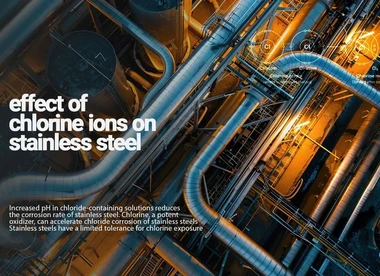
Effect of chlorine ions on stainless steels
The effect of chlorine and chloride parameters on the corrosion of stainless steels and the parameters affecting their corrosion rate, as well as the acceptable limits of chlorine ion levels in water and the differences in the effects of free chlorine and chloride on the corrosion of corrosion-resistant steels, are stated.
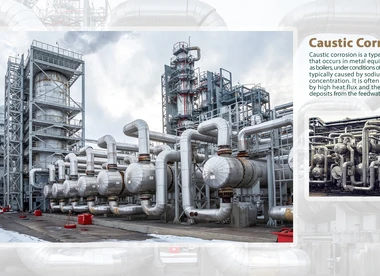
Caustic corrosion
Localized corrosion caused by the concentration of caustic or alkaline salts, which usually occurs under conditions of high evaporation or heat transfer. Caustic salt or caustic soda is one of the most widely used ionic compounds and is used in various industries including water treatment, cardboard and paper production, oil and refinery industries, aluminum production industries, food industries, alcohol production and glass.
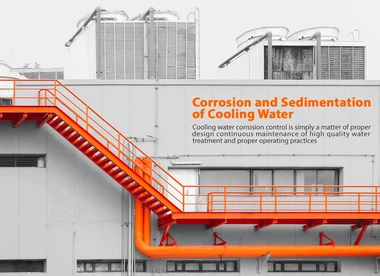
Corrosion and deposition of cooling water based on API 571
It refers to general or localized corrosion of carbon steels and other metals caused by dissolved salts, gases, organic compounds, or microbiological activity.
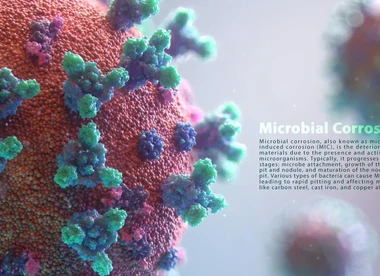
Microbial corrosion based on API 571
Microbial corrosion is a type of corrosion caused by living organisms such as bacteria, algae, or fungi. This type of corrosion is often associated with tubercles or slimy organic materials.
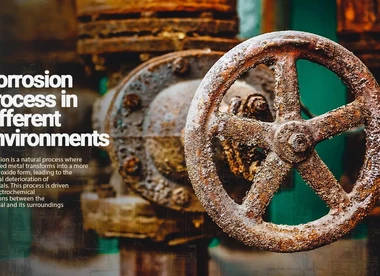
Corrosion process in different environments
Corrosion processes are divided into three groups in a more comprehensive classification: corrosion in aqueous solutions or environments, corrosion in molten salts and liquid metals, and corrosion in gases.
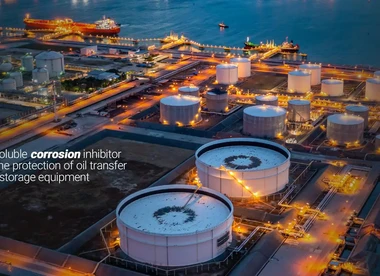
Oil-soluble corrosion inhibitor for the protection of oil transfer and storage equipment
Corrosion is a natural phenomenon that occurs as a result of the electrochemical reaction of metal with the surrounding environment. In the oil and gas industry, corrosion is one of the major problems that accounts for a huge amount of money annually. Part of these amounts are related to the corrosion of pipes or oil transmission lines. Effective ways to prevent corrosion of oil transmission and storage equipment are divided into two categories: physical and chemical solutions.

couponing
The coupon method or corrosion coupons is the simplest method of corrosion monitoring. Coupons are the oldest corrosion monitoring tool. Corrosion coupons are small pieces of metal or alloy of the material of interest that are immersed in the process medium and removed after a specified period of time and their weight or dimension loss is evaluated and examined.
Deaerators
Deaerators are mechanical devices that remove dissolved gases from the boiler feedwater. By reducing the concentration of oxygen and carbon dioxide in the solution, they minimize corrosion and protect the boiler from the effects of corrosive gases.
Submit your opinion
Your email address will not be published.