

MED Desalination Chemical Washing Steps — Implementation Guide
1404/12/02
The three main enemies of cooling towers: scale, corrosion, biofouling
1404/11/29
Can antifreeze also prevent the formation of deposits and corrosion?
1404/11/27
What is a chiller and what are its types? A comprehensive guide to choosing the best cooling system
1404/11/20
Anti-corrosion organic coatings

Organic Coatings
Organic coatings protect metal from the environment in the form of a very thin layer. Varnishes, paints, enamels, bituminous rubbers and plastics are organic coatings that can partially interrupt the metal's connection with the environment and thus protect metals. An important factor in the development of organic coatings is the oil industry, which produces the main components of chemical resins.
Organic coatings vary according to certain factors such as structure, material of the structure, lifespan of the structure, process and service conditions, atmospheric conditions, etc. In the production and design of corrosion-resistant organic coatings, parameters such as the protective power of the coating, the molecular structure of the coating and the role of the coating are very important. The simplest type of organic coating is the use of paints as a primer and topcoat.
Paints, which are mixtures of pigments with drying oils, are generally adhesive coatings. Pigments are usually dry powders that are insoluble in the paint medium and are mixed through dispersion methods. Their range of variations is from titanium oxide, lead oxide, iron oxide or other compounds such as zinc chromate, lead carbonate, special clay, etc. Zinc phosphates are the most important pigments used in anti-corrosion paints.
Baked or kiln-dried paints are types of paints that require heating and baking in special kilns to dry and harden, so that the existing solvents evaporate and a fully polymerized and strong coating remains.
A paint system is a number of paint layers, each of which has a specific role in protecting the metal surface. The paint system consists of the following parts:
1_ Primer
Primer is a general term that refers to all anti-corrosion paints and is one of the most important components of a paint system. Primer increases adhesion and creates a strong bond on the surface of the object and also has high resistance to corrosive materials and has appropriate flexibility.
Since the primer paint is considered a base for other layers of the paint system, it must have good adhesion on the metal surface. If the paint system is of the inhibitor type, the primer paint must have inhibitor pigments (color grains) so that it can reduce the metal's tendency to corrosion by deactivating the surface.
2_ Middle colors
The second layer of the paint system is usually applied with a high thickness. The high thickness of the middle color helps to prevent water or any corrosive agent from penetrating the underlying layers.
3_ Top colors
It is the last layer of paint in a paint system and this layer has the following characteristics:
- It acts as an environmental resistant layer.
- This layer has high resistance to chemicals and moisture.
- This layer creates a hard, abrasion and impact-resistant surface on the part.
- It makes the part beautiful and shiny.
The most important industrial paints used as anti-corrosion paints in the industry include Coulter Epoxy, Astriethyl Silicate, AstriZing Rich Epoxy and polyurethane paints.
The group of epoxy paints with polyamide and polyamine hardening agents has desirable properties such as excellent adhesion, resistance to corrosion and chemicals, resistance in humid environments and high hardness.
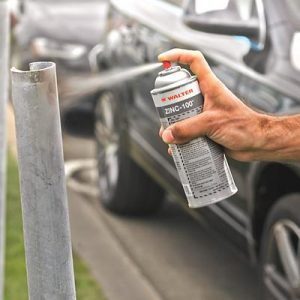
A 75 micron layer of ethyl silicate coating (rich in zinc) can preserve metal surfaces for years in harsh environmental conditions, whether humid, chemical or industrial, and the higher the humidity of the environment, the faster this paint dries and becomes barely needed. This coating can be used to protect metal structures in refineries, petrochemical and industrial plants, as well as in marine structures, and if the appropriate system is applied to it, the useful life of the structures can be increased.
Another outstanding feature of this paint is its resistance to temperatures up to 400 degrees Celsius, which makes it suitable for coating tanks and pipes containing hot fluids and installations exposed to high temperatures or internal surfaces in the vicinity of hot water.
Zinc Rich Proxy Primer is a three-component epoxy resin-based primer with excellent resistance to corrosion and humid environments. This coating is used to coat bridges, docks, water sluices, etc. and is known as Toosi.
Polyurethane coatings, as a polymer that is now completely replacing polyethylene coatings, have many advantages, such as high mechanical and chemical properties. Polyurethane coatings with 100% solids (the term solvent-free indicates that no solvents are used during the manufacture or application of these coatings) are an important member of the large family of polyurethane coatings.
Polyurethane paints are used to coat various types of steel pipes used in the oil, gas, petrochemical, water transportation and other industries.
Studies show that polyurethane coatings with 100% solids have better properties than other coatings and their corrosion resistance is high in most corrosive environments, so that the use of these coatings is highly recommended. The use of polyurethane coatings is not dangerous and they are in good condition in terms of safety.
The use of nanotechnology in paint increases the quality of paint, anti-corrosion properties and reduces its consumption. Nanotechnology helps this sector in two ways. One is in choosing the right materials in the paint and the other is in optimal painting methods.
Today, with the development of nanotechnology, water-based paints have also been affected by this. The excellent benefits of this type of paint have been doubled by applying this technology. These paints use water-dispersible resins with nano dimensions as well as nano-sized pigments and additives, which have resulted in better quality than conventional water-based paints.
Plastic and rubber coatings
In order to prevent corrosion and protect metals from acids, bases, solutions and corrosive gases, the surfaces of the desired metals are covered with a thick layer of plastic or rubber. Plastic coatings of vinyl or polyethylene are used in the form of various tapes to protect metal installations and underground pipelines.
One of the most stable plastics that has very high corrosion resistance in various chemical environments is tetrafluoroethylene or so-called Teflon (super plastic). In order to create a barrier and impermeable layer to protect the metal against corrosion attacks, the thickness of the coating should be about 3 mm. Due to the high cost of these types of coatings, they are usually not suitable for normal work unless the environment is highly corrosive.
Bituminous coatings, which are usually obtained from petroleum derivatives, are used alone or in combination with other materials (such as epoxies) in underground pipelines.
share :
MED Desalination Chemical Washing Steps — Implementation Guide
1404/12/02The three main enemies of cooling towers: scale, corrosion, biofouling
1404/11/29Can antifreeze also prevent the formation of deposits and corrosion?
1404/11/27What is a chiller and what are its types? A comprehensive guide to choosing the best cooling system
1404/11/20
Related Articles
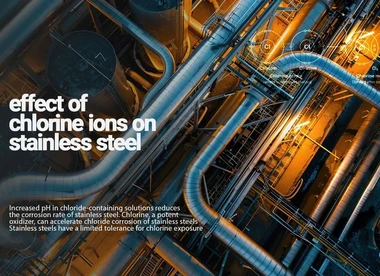
Effect of chlorine ions on stainless steels
The effect of chlorine and chloride parameters on the corrosion of stainless steels and the parameters affecting their corrosion rate, as well as the acceptable limits of chlorine ion levels in water and the differences in the effects of free chlorine and chloride on the corrosion of corrosion-resistant steels, are stated.
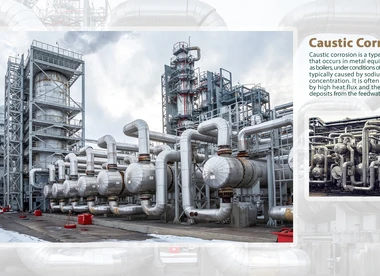
Caustic corrosion
Localized corrosion caused by the concentration of caustic or alkaline salts, which usually occurs under conditions of high evaporation or heat transfer. Caustic salt or caustic soda is one of the most widely used ionic compounds and is used in various industries including water treatment, cardboard and paper production, oil and refinery industries, aluminum production industries, food industries, alcohol production and glass.
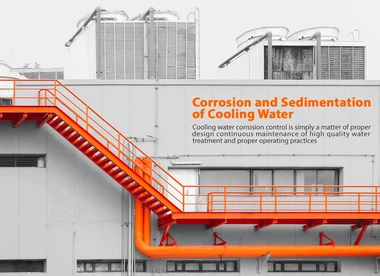
Corrosion and deposition of cooling water based on API 571
It refers to general or localized corrosion of carbon steels and other metals caused by dissolved salts, gases, organic compounds, or microbiological activity.
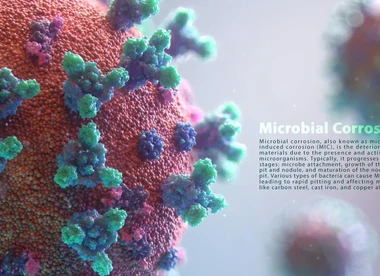
Microbial corrosion based on API 571
Microbial corrosion is a type of corrosion caused by living organisms such as bacteria, algae, or fungi. This type of corrosion is often associated with tubercles or slimy organic materials.
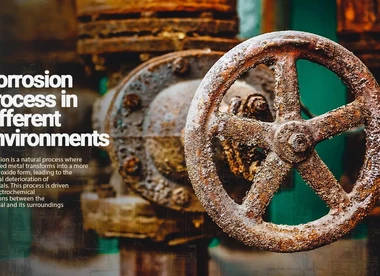
Corrosion process in different environments
Corrosion processes are divided into three groups in a more comprehensive classification: corrosion in aqueous solutions or environments, corrosion in molten salts and liquid metals, and corrosion in gases.
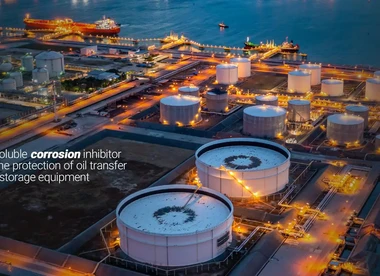
Oil-soluble corrosion inhibitor for the protection of oil transfer and storage equipment
Corrosion is a natural phenomenon that occurs as a result of the electrochemical reaction of metal with the surrounding environment. In the oil and gas industry, corrosion is one of the major problems that accounts for a huge amount of money annually. Part of these amounts are related to the corrosion of pipes or oil transmission lines. Effective ways to prevent corrosion of oil transmission and storage equipment are divided into two categories: physical and chemical solutions.

couponing
The coupon method or corrosion coupons is the simplest method of corrosion monitoring. Coupons are the oldest corrosion monitoring tool. Corrosion coupons are small pieces of metal or alloy of the material of interest that are immersed in the process medium and removed after a specified period of time and their weight or dimension loss is evaluated and examined.
Deaerators
Deaerators are mechanical devices that remove dissolved gases from the boiler feedwater. By reducing the concentration of oxygen and carbon dioxide in the solution, they minimize corrosion and protect the boiler from the effects of corrosive gases.
Submit your opinion
Your email address will not be published.