

MED Desalination Chemical Washing Steps — Implementation Guide
1404/12/02
The three main enemies of cooling towers: scale, corrosion, biofouling
1404/11/29
Can antifreeze also prevent the formation of deposits and corrosion?
1404/11/27
What is a chiller and what are its types? A comprehensive guide to choosing the best cooling system
1404/11/20
Amine unit antifoam

Introduction
Chemicals that cause instability and break the formed foams are known as defoamers, foam suppressants, or anti-foams. These materials are used to prevent foam production in various industries. In the chemical industries, anti-foam (defoamer) is used in the production of paper, paint, food, textiles, and pharmaceuticals. In other industries, anti-foams are important additives in production processes. Anti-foams not only help eliminate foam formation on the surface but also improve processes such as filtration, washing, extraction, distillation, evaporation, dehydration, drying, and separation.
In the oil, gas, and petrochemical industries, the removal of acid gases is of high importance. These gases are usually separated using physical or chemical solvents in absorption towers through the absorption process. The most common alkanolamines used in the absorption process are:
- Diethylene glycol amine
- Methyl ethanol amine
- Diethanol amine
- Methyl diethanol amine
Anti-Foam in Gas Sweetening Units
In a gas sweetening unit, impurities such as carbon dioxide and hydrogen sulfide (referred to as acid gases or sour gases) must be removed from natural gas. These gases cause corrosion of pipelines and equipment, making it essential to separate them from natural gas. This separation process is carried out in absorption towers using solvents like alkanolamines (such as methyl ethanol amine, diethanol amine, and methyl diethanol amine). Each molecule of these amines contains at least one hydroxyl group and one amino group, which aid in the absorption of acid gases.
Problems of Foam Formation in Gas Sweetening Processes
One of the main challenges in gas sweetening using amine compounds is foam formation. Foam is defined as the dispersion of gas in a liquid such that the majority of the environment is filled with gas, and the liquid exists as very thin layers between gas bubbles. Some of the key factors contributing to foam formation include:
- Suspended solid particles in amine
- Presence of organic acids in the incoming sour gas stream
- Injection of corrosion inhibitors in gas wells
- Hydrocarbons dissolved in amine
- Degradation products of amine, such as thiosulfates and volatile acids
- Soap-based greases used in refinery valves
The occurrence of foaming in a gas sweetening unit can lead to various known problems, such as amine loss, filter element replacement, and unplanned shutdowns. These issues can significantly impact the operational efficiency of an industrial unit and, consequently, its revenue.
Solution: Use of Anti-Foam to Reduce Foam
To prevent the problems caused by foaming, continuous injection of anti-foam into the amine solvent is a common solution in refineries. This material effectively helps reduce foaming intensity and is capable of breaking and collapsing foam within a short period. The industrial research company Abrizan, utilizing scientific expertise and high-quality raw materials, has developed and designed an anti-foam agent based on block copolymers of polyether glycols. This anti-foam agent has high thermal stability, is easy to apply and dilute, and prevents the formation of residue while enhancing the gas separation process.
Conclusion
To prevent foam production and reduce foaming tendency, anti-foam is continuously injected into the circulating amine system. Anti-foams are generally mixtures of liquids and solid particles and are categorized based on their primary structure into the following groups:
- Non-polar oils:Mineral oils and silicones
- Polar oils:Fatty alcohols, fatty acids, alkyl amines, and alkyl amides
- Solid particles incompatible with water:Refined silica, aluminum oxide, and polypropylene
Factors such as solubility, droplet size, presence of water-incompatible particles, environmental forces, repeated foaming, chemical competition of components, surface concentration of materials, types of soluble salts, and their concentration can affect the performance and efficiency of the anti-foam.
share :
MED Desalination Chemical Washing Steps — Implementation Guide
1404/12/02The three main enemies of cooling towers: scale, corrosion, biofouling
1404/11/29Can antifreeze also prevent the formation of deposits and corrosion?
1404/11/27What is a chiller and what are its types? A comprehensive guide to choosing the best cooling system
1404/11/20
Related Articles
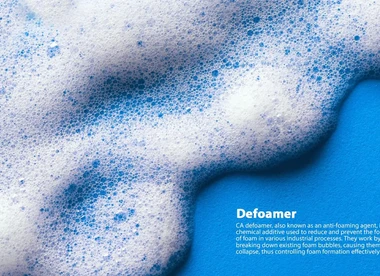
Defoamer and its classification
An antifoam or defoamer is a chemical additive that reduces and prevents the formation of foam in industrial process fluids. The terms antifoam and defoamer are often used interchangeably.
Antifoam unit of water desalination by thermal methods
The high surface tension of sea water and the high probability of formation of foam in MED and MSF systems are unpredictable. These foams are usually formed when organic compounds increase in salt water or brine.
All about antifoam and defoamer
Creating a floor can cause many problems and damages. Loss and overflow of edible materials, reduction in efficiency and speed of the process, reduction in the capacity of tanks and even stopping production are among the problems of foaming.
Submit your opinion
Your email address will not be published.