
Corrosion
Why is plain water not enough for home heating? — 4 scientific reasons
Plain water in the water heater causes deposits, corrosion, freezing, and boiling. How to prevent damage with specialized materials? A practical guide for the home

Industrial antifreeze and anti-boiler: A complete guide to protecting heating and cooling systems
Why are industrial antifreeze and anti-scaling agents essential for circulating systems? A comprehensive guide to preventing freezing, scalding, corrosion and deposits in boilers, chillers and engine rooms

Lithium Bromide Absorption Chillers: Application, Performance, and Maintenance Challenges
How do lithium bromide absorption chillers work? Why are they suitable for air conditioning systems? A comprehensive guide to their performance, benefits, limitations, and chemical maintenance.
Water Parameter Analysis: A Complete Guide to Water Quality Control in Industry and the Environment.
What is water parameter analysis? How to prevent scale and corrosion? Comprehensive physical, chemical and microbial guide + answers to common questions
Why do heat exchangers lose their efficiency over time?
What are the reasons for the reduction in efficiency of heat exchangers? A review of sedimentation, corrosion, biofouling, and practical solutions to restore the efficiency of industrial equipment.
Types of deposits and corrosion in boilers + accurate detection methods
Types of deposits and corrosion in boilers — calcium carbonate, sulfate, silica, iron oxide, oxygen corrosion, sub-deposition, alkaline. Accurate detection methods with XRD, SEM, ICP. Specialized services of Abrizan (Mitreh brand).
Why is it important to control sedimentation and corrosion in desalination devices؟
Why is scale and corrosion control vital in desalination plants? A technical and economic analysis of the impact of scale and corrosion on equipment performance, cost, and life. Warning signs and preventive measures. Suitable for engineers and industrial managers
Why do boilers experience reduced efficiency and safety hazards over time?
Boilers experience reduced efficiency and serious safety risks over time. In this comprehensive article, we examine the scientific and industrial causes of this phenomenon — including scale, corrosion, increased fuel consumption and the risk of pipe bursting — with real statistics. Abrizan’s specialized solutions to prevent these risks
EDI desalination plant (Electrodialysis)
EDI (Electrodialysis) Desalination — A Comprehensive Guide to Technology, Applications, Advantages and Disadvantages. Ultrapure Water Production Without Regeneration Chemicals. Applications in Pharmaceutical, Semiconductor and Power Plants. Pretreatment Requirements and Technical Challenges
MED water desalination plant
MED (Multiple Effect Distillation) Desalination Plant — Comprehensive Guide to Chemical Requirements, Sediment and Corrosion Control with Solutions from Abrizan Company (Mitreh Brand). Specialized Chemical Washing, Thermal Anti-Sedimentation, Laboratory Consulting, Increased Efficiency — Reduced Energy Costs

Metal plating
Plating is a process that increases corrosion resistance by forming a protective oxide layer on metal surfaces. This process is used in a variety of industries, including aerospace, automotive, medical, and construction, where the durability and longevity of metal equipment is of paramount importance.
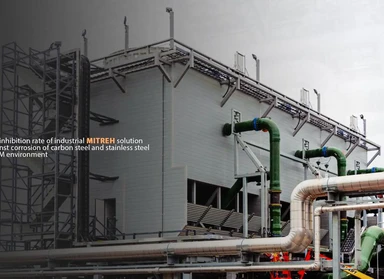
The inhibition rate of industrial mitreh solution against corrosion of carbon steel and stainless steel in DM environment
The aim of this study was to determine the effectiveness of industrial mitreh solution in reducing the corrosion rate of commonly used metals exposed to industrial water environments. The results showed that using mitreh solution significantly reduces the corrosion of metals made of plain carbon steel and stainless steel in DM water.
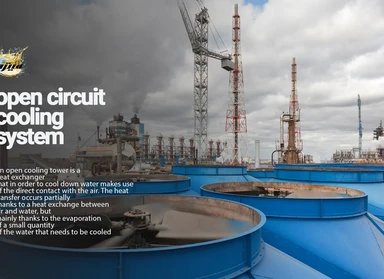
Efficiency of cold mitreh solution in removing scale from open circuit cooling systems
The purpose of this study was to investigate the effectiveness of Mitreh MDA0102 scale remover solution in industrial water environments according to NACE standards in two environments: calcium carbonate and calcium sulfate, and to compare it with acid washing. According to this study, this solution is a non-corrosive solution, unlike the solutions used in acid washing, which greatly increase corrosion. Also, the results of couponing indicated that the presence of Mitreh vector sediment solution will prevent further corrosion by forming a thin layer on the heat transfer surface.
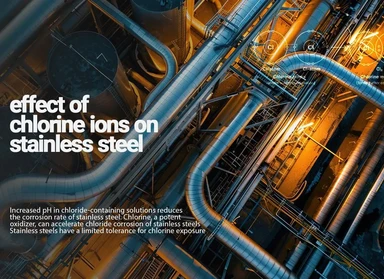
Effect of chlorine ions on stainless steels
The effect of chlorine and chloride parameters on the corrosion of stainless steels and the parameters affecting their corrosion rate, as well as the acceptable limits of chlorine ion levels in water and the differences in the effects of free chlorine and chloride on the corrosion of corrosion-resistant steels, are stated.
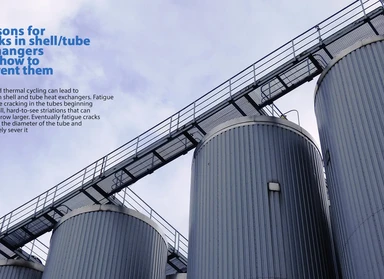
Reasons for cracks in shell/tube exchangers and how to prevent them
Analysis of the causes of cracks in the existing shell/tube exchanger and providing solutions to prevent similar incidents. The shell/tube exchanger is used to regulate the air temperature for drying granules in silos. Due to a leak in this exchanger after 5 years of operation, the tubes were separated from the shell and the tubesheet and tube areas were subjected to non-destructive inspections. It was found that many cracks had formed in the connection between the tubes and the tubesheet on the hot air inlet side, but no defects or discontinuities were observed on the air outlet side.
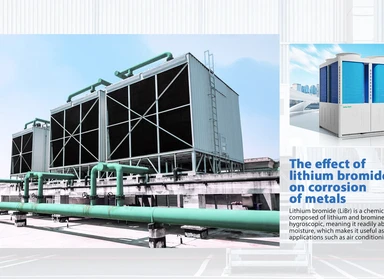
The effect of lithium bromide on corrosion of metals
The concentration of LiBr in solution can significantly affect the rate and severity of corrosion in metals. The concentration of lithium bromide can increase the corrosion rate, affect the pH of the solution, the formation of corrosion products, the solubility of oxygen, the effects of temperature, and also cause specific metal reactions.