


Chemical vs. Mechanical Washing in MED: Which Method is Better?

Is chemical MED cleaning better than mechanical cleaning?
Is your MED machine experiencing reduced efficiency, increased steam consumption or abnormal pressure? Internal fouling is likely to be the culprit — but what is the solution? Chemical or mechanical cleaning?
In this article, we will transparently examine the key differences between the two methods from a technical, economic and operational perspective. The goal: to help you choose the smartest solution to preserve the life of your equipment and optimize maintenance costs.
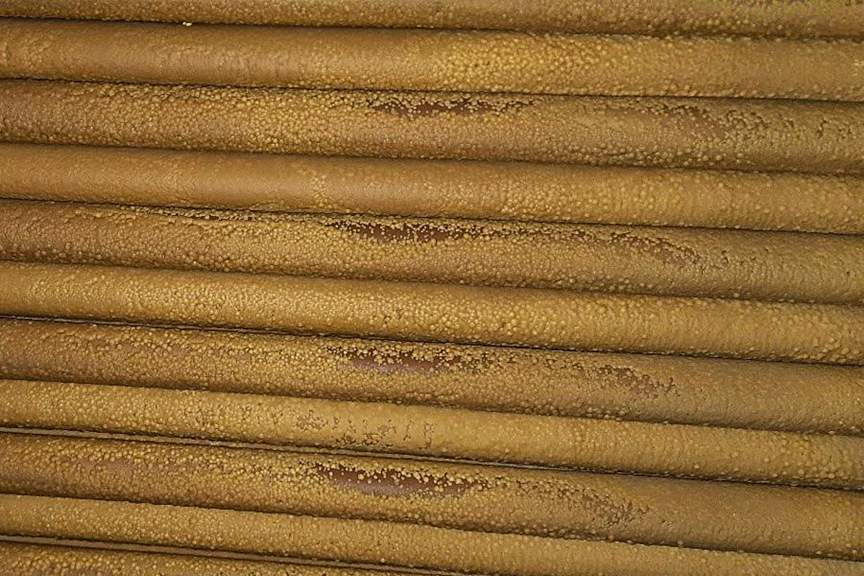

Why do MEDs scale easily?
MED (multi-effect) thermal desalination systems operate by heating graded water in a series of effects at reduced pressure. These relatively low temperature conditions (usually below 70°C) but continuous evaporation lead to the formation of deposits such as:
- Calcium carbonate (CaCO₃)
- Calcium sulfate (CaSO₄)
- Silicates
- Magnesium hydroxide (Mg(OH)₂)
These deposits settle on the surfaces of the heat transfer tubes and provide a natural thermal insulation. The result? Reduced heat transfer, increased energy consumption, and ultimately reduced produced fresh water flow.
Three main factors that exacerbate scaling in MED:
1. High feed water hardness
2. Longer maintenance-free operation periods
3. Lack of appropriate anti-scaling agents
Mechanical washing in MEDs: When is it appropriate?
Mechanical cleaning involves physically dismantling the units and using tools such as wire brushes, sand blasting, or high-pressure water jetting to remove hard layers.
Advantages of mechanical cleaning
- Removal of very hard and old layers that are no longer resistant to chemicals
- Ability to visually inspect and detect mechanical defects (such as holes or localized corrosion)
- No need for chemicals—suitable for units with severe environmental constraints
Major disadvantages of mechanical cleaning
- Requires complete system shutdown (typically 7 to 14 days)
- High labor and transportation costs
- Risk of physical damage to pipe surfaces (scratches → new corrosion initiation)
- Incomplete cleaning of inaccessible points (e.g., in bends or parallel pipes)
Common question: “Does mechanical cleaning solve the problem immediately?”
No. If the root cause of scale formation (e.g. feed water quality or lack of anti-scale agents) is not addressed, the scale will form again within a few months, this time at a faster rate.
Chemical cleaning in the MED system: the smart solution for preventive maintenance
In chemical cleaning, specialized solutions are used to dissolve the scale without opening the system. This process is usually carried out in a closed circuit: the solution circulates through the MED pipes via a pump and removes the scale in a controlled manner.
How does chemical cleaning work?
Modern formulations are based on mild acids + corrosion inhibitors + permeability agents. For example:
- Organic acids (such as glutaric or citric) to dissolve CaCO₃
- Chelating agents (such as EDTA) for sulfate scale
- Corrosion inhibitors to protect 316L stainless steel or titanium
These compounds are formulated to remove scale, not the underlying metal.
Key benefits
✅No disassembly required — system stays in place
✅Short turnaround time (typically 2-6 days)
✅Uniform cleaning of all circulation points
✅Ability to be implemented during scheduled maintenance periods
✅Reduced risk of physical damage to equipment
Potential challenges (and how to manage them)
Need for accurate scale type analysis:
Without knowing the scale composition, it is impossible to select the right solution.
→Solution: Laboratory analysis of scale samples before starting operations.
Risk of corrosion if unsuitable formulations are used
→Solution: Use of materials containing corrosion inhibitors with compatibility testing.
Limitation against very hard and old deposits
→Solution: Intelligent combination of chemical cleaning with a gentle mechanical step (e.g. pre-rinsing with medium pressure water)
Direct comparison: chemical vs. mechanical cleaning
Criteria | Chemical washing | Mechanical washing |
Stop time | 2-6 days | 7-14 days |
Needs disassembly | No | Yes |
Operating cost | Very low | Medium to high |
Risk of damage to equipment | Very low | Medium to high |
Cleaning in closed areas | Perfect | imperfect |
Ability to run periodically | Yes | No (only if completely stopped) |
Need for chemical expertise | Yes | No |
Key point: Chemical flushing is ideal for preventive maintenance and early scale management. However, in cases where scale is embedded in ceramic layers, a combination of both methods is sometimes necessary.
When to use which method? Decision-making guide
✅Use chemical flushing if:
- Freshwater flow reduction is less than 20%
- System still operates within acceptable pressure and temperature ranges
- A short-term shutdown is possible
- Sediment sampling and analysis have been performed
Consider mechanical flushing if:
- Deposits are so hard that even strong acids are not effective
- System has already suffered from under-deposit corrosion
- Concurrent NDT (non-destructive testing) is to be performed
Is chemical flushing suitable for all MED metals?
No — and this is where formulation selection becomes critical.
- 316L stainless steel: Fully compatible with mild organic acids and appropriate inhibitors.
- Titanium: Sensitive to mineral acids (e.g. HCl), but safe with chloride-free formulations.
- Copper and copper alloys: Require higher pH and specific inhibitors.
Never use a “generic” chemical solution for MED flushing. Each system requires a customized solution.
Frequently Asked Questions (FAQ)
Will chemical flushing corrode pipes?
No — if the formulation contains appropriate inhibitors and the pH is controlled. Compatibility tests are essential before implementation.
What is the difference between chemical flushing in MED and RO?
MED deals with mineral deposits (carbonates, sulfates), while RO deals more with biofilm and organic contaminants. Therefore, completely different chemicals are required.
Can we do this process ourselves?
Only if you have the necessary safety equipment, parameter monitoring software, and technical know-how. Otherwise, the risk of costly errors is high.
How many times a year should we flush?
It depends on the quality of the feed water. With effective anti-scale control, some units only need to be cleaned every 3–4 years.
Conclusion: Smart maintenance = long-term savings
Chemical and mechanical flushing are both valid tools — but their application areas are different.
In most cases, chemical flushing is the more efficient, safer, and more cost-effective solution for restoring the performance of MED devices, especially when done proactively and data-driven.
If you are still hesitating between the two methods, the first step is to collect a sediment sample and have it analyzed in the laboratory. Without this step, any decision will be a matter of chance.
If you need expert advice to identify the type of sediment or select the optimal chemical, Abrizan Company's specialists, with more than 20 years of experience in advanced laboratories, are ready to provide customized solutions to various industries.
share :
Related Articles
When is the best time to thermal desalination plant washing?
Signs of need for thermal desalination plant flushing (MED/MSF) + Data-based decision-making guide.

Common challenges in desalination plant maintenance and practical solutions
6 key challenges in power plant desalination plant maintenance + practical solutions to prevent power generation outages.
Types of deposits and corrosion in heat exchangers and identification methods
A comprehensive guide to identifying calcium carbonate, sulfate, silica, iron oxide, and MIC corrosion deposits in heat exchangers using XRD and SEM methods.
Step-by-step guide to chemical boiler cleaning — professional and safe execution
Step-by-step guide to chemical boiler cleaning in compliance with ASME standards, from system shutdown to final passivation. Safe and effective execution.
Warning signs that indicate the need for chemical cleaning of the heat exchanger
Has your heat exchanger lost its efficiency? 5 warning signs (increasing temperature, decreasing ΔT, high pressure, leakage, bad smell) + quick diagnosis checklist.
Comparison of boiler cleaning methods — chemical, mechanical or hydrojet
Which boiler cleaning method is best for you? A complete comparison of chemical, mechanical, and hydrojet methods in terms of cost, safety, time, and efficiency.
Signs of Needing Chemical Backwashing of RO Water Desalination — How to Know if an RO System is "Breathing"?
Is your RO system experiencing reduced water production, increased pressure, or reduced water quality? In this comprehensive article, we explore the 10 warning signs that your RO needs chemical flushing, with technical details, industry statistics, and practical guidance. Free consultation + free sediment sample analysis from your sink.
Signs of Need for Chemical Flushing of MED Water Desalination Plant - A Comprehensive Guide to Diagnosis, Analysis and Immediate Action
Signs of the need for chemical cleaning of MED water softeners — increased steam consumption, reduced water production, leaks, increased temperature. Guide to identifying the type of scale and specialized cleaning solutions by Abrizan (Mitreh brand).
Submit your opinion
Your email address will not be published.