

MED Desalination Chemical Washing Steps — Implementation Guide
1404/12/02
The three main enemies of cooling towers: scale, corrosion, biofouling
1404/11/29
Can antifreeze also prevent the formation of deposits and corrosion?
1404/11/27
What is a chiller and what are its types? A comprehensive guide to choosing the best cooling system
1404/11/20
Corrosion process

Introduction
Corrosion of metals is the process in which metals reach their original oxidation numbers. In fact, corrosion of metals is an oxidation-reduction reaction in which the metal is oxidized by its surroundings.
Typically, oxygen from the air plays the role of the oxidant in these processes. This reaction is also considered a popular and spontaneous reaction in terms of electrochemical reactions.
In other words, this process involves the formation of a galvanic cell in which the metal in question acts as the anode and usually corrodes or loses its function.
The corrosion process causes the deterioration or destruction of the metal. The most common example of corrosion is the formation of rust on steel. Most of the phenomena of the corrosion process are electrochemical in nature and consist of at least two reactions on the surface of the corroding metal.
One of the reactions is oxidation (e.g., dissolution of iron), also called partial anodic reaction. In this regard, tests are performed to measure the amount of iron in the water of the system (systems with circulating water, in boilers, etc.). By obtaining the amount of iron in the water, corrosion and rust, and consequently the formation of deposits in the system, can be prevented or minimized by using anti-corrosion solutions (corrosion inhibitors). Another is a reduction reaction (e.g., reduction of oxygen), also called partial cathodic reaction. The products of electrochemical reactions can react with each other in a non-electrochemical manner and form the final product (e.g., rust). For example, the corrosion of iron to form rust follows the general reaction:
2Fe + 2H2O → 2Fe(OH)2
This reaction involves the dissolution of iron, the reduction of oxygen, and the formation of rust:
Fe → Fe 2+ +2e- (anodic)
2H2O + O2 + 4e- → 4OH– (cathodic)
Fe 2+ + 2OH – → Fe(OH)2(chemical)
Types of Corrosion Process
Uniform Corrosion Process:
Uniform corrosion process is carried out by corrosion attack that is generally evenly distributed over a large area or part of the metal surface. Uniform corrosion causes material loss to failure. This is the most widespread form of corrosion observed.
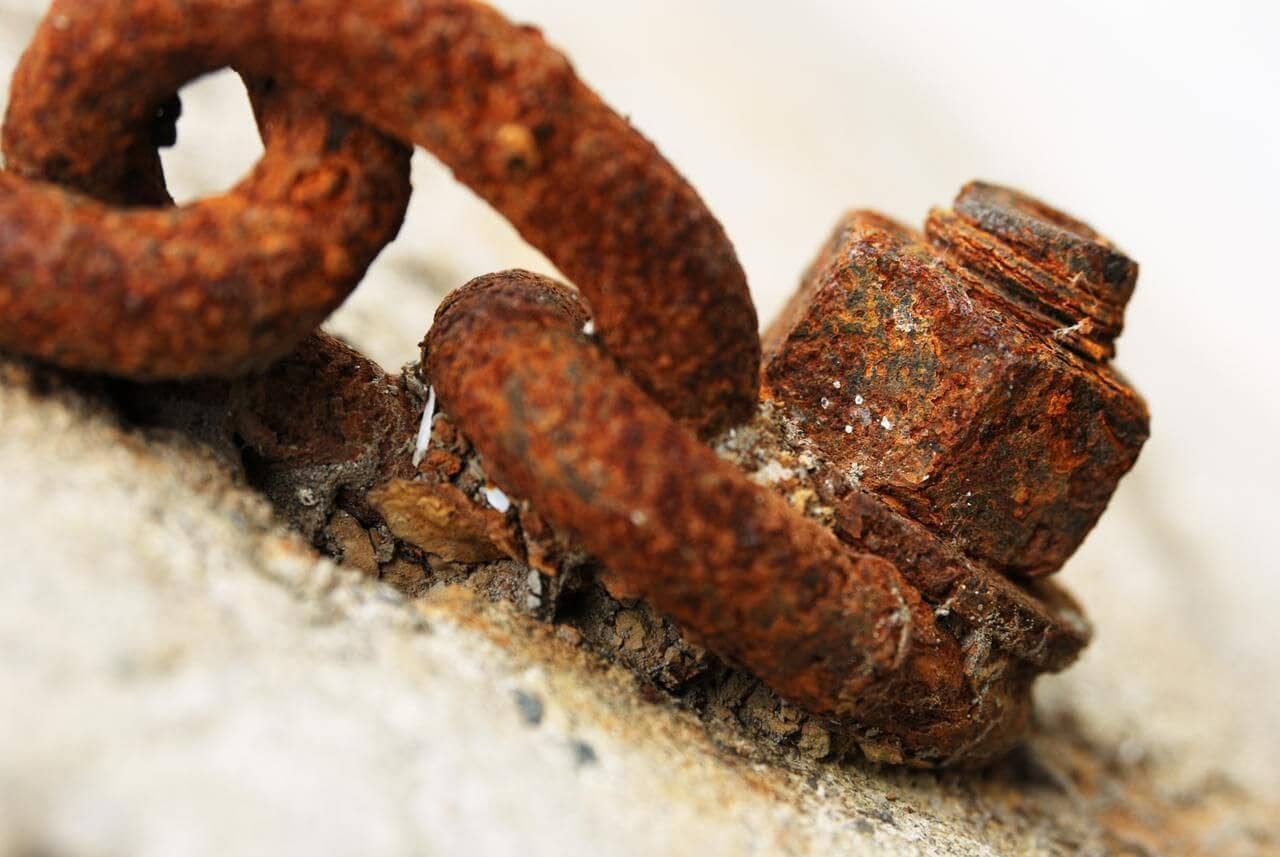
Pitturing Corrosion Process:
Pitturing corrosion process is a type of localized corrosion by which holes are produced in materials. Pitting corrosion damage is considered more dangerous than uniform corrosion because it is more difficult to predict. Corrosion products often cover the holes, which are often very difficult to detect. A small, narrow hole with minimal metal loss throughout can lead to complete failure of an engineering system.
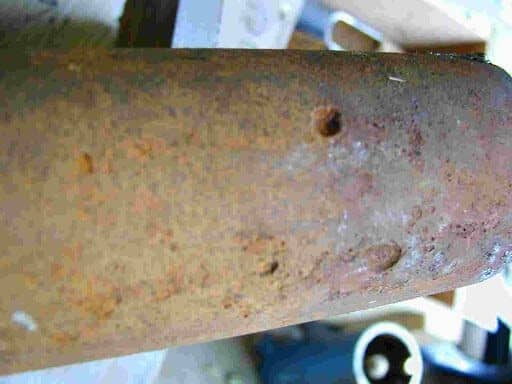
Crevice Corrosion Process:
Crevice corrosion process is a type of localized corrosion that occurs when a stagnant solution is present in a small (micro) gap. Local chemical changes in gaps (protective areas) such as those under gaskets, insulation materials, surface deposits, detached coatings, threads, flange connections, and fasteners can lead to crevice corrosion.
Galvanic Corrosion Process:
Galvanic corrosion refers to corrosion damage caused when two dissimilar materials are present in a corrosive electrolyte. Galvanic corrosion occurs when two (or more) dissimilar metals are electrically connected to water. When a galvanic couple is formed, one of the metals in the couple becomes the anode and corrosion occurs more rapidly than either alone, while the other becomes the cathode and corrosion occurs more slowly than either alone. Either (or both) metals in the couple may or may not corrode by themselves in seawater.
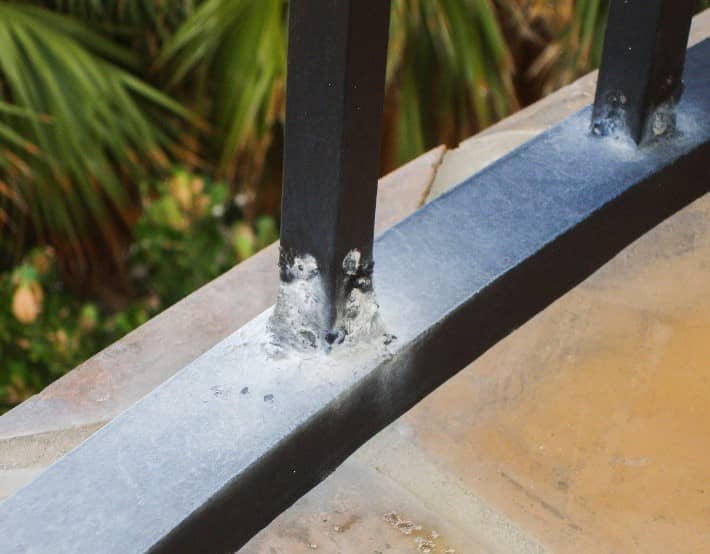
Microbiological Corrosion Process: (MIC)
Microbiological corrosion, or MIC, refers to corrosion caused by biological organisms or microbes. These microbes are classified based on common characteristics such as their byproducts (e.g., sludge production) or the compounds they affect (i.e., sulfur oxidizers). They all fall into one of two groups based on the amount of oxygen they require. One is aerobic (requires oxygen) such as sulfur-oxidizing bacteria and the other is anaerobic (requires little or no oxygen) such as sulfate-reducing bacteria.
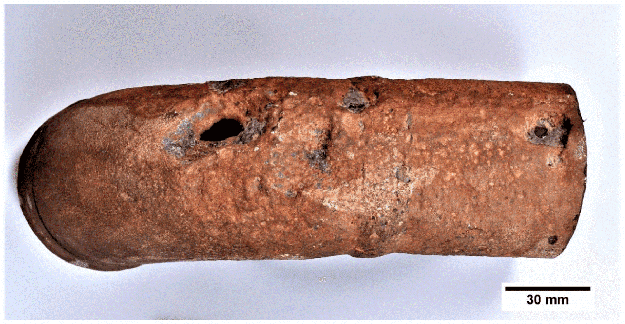
Conclusion
We can summarize the importance of corrosion in three words: economy, safety, and protection. If we do not prevent this phenomenon, heavy direct and indirect costs will be imposed on us. In addition to the economic aspects, the sudden destruction of structures due to various types of corrosion can endanger the lives of thousands of people. In general, in electrochemical reactions, two half-reactions take place simultaneously. In one reaction, electrons are produced and in the other, electrons are consumed. For a corrosion reaction to occur, we must have a complete electrochemical circuit. The elements that make up an electrochemical circuit include the cathode (electron consuming component), the anode (electron donating component), and the electron transfer path. In corrosion systems, the electron transfer path is the electrolyte, in other words, the corrosive environment. If any of these elements are not present, the corrosion process will not occur...
share :
MED Desalination Chemical Washing Steps — Implementation Guide
1404/12/02The three main enemies of cooling towers: scale, corrosion, biofouling
1404/11/29Can antifreeze also prevent the formation of deposits and corrosion?
1404/11/27What is a chiller and what are its types? A comprehensive guide to choosing the best cooling system
1404/11/20
Related Articles
Effect of chlorine ions on stainless steels
The effect of chlorine and chloride parameters on the corrosion of stainless steels and the parameters affecting their corrosion rate, as well as the acceptable limits of chlorine ion levels in water and the differences in the effects of free chlorine and chloride on the corrosion of corrosion-resistant steels, are stated.
Caustic corrosion
Localized corrosion caused by the concentration of caustic or alkaline salts, which usually occurs under conditions of high evaporation or heat transfer. Caustic salt or caustic soda is one of the most widely used ionic compounds and is used in various industries including water treatment, cardboard and paper production, oil and refinery industries, aluminum production industries, food industries, alcohol production and glass.
Corrosion and deposition of cooling water based on API 571
It refers to general or localized corrosion of carbon steels and other metals caused by dissolved salts, gases, organic compounds, or microbiological activity.
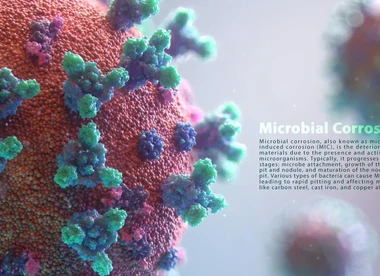
Microbial corrosion based on API 571
Microbial corrosion is a type of corrosion caused by living organisms such as bacteria, algae, or fungi. This type of corrosion is often associated with tubercles or slimy organic materials.
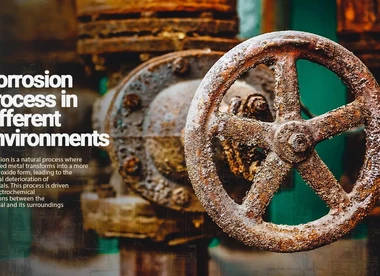
Corrosion process in different environments
Corrosion processes are divided into three groups in a more comprehensive classification: corrosion in aqueous solutions or environments, corrosion in molten salts and liquid metals, and corrosion in gases.
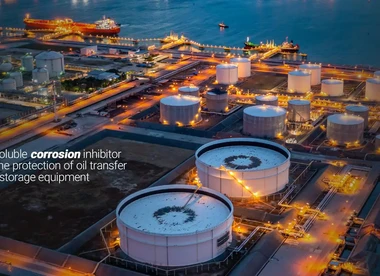
Oil-soluble corrosion inhibitor for the protection of oil transfer and storage equipment
Corrosion is a natural phenomenon that occurs as a result of the electrochemical reaction of metal with the surrounding environment. In the oil and gas industry, corrosion is one of the major problems that accounts for a huge amount of money annually. Part of these amounts are related to the corrosion of pipes or oil transmission lines. Effective ways to prevent corrosion of oil transmission and storage equipment are divided into two categories: physical and chemical solutions.

couponing
The coupon method or corrosion coupons is the simplest method of corrosion monitoring. Coupons are the oldest corrosion monitoring tool. Corrosion coupons are small pieces of metal or alloy of the material of interest that are immersed in the process medium and removed after a specified period of time and their weight or dimension loss is evaluated and examined.
Deaerators
Deaerators are mechanical devices that remove dissolved gases from the boiler feedwater. By reducing the concentration of oxygen and carbon dioxide in the solution, they minimize corrosion and protect the boiler from the effects of corrosive gases.
Submit your opinion
Your email address will not be published.