

MED Desalination Chemical Washing Steps — Implementation Guide
1404/12/02
The three main enemies of cooling towers: scale, corrosion, biofouling
1404/11/29
Can antifreeze also prevent the formation of deposits and corrosion?
1404/11/27
What is a chiller and what are its types? A comprehensive guide to choosing the best cooling system
1404/11/20
Warning signs that indicate the need for chemical cleaning of the heat exchanger

Introduction
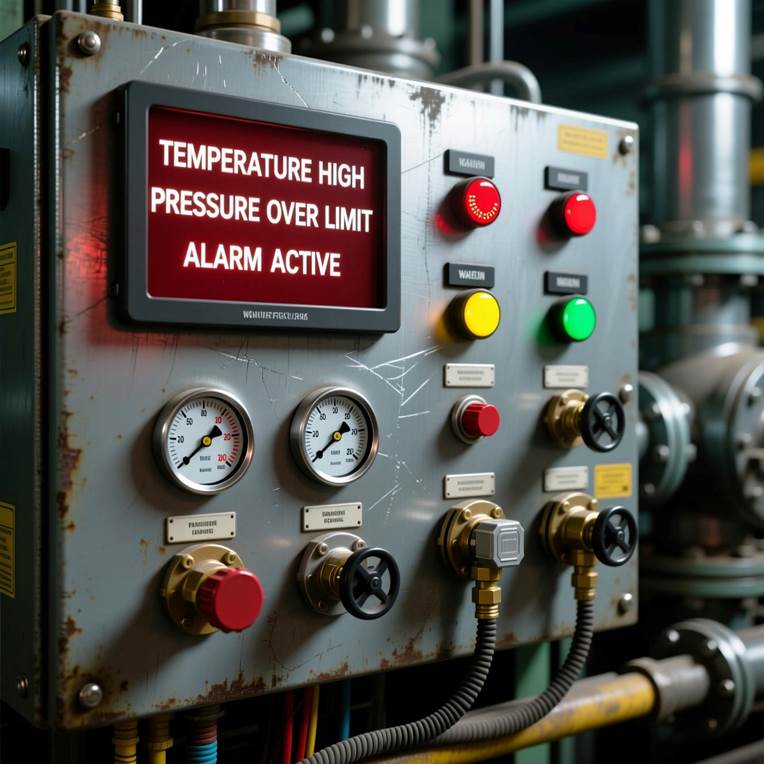
Have you recently noticed that your plant boiler is burning more fuel than before? Or the building chiller is no longer cooling as well as it used to? Perhaps the pressure of the circulating water pumps has suddenly increased or there is an unpleasant odor coming from your cooling tower system?
These are all warning signs that your heat exchanger needs an urgent chemical cleaning. Many facility managers do not take action until the system is completely out of order, while delaying timely cleaning greatly increases energy costs, repairs and production downtime.
⚡⚡⚡⚡⚡
✍️ In this article, we will examine, in a very practical and simple language, the five main signs that a heat exchanger needs chemical cleaning:
- Increased outlet temperature
- Decreased temperature difference (ΔT)
- Increased pressure
- Unexpected leaks
- Foul or unpleasant odor
We have also prepared a quick diagnosis checklist for you that you can use today. If you operate in an industry that uses heat exchangers, boilers, chillers, or water circulation systems, this article can reduce your operating costs by up to 30%.
Why is chemical cleaning of exchangers necessary?
Heat exchangers are the beating heart of many industrial processes. They transfer heat between two fluids — without them mixing. But over time, the internal surfaces of these equipment become contaminated (fouled).
Fouling includes:
- Mineral deposits (such as calcium carbonate)
- Corrosion layers
- Microbial biofilms
- Organic deposits or solid particles
These layers act as a thermal insulator and disrupt heat transfer. The result? The system has to work harder to perform as before, which means more energy consumption, premature wear and tear, and the risk of failure.
But the good news is: If detected in time, fouling can be fixed, and the best way is with specialized chemical cleaning.
The first sign: increased outlet or operating temperature
Why does the temperature rise?
In a healthy heat exchanger, the outlet temperature of the cooling fluid (such as water) is within a certain range. If this temperature increases continuously, it means that the heat is not being transferred properly.
Example:
In an industrial chiller, the outlet water temperature is usually between 10 and 12 °C. If this number reaches 16 °C or higher, it is an indication of reduced heat transfer.
What is the main cause?
- Layers of sediment or biofouling on the heat transfer surfaces
- Reduced water flow due to clogged channels
- Corrosion that causes surface roughness and reduced efficiency
Technical tip: Every 1 °C increase in the chiller outlet temperature can increase the compressor’s power consumption by 2–3%.
Second sign: Reduced temperature difference (ΔT)
What is ΔT and why is it important?
ΔT (Delta T) is the temperature difference between the inlet and outlet of a fluid in the exchanger. This number is one of the most important indicators of the health of the exchanger.
- In a chiller: The ΔT of the cooling water is usually 5–7 °C.
- In a boiler: The ΔT of the feed water may be 20–30 °C.
If this temperature difference decreases (e.g. from 6 °C to 3 °C), the fluid is absorbing or losing less heat and this is directly related to fouling.
Why does the ΔT decrease?
- Reduced water flow (due to clogging)
- Heat transfer surface covered with an insulating layer
- Incorrect flow distribution in the exchanger (e.g. short circuiting)
✅ Solution: Regularly check the ΔT in the operating reports. A decrease of more than 20% compared to the baseline requires immediate inspection.
Third sign: increased pressure or flow loss
High pressure = blocked channels!
When the pipes or channels of the exchanger are narrowed or blocked by scale, rust or biofilm, the pump must generate more pressure to maintain the same flow as before.
Symptoms:
- Increased Inlet Pressure
- Decreased Outlet Pressure
- Decreased Flow Rate
- Unusual noise from pump or transducer
How much of a pressure increase is worrisome?
- Increase in inlet pressure by more than 10–15% from baseline
- Flow rate reduction by more than 20% without changing pump settings
In an industrial study, it was found that just 3 mm of scale in 25 mm pipes increased pump pressure by 35%!
Sign Four: Unexpected Leaks
Leak = Last Warning Before Disaster!
Leaks in heat exchangers are usually a sign of advanced corrosion or mechanical damage. But why does corrosion occur?
- The presence of layers of deposits that cause Under-Deposit Corrosion
- Activity of corrosive bacteria (MIC – Microbiologically Influenced Corrosion)
- Use of inappropriate chemicals in washing or disinfection
Types of warning leaks
- Leaks between hot and cold fluids (e.g. water entering steam)
- Dripping from welded joints or seams
- Traces of unusual color or odor in the outlet fluid
⚠️Warning:Leaks in industrial exchangers not only waste resources, but can also pose serious health and safety risks, especially in the food or pharmaceutical industries.
Sign Five: Bad or unpleasant odor from the system
Bad odor = microbial activity!
If you smell a musty, rotten egg or muddy smell coming from your cooling tower system, chiller or even your water outlet, you may be dealing with advanced biofouling.
These odors are usually caused by:
- Sulfate reducing bacteria (SRB) that produce hydrogen sulfide (H₂S) gas
- Algae or fungus buildup in hot water systems
- Organic matter decomposition in wet pipes
Why should you take it seriously?
- A foul odor is a sign of active biofilm that causes microbial corrosion
- In cooling towers, it can lead to the growth of Legionella bacteria — the cause of deadly Legionnaires’ disease
- Reduced water quality and process fluid contamination
✅ Solution:Microbiological sampling + chemical flushing with dedicated biocides.
Checklist to quickly identify the need for chemical flushing
To help you, we’ve designed a 5-minute checklist. If more than 2 of the following are occurring in your system, it’s time for a chemical flush:
Number | Sign | Status (✓✗ / ) |
1 | Has the coolant outlet temperature increased by more than 10%? |
|
2 | Has the temperature difference (ΔT) decreased by more than 20%? |
|
3 | Has the pump inlet pressure increased by more than 15% or has the flow decreased? |
|
4 | Have you noticed any unexpected leaks or fluid traces? |
|
5 | Is there a foul, putrid, or rotten egg smell coming from the system? |
|
6 | Has energy consumption (fuel or electricity) increased by more than 10% in the last 6 months? |
|
✍️ Recommendation:Complete this checklist every 3 months and record the progress of changes.
When should you do a chemical flush?
Many people think that flushing is only necessary when the system fails. But the best time is before this stage is reached.
Recommended periods for preventive flushing:
System type | Recommended washing period |
Industrial boilers | Every 6–12 months |
Plate chillers | Every 12–18 months |
Shell and tube exchangers (refinery) | Every 18–24 months |
Cooling towers | Every 6 months + monthly disinfection |
Thermal water desalination plants | Every 3–6 months |
Of course, these periods vary depending on the water quality, temperature, pressure and type of process. The best way is to get expert advice and water analysis.
How is a professional chemical wash performed?
Abrizan Industrial Research Company, with over 20 years of experience, performs the chemical cleaning process in 5 stages:
Stage 1: Initial inspection and sampling
- System performance assessment (temperature, pressure, flow)
- Sampling of sediment, water and metal surface
Stage 2: Laboratory analysis
- XRD to identify sediment type
- Microbial testing to detect biofouling
- SEM-EDS to investigate corrosion
Stage 3: Custom formulation design
- Selecting the appropriate sediment carrier (acidic/non-acidic)
- Adding corrosion inhibitor
- Selecting biocide for biofouling
Stage 4: Performing circulating cleaning
- Connecting temporary circulating system
- Circulating solution for 4 to 12 hours
- Real-time pH, temperature and time control
Stage 5: Final cleaning and protection
- Water washing for neutralization
- Anti-corrosion injection after cleaning
- Performance report and periodic maintenance suggestion
All products used under the MITREH brand are manufactured and They comply with industry and global standards.
Case Study: Saving an Industrial Boiler with Timely Cleaning
In a chemical manufacturing plant in Isfahan, a 10-ton-hour boiler had the following problems after 14 months of operation:
- Outlet steam temperature 180 °C instead of 200 °C
- Gas consumption increased by 28%
- Feed water pressure 25% higher than normal
- Foul smell from the drain valve
Abrizan's actions:
- Analysis showed: Calcium carbonate sediment + bacterial biofouling
- Circular washing with a non-acidic solution of Mitreh
- Anti-corrosion injection of Mitreh
Results after 24 hours:
- Steam temperature returned to 200 °C
- 26% reduction in gas consumption
- Complete elimination of bad odor
- Preventing boiler tube replacement (saving millions of tomans)
⭐⭐⭐ On this page you can see some projects carried out by Abrizan Company. ⭐⭐⭐
❓❓❓ Frequently Asked Questions (FAQ) ❓❓❓❓
❓ Does chemical cleaning damage the tubes?
If done with the correct formulation and precise timing, no. Mitreh products contain corrosion inhibitors that protect metals.
❓ How do we know what type of deposit it is?
XRD testing in specialized Abrizan laboratories can perform this test in less than 48 hours.
❓ Is mechanical cleaning enough?
No. Mechanical cleaning only removes surface layers. Chemical cleaning also removes underlying layers and biofilms.
✅ Conclusion: Early detection = smart savings
The need for chemical cleaning of the heat exchanger cannot be seen with the naked eye, but your system warns you. Increased temperature, decreased ΔT, high pressure, leaks and bad odors all have a common language: “I need to be cleaned!”
If you ignore these signs, paying heavy costs is inevitable. But if you act on time, not only will the system’s efficiency be restored, but your equipment life, safety and profitability will increase.
✅ Take action today!
Complete the checklist in this article. If more than 2 items are positive, contact the experts at Abrizan Company.
Free consultation, sample analysis and custom solution design all to restore the “real heat” of your system.
share :
MED Desalination Chemical Washing Steps — Implementation Guide
1404/12/02The three main enemies of cooling towers: scale, corrosion, biofouling
1404/11/29Can antifreeze also prevent the formation of deposits and corrosion?
1404/11/27What is a chiller and what are its types? A comprehensive guide to choosing the best cooling system
1404/11/20
Related Articles
Chemical vs. Mechanical Washing in MED: Which Method is Better?
Which method is better for cleaning MED devices? Technical comparison, cost and risk of chemical vs. mechanical cleaning.
When is the best time to thermal desalination plant washing?
Signs of need for thermal desalination plant flushing (MED/MSF) + Data-based decision-making guide.

Common challenges in desalination plant maintenance and practical solutions
6 key challenges in power plant desalination plant maintenance + practical solutions to prevent power generation outages.
Types of deposits and corrosion in heat exchangers and identification methods
A comprehensive guide to identifying calcium carbonate, sulfate, silica, iron oxide, and MIC corrosion deposits in heat exchangers using XRD and SEM methods.
Step-by-step guide to chemical boiler cleaning — professional and safe execution
Step-by-step guide to chemical boiler cleaning in compliance with ASME standards, from system shutdown to final passivation. Safe and effective execution.
Comparison of boiler cleaning methods — chemical, mechanical or hydrojet
Which boiler cleaning method is best for you? A complete comparison of chemical, mechanical, and hydrojet methods in terms of cost, safety, time, and efficiency.
Signs of Needing Chemical Backwashing of RO Water Desalination — How to Know if an RO System is "Breathing"?
Is your RO system experiencing reduced water production, increased pressure, or reduced water quality? In this comprehensive article, we explore the 10 warning signs that your RO needs chemical flushing, with technical details, industry statistics, and practical guidance. Free consultation + free sediment sample analysis from your sink.
Signs of Need for Chemical Flushing of MED Water Desalination Plant - A Comprehensive Guide to Diagnosis, Analysis and Immediate Action
Signs of the need for chemical cleaning of MED water softeners — increased steam consumption, reduced water production, leaks, increased temperature. Guide to identifying the type of scale and specialized cleaning solutions by Abrizan (Mitreh brand).
Submit your opinion
Your email address will not be published.