

MED Desalination Chemical Washing Steps — Implementation Guide
1404/12/02
The three main enemies of cooling towers: scale, corrosion, biofouling
1404/11/29
Can antifreeze also prevent the formation of deposits and corrosion?
1404/11/27
What is a chiller and what are its types? A comprehensive guide to choosing the best cooling system
1404/11/20
Why is the use of general acids prohibited in boiler cleaning? (Danger of explosion and corrosion)

Short answer:Using general acids such as hydrochloric or sulfuric to clean boilers without specialized inhibitor additives leads to severe corrosion of the base metal, thinning of the pipe walls, stress cracks, and in extreme cases, boiler explosion. Specialized solutions "Mitreh" produced by Abrizan Company, with advanced formulations, dissolve deposits but at the same time prevent acid attack on carbon steel by creating a temporary protective layer and ensure complete safety of the equipment.
Introduction: When a cheap solution ends in an expensive disaster
Imagine that your industrial boiler has suffered a decrease in efficiency and an increase in body temperature after months of continuous operation. The signs are clear: descaling is necessary. At this moment, a dangerous temptation arises: "Why not use hydrochloric acid (salt essence) or sulfuric acid, which are cheap on the market?" Many technical managers choose this path due to the low initial cost, unaware that this decision could end the useful life of the boiler and even start a catastrophic safety incident.
Acid cleaning of boilers is a delicate surgical procedure, not a simple home cleaning. Common acids without advanced inhibitors do not distinguish between “hard deposits” and “sound boiler metal” and eat away at both at high speed. In this article, we will examine in detail the mechanisms of destruction caused by common acids and explain why specialized formulations from Abrizan Company under the “Mitreh” brand are the only safe and cost-effective solution in the long term.
If you are still not sure whether your boiler needs cleaning, we suggest you first read the article [Warning signs that your boiler needs chemical cleaning] to ensure that this action is necessary.
Mechanism of destruction: How do common acids destroy boilers?
To understand the danger, we need to understand the chemical reaction that occurs inside the boiler tubes. Boilers are mainly made of carbon steel. When a strong acid such as hydrochloric (HCl) or sulfuric (H2 SO4) enters the system, two simultaneous reactions occur:
1. Dissolving scale:The acid reacts with calcium carbonate and other salts and dissolves them (desired goal).
2. Attacking the base metal:The acid reacts with iron (Fe) to produce hydrogen gas and dissolve the metal (disaster!).
Fe + 2HCl → FeCl2 + H2
In the absence of powerful corrosion inhibitors, which are only found in specialized products, the rate of metal corrosion can increase by up to 10 times the normal rate. This means that within a few hours of flushing, millimeters of thickness can be lost from the boiler’s vital pipes.
Three Deadly Consequences of Using Common Acids
The use of crude acids in sensitive industries such as oil, gas and power plants carries three main risks:
- Uniform corrosion: Uniform thinning of the pipe walls, which reduces the permissible working pressure of the boiler.
- Pitting: The creation of deep, localized holes that are the starting points for sudden cracking and leakage. These holes are very difficult to detect after washing.
- Hydrogen Embrittlement: Hydrogen gas produced in the reaction of acid and iron penetrates the crystalline structure of the steel. This phenomenon causes the metal to become brittle and suddenly crack under pressure; a risk that may manifest itself months after washing and lead to a boiler explosion.
To learn more about the types of damage caused to the boiler, it is recommended to read the article [Types of deposits and corrosion in boilers].
Why are specialized solutions from Mitreh Awzhan safer?
The main difference is in the "selectivity". General acids act blindly, but Abrizan Hooshmand Company's specialized products are designed. Mitreh brand "Descaler" series scale solutions are a balanced combination of weakened organic and mineral acids along with a complete package of corrosion inhibitors, dispersants and neutralizers.
Key features of Mitreh technology in boiler cleaning
1. Passivation:The inhibitors in Mitreh's formulation form an invisible and protective molecular layer immediately after contact with a healthy metal surface. This layer prevents the acid from reaching the metal, but allows the acid to pass through the pores of the scale and dissolve it.
2. Hydrogen gas release control:Special catalysts in these solutions control the rate of hydrogen gas production and prevent it from penetrating the metal structure (hydrogen embrittlement).
3. Prevents redeposition:Unlike conventional acids that may re-deposit salts in other areas after dissolving the sediment, the dispersants in Abrizan products keep the dislodged particles suspended and remove them with the water flow.
4. Compatibility with various alloys:Modern boilers may have stainless steel or special alloy pipes. Hydrochloric acid is toxic to stainless steel (causing chloride stress corrosion), but non-chloride or controlled-formulation Mitreh solutions are fully compatible with these alloys.
With more than two decades of experience, Abrizan has developed products such as "mineral compound sediment removers" and "acid-based descalers" that are specifically designed for the harsh conditions of the oil, gas and petrochemical industries.
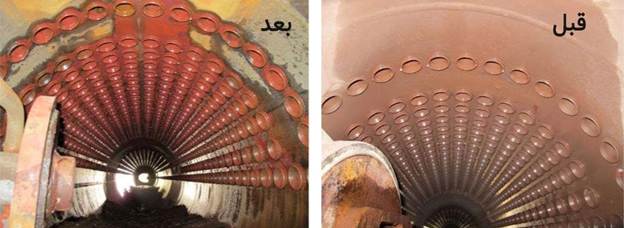
Technical Comparison: Crude Hydrochloric Acid vs. Dichlormethiazide
To clarify the matter, let's do a direct comparison:
Feature | Hydrochloric/Sulfuric acid (commercial) | Specialized De-Sclera Mitre Solution (Abrizan) |
Choosing | Attacks sediment and metal simultaneously | Selective attack only on sediment |
Corrosion rate | Very high (risk of pipe perforation) | Close to zero (NACE standard) |
Hydrogen danger | Excessive gas production and risk of explosion/cracking | Controlled and safe |
Damage to steel | Severe corrosion for stainless steels | Completely safe for all types of alloys |
Need to neutralize | Complex and costly (requires high corrosive benefits) | Built-in buffers, easy to neutralize |
Environmental waste | Very dangerous and acidic | Recyclable and environmentally friendly |
Final cost | Low (purchase) but very high (repairs) | Optimal (capital preservation and life extension) |
As you can see, a small saving on the purchase of ordinary acid can lead to heavy costs of replacing pipes, long-term downtime of the production line, and even fatalities. To better understand the different cleaning methods and the location of chemical washing, do not miss the article [Comparison of Chemical, Mechanical, and Hydrojet Boiler Washing Methods].
Safe Steps for Boiler Washing with Abrizan Products
Successful chemical washing does not only depend on good chemicals; it also requires the correct implementation of the process. Abrizan specialists carefully implement these steps by providing consulting and monitoring services:
1. Initial Analysis and Detection of the Type of Deposit
Before any action, a sample of the deposit is taken and analyzed in Abrizan's advanced laboratory. Is the deposit carbonate, silicate, sulfate, or iron oxide? The selection of the type of descaler is made based on this analysis. (View project: [Smart Descaling of Boiler 101F, 10th South Pars Gas Refinery])
2. Dose calculation and dilution
Based on the volume of the circuit and the amount of sediment, the exact concentration of the Mitreh solution is calculated. Using a concentration that is too low is ineffective and too high (even with an inhibitor) may increase the risk.
3. Solution injection and circulation
The solution is circulated in the boiler circuit with special pumps. At this stage, the temperature and pH are carefully monitored. Unlike conventional acids that have intense and uncontrollable exothermic reactions, Mitreh solutions create a mild and controlled reaction.
4. Real-time monitoring of acid and iron ion concentrations
By continuously measuring the iron ion in the solution, the end of the washing is determined. When the iron concentration remains constant, it means that all the sediment has dissolved and continuing the process will only damage the metal.
5. Neutralization & Final Flushing
After the work is completed, the remaining acid is neutralized with special neutralizing agents (often included in the Abrizan package) and then the system is flushed with clean water until no trace of acid remains.
6. Final Passivation
This is the most important step that is often overlooked in non-specialized cleaning. After the scale is removed, the metal surface is very active and susceptible to immediate rusting. Using Abrizan's "post-scale passivation" agents, a protective oxide layer (stable magnetite) is formed on the metal surface, which protects the boiler until it is restarted.
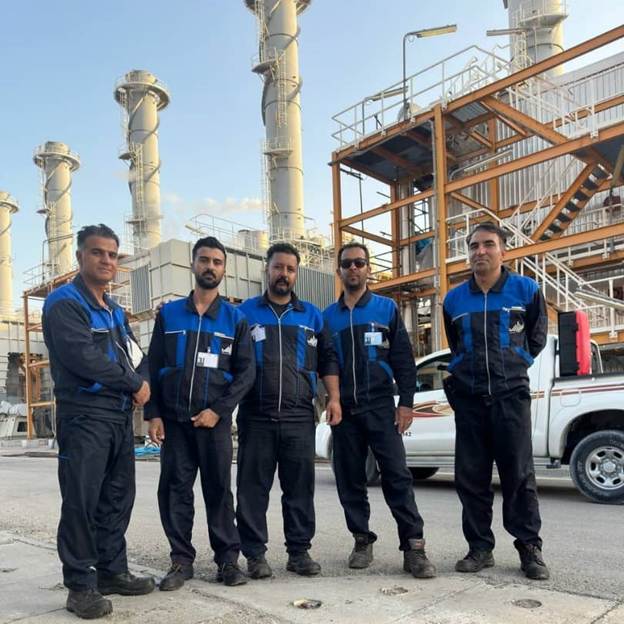
An example of the successful implementation of this complex process can be seen in the project [Specialized cleaning of boilers at the Fajr Jam gas refinery], where the sensitivity of the gas equipment required that the slightest error not occur. Also, the [South Pars 9th Refinery Reboiler Descaling] project demonstrates Abrizan's ability to manage complex hydrocarbon-mineral deposits in sensitive refinery equipment.
Frequently Asked Questions (FAQ) about Acid Boiler Cleaning
1. Can regular salt water be used to clean a domestic or small industrial boiler?
No. Even on a small scale, hydrochloric acid without an inhibitor will quickly corrode the tank and pipes, and the hydrogen gas produced is explosive. Always use standard and safe acid cleaners.
2. What is the main difference between Mitreh Descaler and other foreign brands?
Mitreh products are formulated by the Iranian water treatment company, Daneshbonyan Abrizan, to suit the quality of water and the type of deposits specific to Iran (which often have high hardness and specific salts). In addition to being equal to or higher in efficiency than foreign models, they offer faster access and more accurate laboratory technical support.
3. How long does it take to clean a boiler?
This time depends on the thickness of the deposit and its type, but usually takes between 4 and 12 hours. Using strong acids may shorten the time, but greatly increases the risk of damage to the metal. Mitreh products provide an optimal balance between speed and safety.
4. Does chemical flushing cause leaks in old pipes?
If pipes are already weakened by under-deposit corrosion, hidden leaks may become apparent after the deposits are removed. This is not the fault of the chemicals, but rather an indication of previous damage. Using common acids will accelerate this degradation process and seal the leak, while the principled method with Mitreh puts the least stress on the metal. For more information on the causes of boiler life loss, read the article [Why Boilers Lose Efficiency Over Time and Become Safety Hazards].
5. How is the waste from flushing disposed of?
The wastewater from flushing with Mitreh products is easier and less expensive to treat and dispose of in accordance with environmental standards because it contains neutralizing agents and does not contain excess heavy metals (caused by severe corrosion). For more information about the causes of reduced boiler life, read the article [Why Boilers Become Less Efficient and Have Safety Risks Over Time].
Conclusion: Boiler Safety is an Investment, Not a Cost
Boiler cleaning is an unavoidable necessity to maintain industrial efficiency and safety. But the choice of tools for this task determines the line between successful maintenance and a financial and human disaster. Common acids such as hydrochloric and sulfuric are double-edged swords that, without advanced inhibitors, target the beating heart of your industry (boiler) rather than damaging the scale.
Specialized products of the “Mitreh” brand from Abrizan Company, based on more than 20 years of experience in the water, oil and gas industries, offer a comprehensive, safe and economical solution. These solutions not only clean stubborn scale, but also extend the life of your equipment with advanced protection mechanisms and prevent risks such as pipe bursts and explosions.
Remember that the cost of buying a cheap chemical is insignificant compared to the cost of replacing a boiler or stopping a production line. Choose wisely and do not sacrifice safety for false savings.
Need expert advice?
> If you need expert advice to identify the type of scale or to select the optimal chemicals, Abrizan experts with over 20 years of experience in advanced laboratories are ready to provide customized solutions to various industries. By carefully analyzing your samples, we recommend the best combination of anti-scale, anti-corrosion and descaler products for your specific boiler conditions.
share :
MED Desalination Chemical Washing Steps — Implementation Guide
1404/12/02The three main enemies of cooling towers: scale, corrosion, biofouling
1404/11/29Can antifreeze also prevent the formation of deposits and corrosion?
1404/11/27What is a chiller and what are its types? A comprehensive guide to choosing the best cooling system
1404/11/20
Related Articles
Chemical vs. Mechanical Washing in MED: Which Method is Better?
Which method is better for cleaning MED devices? Technical comparison, cost and risk of chemical vs. mechanical cleaning.
When is the best time to thermal desalination plant washing?
Signs of need for thermal desalination plant flushing (MED/MSF) + Data-based decision-making guide.

Common challenges in desalination plant maintenance and practical solutions
6 key challenges in power plant desalination plant maintenance + practical solutions to prevent power generation outages.
Types of deposits and corrosion in heat exchangers and identification methods
A comprehensive guide to identifying calcium carbonate, sulfate, silica, iron oxide, and MIC corrosion deposits in heat exchangers using XRD and SEM methods.
Step-by-step guide to chemical boiler cleaning — professional and safe execution
Step-by-step guide to chemical boiler cleaning in compliance with ASME standards, from system shutdown to final passivation. Safe and effective execution.
Warning signs that indicate the need for chemical cleaning of the heat exchanger
Has your heat exchanger lost its efficiency? 5 warning signs (increasing temperature, decreasing ΔT, high pressure, leakage, bad smell) + quick diagnosis checklist.
Comparison of boiler cleaning methods — chemical, mechanical or hydrojet
Which boiler cleaning method is best for you? A complete comparison of chemical, mechanical, and hydrojet methods in terms of cost, safety, time, and efficiency.
Signs of Needing Chemical Backwashing of RO Water Desalination — How to Know if an RO System is "Breathing"?
Is your RO system experiencing reduced water production, increased pressure, or reduced water quality? In this comprehensive article, we explore the 10 warning signs that your RO needs chemical flushing, with technical details, industry statistics, and practical guidance. Free consultation + free sediment sample analysis from your sink.
Submit your opinion
Your email address will not be published.