

MED Desalination Chemical Washing Steps — Implementation Guide
1404/12/02
The three main enemies of cooling towers: scale, corrosion, biofouling
1404/11/29
Can antifreeze also prevent the formation of deposits and corrosion?
1404/11/27
What is a chiller and what are its types? A comprehensive guide to choosing the best cooling system
1404/11/20
The importance of industrial design in corrosion prevention

Industrial Design
The engineer who designs industrial machinery and equipment plays an important role in reducing the staggering costs of corrosion. A designer must:
- Be aware of the technical support available to him.
- Have a sound policy in determining the appropriate materials.
- Be able to select cost-effectively from a variety of corrosion control methods for the intended application.
Large factories, especially in the oil, gas and petrochemical industries, have engineering groups that have materials at their disposal, and these experienced engineers work directly with designers to reduce corrosion.
Materials engineers have a good understanding of the processes and corrosion problems that exist in manufacturing plants. They rush to the designers to advise on design problems. The designer, who in turn works with the materials engineering expert in solving problems, must have sufficient information about corrosion. The main issue is to prevent corrosion at "design time" and before the plant is built.
The designer should review past experience and then consider safety and economic considerations based on the material's ability to perform the job in question. The most suitable material is not necessarily the most expensive or the cheapest. For example, if all the equipment in a particular application were made of platinum, corrosion problems would be minimal.
Of course, a plant made of platinum would be very expensive. Design engineers should use the best possible materials for the specific application. The clear concept of optimum is that the material will perform safely and properly at the lowest cost.
Following proper design principles can control corrosion to a great extent. Important points to consider in design include: the possibility of easy replacement of parts exposed to corrosion, the greater use of welding instead of riveting, consideration of the contribution of corrosion (especially uniform specific corrosion), elimination of stress concentration (especially in alloys sensitive to stress cracking), elimination of sharp fluid movement angles (especially at high speeds), uniformity of thermal gradient, avoidance of using metals with high potential differences in connection, prevention of oxygen or substances effective in corrosion to the environment as much as possible, proper design of the discharge system in tanks, elimination of fluid stagnation areas, non-use of porous materials such as wood and asbestos, avoidance of high speeds for fluids, and the possibility of continuous inspection in tanks.
Corrosion control is one of the most important concerns of engineers in an industrial unit. For this reason, some designs are carried out based on corrosion calculations and its control. In the design method based on the corrosion rate, the problems that may arise when using a system related to corrosion will be examined more closely. This method has ten steps, each of which is related to corrosion control in some way. These ten steps are:
Step 1: Determine the environment
Step 2: Determine the materials
Step 3: Determine the initial and secondary conditions
Step 4: Determine the critical states
Step 5: Determine the defects and activity levels
Step 6: Create a statistical model
Step 7: Accelerated tests
Step 8: Predict
Step 9: Monitor, evaluate and feedback
Step 10: Correct
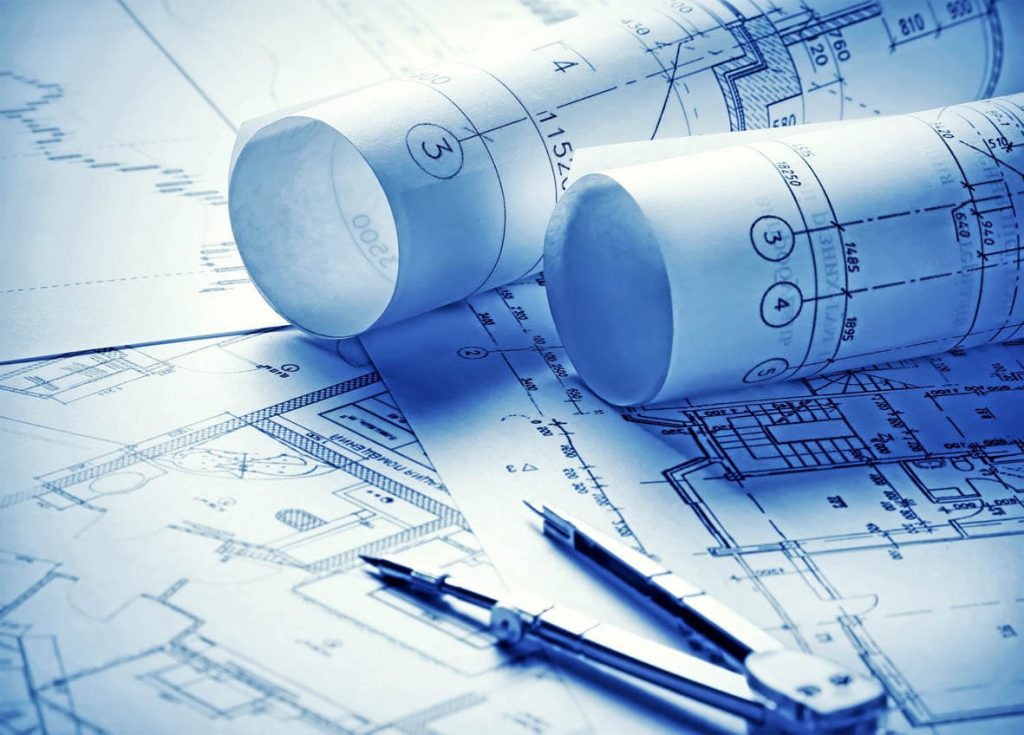
The development of such a method may only partially illustrate the importance of corrosion control. In any case, in industrial units that are becoming larger and more mechanized every day, the cost of repairs and maintenance of equipment is an important factor in their profitability. The parallel development of technologies and skills in these methods is leading to the use of maximum reliability and minimum damage.
In addition, the life of a system depends on its maximum design life, which means that a system cannot operate continuously and forever. The system must be optimized for normal operation and problems, meaning that if the system is damaged by the failure of a component, it must operate in a way that causes the least damage to the operation of the system. For example, it must be easy to replace components that are damaged from time to time.
share :
MED Desalination Chemical Washing Steps — Implementation Guide
1404/12/02The three main enemies of cooling towers: scale, corrosion, biofouling
1404/11/29Can antifreeze also prevent the formation of deposits and corrosion?
1404/11/27What is a chiller and what are its types? A comprehensive guide to choosing the best cooling system
1404/11/20
Related Articles
Effect of chlorine ions on stainless steels
The effect of chlorine and chloride parameters on the corrosion of stainless steels and the parameters affecting their corrosion rate, as well as the acceptable limits of chlorine ion levels in water and the differences in the effects of free chlorine and chloride on the corrosion of corrosion-resistant steels, are stated.
Caustic corrosion
Localized corrosion caused by the concentration of caustic or alkaline salts, which usually occurs under conditions of high evaporation or heat transfer. Caustic salt or caustic soda is one of the most widely used ionic compounds and is used in various industries including water treatment, cardboard and paper production, oil and refinery industries, aluminum production industries, food industries, alcohol production and glass.
Corrosion and deposition of cooling water based on API 571
It refers to general or localized corrosion of carbon steels and other metals caused by dissolved salts, gases, organic compounds, or microbiological activity.

Microbial corrosion based on API 571
Microbial corrosion is a type of corrosion caused by living organisms such as bacteria, algae, or fungi. This type of corrosion is often associated with tubercles or slimy organic materials.
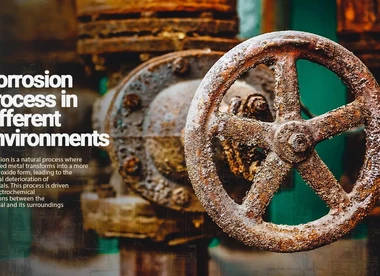
Corrosion process in different environments
Corrosion processes are divided into three groups in a more comprehensive classification: corrosion in aqueous solutions or environments, corrosion in molten salts and liquid metals, and corrosion in gases.
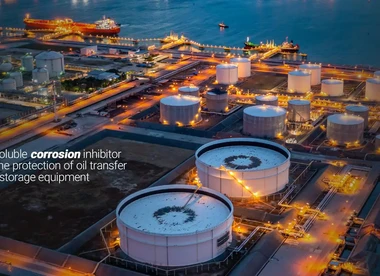
Oil-soluble corrosion inhibitor for the protection of oil transfer and storage equipment
Corrosion is a natural phenomenon that occurs as a result of the electrochemical reaction of metal with the surrounding environment. In the oil and gas industry, corrosion is one of the major problems that accounts for a huge amount of money annually. Part of these amounts are related to the corrosion of pipes or oil transmission lines. Effective ways to prevent corrosion of oil transmission and storage equipment are divided into two categories: physical and chemical solutions.

couponing
The coupon method or corrosion coupons is the simplest method of corrosion monitoring. Coupons are the oldest corrosion monitoring tool. Corrosion coupons are small pieces of metal or alloy of the material of interest that are immersed in the process medium and removed after a specified period of time and their weight or dimension loss is evaluated and examined.
Deaerators
Deaerators are mechanical devices that remove dissolved gases from the boiler feedwater. By reducing the concentration of oxygen and carbon dioxide in the solution, they minimize corrosion and protect the boiler from the effects of corrosive gases.
Submit your opinion
Your email address will not be published.