
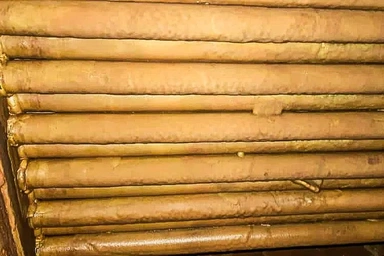
Pictures before deposition
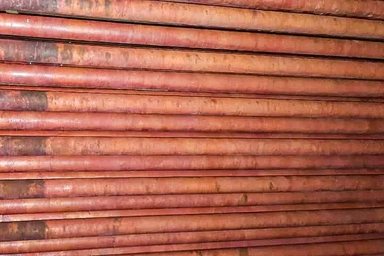
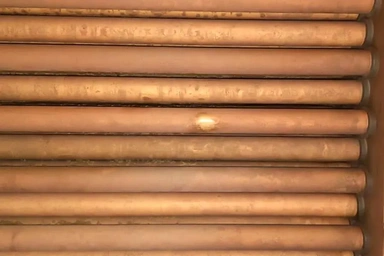
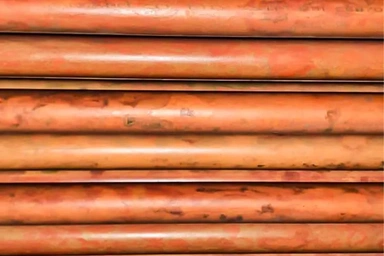
Pictures after sediment removal
Descaling of MED desalination plant in Assaluyeh with Mitreh Sard 0102 formulation
A severe reduction in water delivery in MED desalination systems due to the accumulation of scale due to continuous operation is one of the most common challenges in the petrochemical industry. In the implementation project of the Abrizan in the Assaluyeh joint facility (Phases 17 and 18, Package No. 2), this problem was completely resolved in just 6 days using Mitreh Sard 0102 scale removal solution, and the nominal capacity of the system was restored.
Why did the MED system in Assaluyeh experience a decrease in water delivery?
Multistage evaporation (MED) systems, under long-term and non-stop operating conditions, are prone to the accumulation of mineral deposits—especially calcium carbonate, calcium sulfate, and silica—on the surface of the heating tubes of the first effects. These sediment layers:
- Severely reduce the heat transfer coefficient (HTC).
- Disrupt the temperature and pressure in the subsequent effects.
- Ultimately, they lead to a 30 to 50 percent reduction in water delivery—as occurred in the Asaluyeh Package 2.
Abrizan Solution: Targeted Flushing with Cold Mitreh 0102
After laboratory confirmation of the type of deposit and review of operational data, Abrizan’s specialized team implemented a chemical flushing protocol with Cold Mitreh 0102—a non-acidic, anti-corrosive formulation. This solution has the following key features:
- Suitable for removing carbonate and sulfate deposits at low temperatures (without the need to heat the system).
- Compatible with carbon steel and brass—common materials in MED systems.
- Can be used in circulation mode without damaging the fittings or gaskets.
The flushing process was carried out over 6 days with precise control of pH, concentration, and duration. The before and after images clearly show the high volume of deposits removed from effects one and two.
Why is choosing the right chemical solution critical?
Many units use strong acids such as HCl to save time—but this is dangerous in MED systems:
- Hydrochloric acid can severely damage copper pipes.
- If not properly neutralized, post-cleaning corrosion occurs.
- Silica deposits are not dissolved by acid and require specialized formulations.
In contrast, Cold Mitreh 0102 combines chelating agents and pH-stable buffers to both dissolve the deposit and prevent corrosion.
Is this method generalizable to other MED units?
Yes. The process is fully customizable:
- The deposit type is identified by XRD analysis or solubility testing.
- The Mitreh formulation is customized based on the seawater composition and operating temperature.
- The time and number of cycles are optimized based on the severity of the deposit.
Conclusion: Preventing Unplanned Shutdowns with Chemistry
Chemical flushing in desalination systems is not just “cleaning”—it’s about managing the life of your industrial assets. With Abrizan solutions, you can maintain the efficiency of your MED systems and reduce operating costs without prolonged downtime.
If you need expert advice to identify the type of scale or the optimal selection of chemicals, Abrizan’s experts, with over 20 years of experience in advanced laboratories, are ready to provide customized solutions to various industries.
share :