

Why do industrial systems require anti-freeze/coolant in the summer?
1405/03/02
Cooling Tower Chemical Cleaning Steps — Implementation Guide
1405/02/07
Types of sediments in RO systems and methods for identifying them
1405/02/05
Benefits of using specialized solutions from Abrizan Company for MED
1404/12/09
MED water desalination plant

MED is a thermal technology — but its downfall is chemical
In this expert guide, we cover everything about MED desalination — from how it works and its benefits to chemical challenges, scale control, and corrosion — in simple, actionable language. We also show you how to increase efficiency, reduce costs, and extend equipment life.
Why read this article?
✅ A deep understanding of how MED desalination works
✅ A detailed look at its chemical challenges — scale, corrosion, and reduced efficiency
✅ A look at the industries that use MED the most and why
✅ Specialized solutions for scale control, corrosion, and chemical flushing of pipes and evaporators
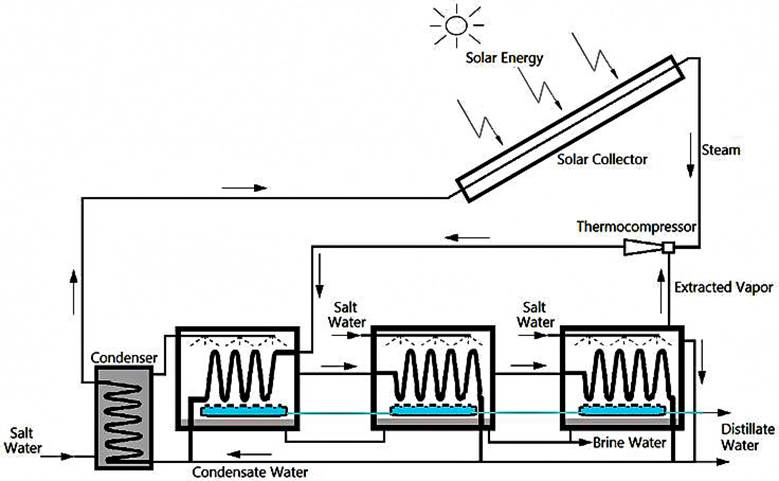
What is MED Desalination?
MED stands for Multi-Effect Distillation. A thermal technology that uses brackish or saline water to produce very high quality fresh water.
How MED Desalination Works
- The brine is heated and evaporated in the first effect (Effect) using external steam or heat recovery.
- The steam produced enters the next effect (which operates at a lower pressure and temperature) where it condenses and gives up its latent heat to the water in the next stage.
- This process is repeated in 3 to 14 effects, and at each stage, fresh water (condensate) is collected.
- Key advantage: Energy savings, as the heat from the steam in each stage is used in the next stage.
Benefits of MED Desalination — Why is it used in large industries?
Very high outlet water quality (TDS < 10 ppm)
- Suitable for feeding high-pressure boilers, pharmaceutical and semiconductor industries
Ability to connect to cheap heat sources (e.g. power plants)
- In refineries and thermal power plants, they use excess steam or recycled hot water, without the need for additional fuel consumption.
High tolerance to changes in inlet water quality
- Unlike RO desalination, it is not sensitive to inlet water quality. Even if there is high TDS or temporary contamination.
Long equipment life (20+ years)
- With proper chemical maintenance, MED systems can operate for more than two decades without major replacement.
No need for membranes or filtration media
- There are no membranes to remove or replace. Reduced replacement costs.
Chemical Challenges of MED Desalination
1- Scale formation in evaporator tubes and condensers
- Formation of calcium carbonate, calcium sulfate, silica, and magnesium hydroxide on hot surfaces → Reduced heat transfer → Increased energy consumption
2- Corrosion in hot and wet sections
- Acidic corrosion (at low pH) or alkaline corrosion (at high pH) in tubes and chambers — especially in the presence of chlorides
- Galvanic corrosion at the junction of different metals
3- Decreased efficiency over time
- Without chemical control, system efficiency decreases by up to 30% after 6 months — due to deposited insulating layers
4- Need for periodic flushing with specialized chemicals
- Flushing with common strong acids → Damage to metals → Leakage and emergency shutdown
- Need for flushing of thermal and non-corrosive vectors
5- Sensitivity to pH and alkalinity of water
- High pH → Formation of carbonate scale
- Low pH → Acidic corrosion
- Need for precise chemical control
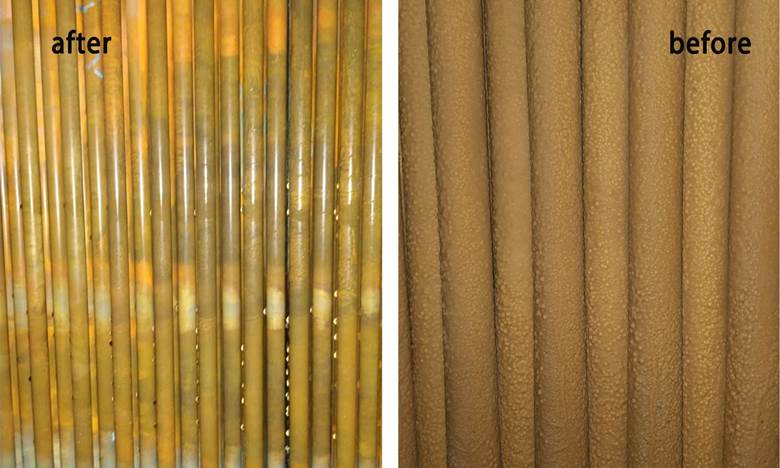
Evaporator tube covered with scale versus clean tube (before and after scale removal)
In which industries is MED desalination used and why?
1- Thermal and combined cycle power plants
- → Why?
- Access to cheap steam or recycled hot water
- Need for high purity water to feed boilers
- High capacity and reliability in continuous operation
2- Oil and gas refineries
- → Why?
- Use of excess steam from process units
- Produce high quality water for injection into wells or process uses
- Tolerate fluctuations in seawater or groundwater quality
3- Petrochemical industries
- → Why?
- Need for process water with very low TDS
- Possibility of integration with steam generation units
- Cost reduction by using recycled heat
4- Food and pharmaceutical industries (in specific cases)
- → Why?
- Produce ultrapure water without the need for membranes
- No need for regeneration chemicals (such as resins)
Specialized solutions of Abrizan Company (Mitreh Brand) for MED water desalination
We increase the efficiency of your system.
Accurate detection of the type of sediment with Abrizan's specialized laboratory
Before any action, our laboratory team:
- Takes samples of sediment from pipes or incoming water
- Detects the type of sediment using XRD, SEM, ICP methods
- Based on the results, recommends a specific formulation, not a generic product!
Thermal anti-scale injection — Prevents new scale formation
Mitreh products specifically for MED:
- Control of calcium and magnesium carbonate at high temperatures (up to 120°C)
- Prevents the formation of silica and calcium sulfate
- No secondary scale formation — Compatible with steel and copper
Periodic chemical washing — with Mitreh thermal vector scalers
- Mitreh-Anti-Scale: For washing carbonate scale
- Specialized anti-scalants: Special for waters containing compounds such as iron, sulfur, bromine, fluoride, etc.
- Standard washing protocol: precise time, dosage, temperature and flow rate — Under the supervision of our technical team
Protection of metals with thermal anti-corrosion
Anti-corrosion injection of thermal systems to protect:
- Carbon steel
- Copper and copper alloys
- Stainless steel
- Performs at high temperatures and a wide pH range
Periodic monitoring and performance reporting
After each wash, a complete report of:
- Operating temperature reduction in each Effect
- Increase thermal efficiency
- Reduce steam consumption
- Increase fresh water production
All Mitreh products:
- Comply with API, ASTM, ISO standards
- No damage to metals even at high temperatures
- Available as ready-to-use solution or powder with application manual
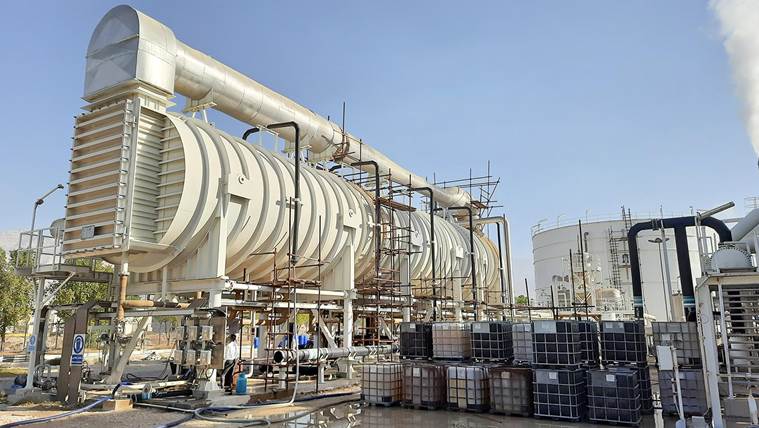
Before washing a MED device at the South Pars Gas Complex
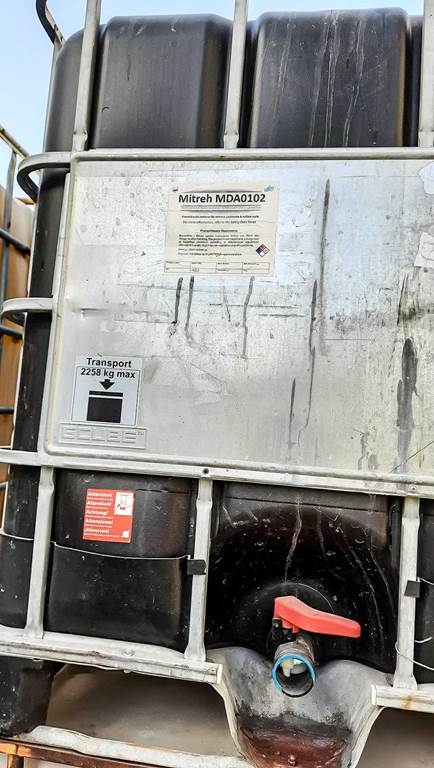
When should you flush your MED system?
- 10-15% increase in steam or energy consumption
- 10-20% decrease in fresh water production
- Increase in outlet temperature in the initial effects
- Increase in pressure in the evaporation chambers
- Increased vibration or noise in the pipes (caused by irregular boiling)
Signs of the need for chemical cleaning of the MED water softener
Final conclusion:
MED desalination is a powerful and stable technology, but without proper chemical management, it becomes a source of cost and reduced efficiency.
Abrizan Industrial Research Company with the Mitreh brand, relying on experience, laboratory and expert executive team, is ready to be with you to increase thermal efficiency, reduce energy consumption and extend the life of the equipment.
Abrizan Golden Tip
Do not wait for the system to experience a sharp decrease in efficiency! Periodic flushing (every 6 to 12 months) can increase the life of the equipment by up to 2 times and reduce energy costs by up to 35%.
Specialized services of Abrizan for MED water desalination
Free consultation with the laboratory:
Send sediment or water sample → Free analysis → Suggest a specific formulation
Perform chemical washing on site:
Presence of a specialist team in your project — Implementation of a standard protocol — Performance report
Provide Mitreh products:
Thermal anti-scaling — Sediment remover — Anti-corrosion — pH control
Shipping to all parts of Iran — with Persian implementation guide
Operational training for operators:
How to inject materials — Control parameters — Washing schedule — Performance monitoring
[Request free technical advice and analysis and direct contact with a sales expert]
share :
Why do industrial systems require anti-freeze/coolant in the summer?
1405/03/02Cooling Tower Chemical Cleaning Steps — Implementation Guide
1405/02/07Types of sediments in RO systems and methods for identifying them
1405/02/05Benefits of using specialized solutions from Abrizan Company for MED
1404/12/09
Related articles
MED Desalination Chemical Washing Steps — Implementation Guide
A step-by-step guide to chemical flushing of MED desalination plants: from scale detection to safe and effective implementation. Preventing corrosion and increasing efficiency
International standards for maintaining and cleaning desalination plants
Do you know what international standards are required for the maintenance and cleaning of desalination plants? A complete guide to extending the life of equipment and preventing sedimentation.
Water Turbidity Measurement: A Comprehensive Guide for Industry and Drinking Water
What is water turbidity? Why is it vital to measure it? Read about measurement methods, standards, and ways to reduce turbidity in this complete guide.
Types of deposits and corrosion in MED desalination water
Types of deposits and corrosion in MED desalination plants — calcium carbonate, sulfate, silica, magnesium hydroxide, subsedimentary corrosion. Accurate detection methods with XRD, SEM, ICP. Specialized solutions for water treatment plants with (Mitreh brand).
Why is it important to control sedimentation and corrosion in desalination devices؟
Why is scale and corrosion control vital in desalination plants? A technical and economic analysis of the impact of scale and corrosion on equipment performance, cost, and life. Warning signs and preventive measures. Suitable for engineers and industrial managers

Comparison of RO, MED, MSF desalination water in terms of cost, energy consumption, chemical requirement of the industry
Detailed comparison of RO, MED, MSF in terms of cost, energy consumption and chemical requirements. Technical analysis, comparison table and decision-making guide. MED with recycled heat is cheaper than RO! Suitable for engineers and industrial managers
MVC desalination plant (Mechanical vapor compression)
MVC (Mechanical Vapor Compression) Desalination — Comprehensive Guide to Application, Advantages, Disadvantages and Chemical Solutions by Abrizan Company (Mitreh Brand). Evaporator Chemical Washing, Thermal Anti-Fouling, Laboratory Consulting. Increase Efficiency — Reduce Energy Costs
EDI desalination plant (Electrodialysis)
EDI (Electrodialysis) Desalination — A Comprehensive Guide to Technology, Applications, Advantages and Disadvantages. Ultrapure Water Production Without Regeneration Chemicals. Applications in Pharmaceutical, Semiconductor and Power Plants. Pretreatment Requirements and Technical Challenges
Submit your opinion
Your email address will not be published.