


Common challenges in desalination plant maintenance and practical solutions

Introduction to Desalination Plant Maintenance Challenges
Is your plant’s desalination plant experiencing frequent shutdowns, reduced efficiency, or increased maintenance costs? These problems are often rooted in challenges specific to the plant environment — not just water quality.
In power plants, desalination plants operate under high operating pressures, fluctuating production loads, and unique safety constraints. This article examines six key challenges and practical solutions for effective desalination plant maintenance in these sensitive environments.
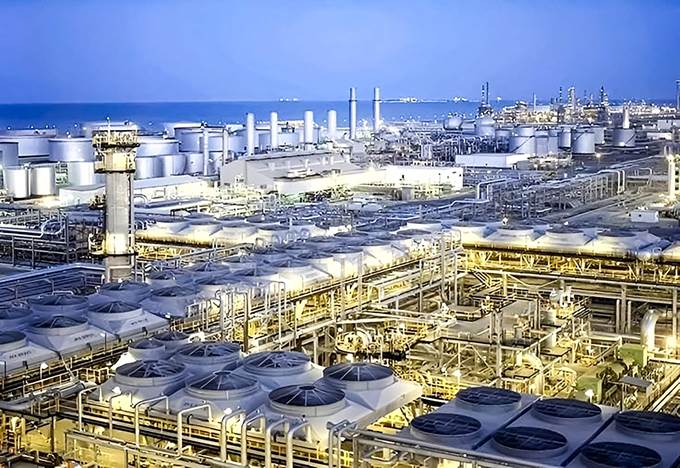
Why is desalination plant maintenance different in power plants?
In thermal power plants (gas, steam or combined), desalination plants are not a stand-alone unit, but a vital part of the water and steam cycle. Any disruption in them directly affects power generation.
Three unique characteristics of power plants that complicate desalination plant maintenance:
1. Strong dependence on the stability of the supply of clean water to the boiler
2. Strict time constraints on maintenance shutdowns
3. Harsh environmental conditions: high temperatures, vibrations, and air pollution from combustion processes
Therefore, maintenance solutions must be not only technical, but also in line with power generation schedules.
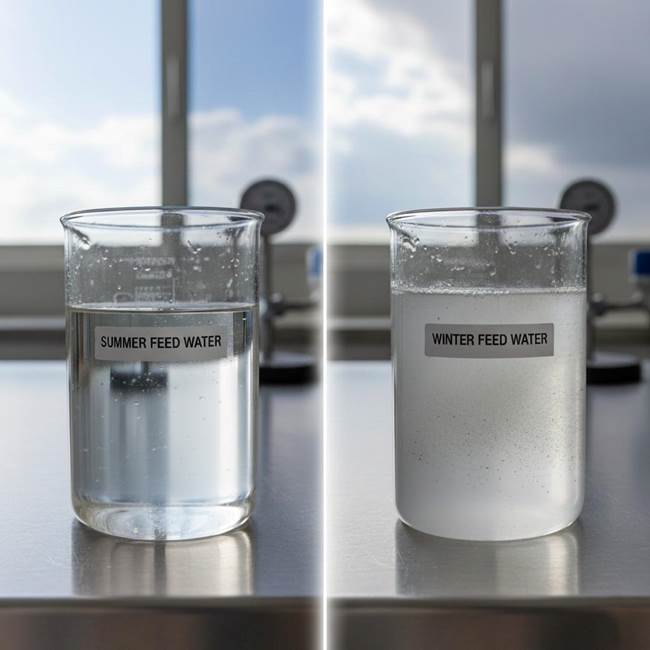
Challenge 1: Poor feedwater quality due to variable source
In many coastal power plants, seawater is used as the feedwater for desalination plants. But:
- Seawater quality varies with the season (e.g., turbidity during rainfall or fine dust)
- Maritime activities (dredging, shipping) can increase the concentration of suspended solids
- Old pretreatment systems may not cope with these fluctuations
Consequences:
- Fouling of membranes in RO systems
- Formation of complex deposits (a combination of carbonate, sulfate, and silica) in thermal systems
Practical solutions:
- Continuous monitoring of TSS and SDI (suspended solids index and fouling index)
- Use of customized flocculants adapted to seasonal conditions
- Installation of multi-stage pretreatment filters with automatic replacement
Challenge 2: Time constraints on maintenance outages
In a power plant, every hour of downtime = lost revenue. Therefore:
- Long-term downtime (e.g. 10 days for a complete washout) is not possible
- Maintenance teams must operate in short windows (24–72 hours)
Consequences:
- Incomplete cleaning
- Residual deposits that quickly regrow
- Hastily made and sometimes wrong decisions
Practical solutions:
- Perform advanced chemical washes with tight schedules (2–4 days)
- Use fast-acting formulations with efficient corrosion inhibitors
- Coordinate with power generation schedules to plan short outages
Note: Smart chemical washes can be completed in 72 hours — if planned and simulated in advance.
Challenge 3: Formation of resistant scale in thermal systems (MED/MSF)
In large power plants, thermal desalinizers (MED or MSF) are more common. But:
- High temperatures (up to 120°C in MSF) → Formation of hard, insoluble calcium sulfate layers
- Presence of silica in the feed water → Formation of glassy deposits that are not easily washed
Consequences:
- Severe reduction in heat transfer
- Increase in pressure in the effects
- Risk of subsoil corrosion in titanium or stainless steel pipes
Practical solutions:
- Regular sediment analysis with XRD and XRF for precise composition identification
- Use of combined acidic detergents (combination of organic acids and chelating agents)
- Careful control of pH and temperature during washing to prevent damage to metals

Heat transfer pipes of the third refinery desalination plant before chemical washing

Heat transfer pipes of the third refinery desalination plant after chemical washing
Challenge 4: Biofilm and Microbiological Growth in RO Systems
In power plants using RO, the ambient heat and high humidity create an ideal environment for bacterial growth.
Consequences:
- Membrane fouling with biofilm
- Reduced water permeability
- Increased injection pressure
- Membrane degradation due to microbial metabolic acids
Practical solutions:
- Combined use of oxidizing (e.g. chlorine) and non-oxidizing biocides
- Perform membrane washing with biofilm-specific detergents
- Monitoring ATP (microbial cellular energy) to assess microbial activity in real time
Three warning indicators of biofouling:
1. Increase in differential pressure ΔP of more than 15%
2. Decrease in pure water flow
3. Decrease in system recovery (Recovery Ratio)
Challenge 5: Coordination between different units of the power plant
The desalination plant is affected by other units:
- If the cooling tower corrodes, iron will leach into the feedwater
- If the boiler leaks, boiler chemicals (e.g. hydrazine) may return to the desalination circuit
Solutions Practical:
- Establish an integrated monitoring system for water quality at all points
- Collaboration between operational teams (water, steam, treatment)
- Periodic inspection of potential leakage points between separate circuits
Challenge 6: Lack of technical expertise in local teams
Many power plants are located in remote areas and access to water chemistry experts is limited. This leads to:
- Use of traditional and suboptimal methods
- Reliance on general contractors without desalination expertise
- Decision-making based on guesswork
Practical solutions:
- Use of online or remote support services
- Train local teams on standard protocols
- Use of rapid analysis kits on site for immediate decision-making
❓❓❓ FAQ ❓❓❓
❓ Can the same maintenance program be used for all power plants?
No. Each power plant requires a customized program based on its geographical location, type of generation (gas/steam), and water source.
❓ Can anti-scalers replace periodic flushing?
No — they only slow down the rate of scale formation. Periodic flushing is still essential.
❓ Why is chemical flushing more critical in power plants than in other industries?
Because a mistake can lead to a national shutdown of power generation. Therefore, each formulation must be rigorously tested for safety and compatibility.
❓ Can RO and MED desalination plants be maintained simultaneously?
Yes — and it is recommended. Since they often use the same feed water source, coordinated maintenance is best.
✍️ Conclusion: Desalination plant maintenance is a systems strategy
Successful desalination plant maintenance does not depend on just “occasional flushing.” Rather, it requires:
- A deep understanding of its interaction with other plant units
- Data-driven monitoring, not guesswork
- Preventive planning aligned with the power generation cycle
- Decision-making based on scientific analysis, not general guidelines
The first step to improvement: Collect the last 6 months of operational data and compare it to baseline conditions. The second step: Collect a sediment or biofilm sample and analyze it in the laboratory. These two small tasks can save years of equipment life.
If you need expert advice to identify the type of sediment or the optimal selection of chemicals, Abrizan Company’s specialists, with more than 20 years of experience in advanced laboratories, are ready to provide customized solutions to various industries.
share :
Related Articles
Chemical vs. Mechanical Washing in MED: Which Method is Better?
Which method is better for cleaning MED devices? Technical comparison, cost and risk of chemical vs. mechanical cleaning.
When is the best time to thermal desalination plant washing?
Signs of need for thermal desalination plant flushing (MED/MSF) + Data-based decision-making guide.
Types of deposits and corrosion in heat exchangers and identification methods
A comprehensive guide to identifying calcium carbonate, sulfate, silica, iron oxide, and MIC corrosion deposits in heat exchangers using XRD and SEM methods.
Step-by-step guide to chemical boiler cleaning — professional and safe execution
Step-by-step guide to chemical boiler cleaning in compliance with ASME standards, from system shutdown to final passivation. Safe and effective execution.
Warning signs that indicate the need for chemical cleaning of the heat exchanger
Has your heat exchanger lost its efficiency? 5 warning signs (increasing temperature, decreasing ΔT, high pressure, leakage, bad smell) + quick diagnosis checklist.
Comparison of boiler cleaning methods — chemical, mechanical or hydrojet
Which boiler cleaning method is best for you? A complete comparison of chemical, mechanical, and hydrojet methods in terms of cost, safety, time, and efficiency.
Signs of Needing Chemical Backwashing of RO Water Desalination — How to Know if an RO System is "Breathing"?
Is your RO system experiencing reduced water production, increased pressure, or reduced water quality? In this comprehensive article, we explore the 10 warning signs that your RO needs chemical flushing, with technical details, industry statistics, and practical guidance. Free consultation + free sediment sample analysis from your sink.
Signs of Need for Chemical Flushing of MED Water Desalination Plant - A Comprehensive Guide to Diagnosis, Analysis and Immediate Action
Signs of the need for chemical cleaning of MED water softeners — increased steam consumption, reduced water production, leaks, increased temperature. Guide to identifying the type of scale and specialized cleaning solutions by Abrizan (Mitreh brand).
Submit your opinion
Your email address will not be published.