

When to Replace System Antifreeze? — Testing and Replacement Guide
1404/10/06
Protecting Your Villa's Heating System Before Winter — The Complete Guide
1404/10/03
Guide to annual maintenance of heating systems with specialized chemicals
1404/10/01
Types of deposits and corrosion in heat exchangers and identification methods
1404/09/29
Local corrosion inhibitor

Localized corrosion inhibition
Localized corrosion occurs on metals covered by oxide layers. This can be caused by defects or breakage of the oxide layer. Attacking ions such as chloride cause the oxide layer to break down at weak points on the metal surface. In this case, most of the metal is in the oxide state while small localized areas of it are in the active state.
Localized corrosion will begin after the time required for the metal to interact with the aggressive environment has elapsed. This time is known as the initiation time for hole nucleation, which depends on the concentration of the oxide ions and the electrode potential of the metal. The origin of the holes depends on the presence of weak points in the surface oxide layer. At these points, corrosion products are formed at a higher rate than on the oxide surface.
Some mineral compounds reduce the rate of localized corrosion and increase the potential for failure. Some anions such as NO3–, SO2–, Cr2O7, H2PO4–, and OH– are inhibitors and prevent localized corrosion of iron and nickel. Inorganic inhibitors used to prevent localized corrosion are spoilage agents and include compounds that form insoluble salts on the metal surface. Nitrite and chromate are spoilage agents that slow down the rate of reduction or, in other words, cause the electrode potential to change to more positive values.
share :
When to Replace System Antifreeze? — Testing and Replacement Guide
1404/10/06Protecting Your Villa's Heating System Before Winter — The Complete Guide
1404/10/03Guide to annual maintenance of heating systems with specialized chemicals
1404/10/01Types of deposits and corrosion in heat exchangers and identification methods
1404/09/29
Related Articles
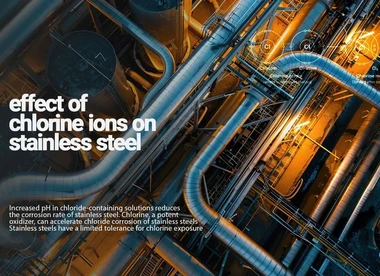
Effect of chlorine ions on stainless steels
The effect of chlorine and chloride parameters on the corrosion of stainless steels and the parameters affecting their corrosion rate, as well as the acceptable limits of chlorine ion levels in water and the differences in the effects of free chlorine and chloride on the corrosion of corrosion-resistant steels, are stated.
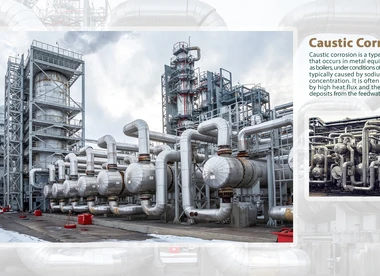
Caustic corrosion
Localized corrosion caused by the concentration of caustic or alkaline salts, which usually occurs under conditions of high evaporation or heat transfer. Caustic salt or caustic soda is one of the most widely used ionic compounds and is used in various industries including water treatment, cardboard and paper production, oil and refinery industries, aluminum production industries, food industries, alcohol production and glass.
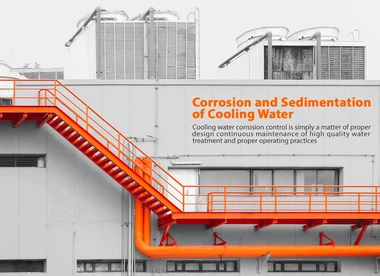
Corrosion and deposition of cooling water based on API 571
It refers to general or localized corrosion of carbon steels and other metals caused by dissolved salts, gases, organic compounds, or microbiological activity.

Microbial corrosion based on API 571
Microbial corrosion is a type of corrosion caused by living organisms such as bacteria, algae, or fungi. This type of corrosion is often associated with tubercles or slimy organic materials.
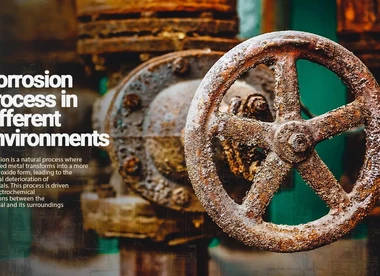
Corrosion process in different environments
Corrosion processes are divided into three groups in a more comprehensive classification: corrosion in aqueous solutions or environments, corrosion in molten salts and liquid metals, and corrosion in gases.
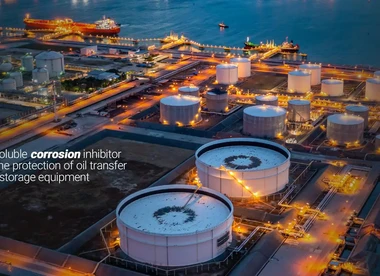
Oil-soluble corrosion inhibitor for the protection of oil transfer and storage equipment
Corrosion is a natural phenomenon that occurs as a result of the electrochemical reaction of metal with the surrounding environment. In the oil and gas industry, corrosion is one of the major problems that accounts for a huge amount of money annually. Part of these amounts are related to the corrosion of pipes or oil transmission lines. Effective ways to prevent corrosion of oil transmission and storage equipment are divided into two categories: physical and chemical solutions.

couponing
The coupon method or corrosion coupons is the simplest method of corrosion monitoring. Coupons are the oldest corrosion monitoring tool. Corrosion coupons are small pieces of metal or alloy of the material of interest that are immersed in the process medium and removed after a specified period of time and their weight or dimension loss is evaluated and examined.
Deaerators
Deaerators are mechanical devices that remove dissolved gases from the boiler feedwater. By reducing the concentration of oxygen and carbon dioxide in the solution, they minimize corrosion and protect the boiler from the effects of corrosive gases.
Submit your opinion
Your email address will not be published.