

Protecting Your Villa's Heating System Before Winter — The Complete Guide
1404/10/03
Guide to annual maintenance of heating systems with specialized chemicals
1404/10/01
Types of deposits and corrosion in heat exchangers and identification methods
1404/09/29
Step-by-step guide to chemical boiler cleaning — professional and safe execution
1404/09/22
Material selection in different corrosive environments

Selecting Different Materials in Different Corrosive Environments
The increasing expansion of various industries, including factories, power plants, refineries, automotive industries, cable manufacturing, etc., has made it more necessary to know the types of materials and their performance against corrosive environments. The importance of selecting the right materials in different corrosive environments is such that it has become the most important and common tool for corrosion control.
For selecting materials in corrosive environments from an economic perspective, two options are proposed:
- Minimum cost: Selecting the cheapest material along with replacing corroded parts periodically or correcting problems after they occur.
- Minimum corrosion: Selecting the most corrosion-resistant material regardless of cost, installation, or equipment life.
Selecting high-performance materials usually falls between the two aforementioned options and also includes considering other factors, such as availability and safety.
Given the major industrial importance of material selection in corrosive environments, in the remainder of this section, we will examine their corrosion performance in more detail:
Carbon steels:
Carbon steels have a wide range of applications in industry due to their cheapness and suitable mechanical properties. The corrosion resistance of these materials is moderate except for concentrated sulfuric acid and alkalis. Their resistance to scaling of mild steels is adequate up to a temperature of about 500°C. It should be noted that the presence of sulfur in the combustion product gases (smoke) reduces this temperature. Resistance to the formation of oxide and sulfide scales is improved by the presence of 3% chromium. Chromium is also a factor in increasing the atmospheric corrosion resistance of steels. Nickel is used to improve resistance to sodium hydroxide.
Cast irons:
In principle, the corrosion resistance of alloy cast irons is much better than that of ordinary cast irons. Adding copper can greatly increase the resistance of cast irons to sulfuric acid and atmospheric corrosion. Gray cast iron with more than 14% silicon also has high resistance (even in sulfuric acid environments) to corrosion.
Stainless steels:
These steels are a group of corrosion-resistant materials that have many applications in engineering. It is important to note that these steels are not resistant to all corrosive environments. If stainless steels are not manufactured properly or have not been properly heat treated, they are subject to localized corrosion such as: intergranular corrosion, stress corrosion cracking, pitting, and severe pitting. The corrosion resistance of stainless steels increases with increasing chromium content. This is because the corrosion resistance factor is the presence of a thin layer of chromium hydroxide on their surface. The quality of this protective layer depends on the chemical composition and processes applied to stainless steels.
Chromium plays an important role in creating a passive layer on the surface of stainless steels. Nickel is an austenite stabilizing element and its presence in high-chromium steels improves resistance in some oxygen-free environments. Manganese also helps stabilize austenite and can replace part of the nickel. However, it does not significantly alter the corrosion resistance of high-chromium steels. Molybdenum increases the strength of the passive layer and improves resistance to pitting in the presence of seawater. Elements such as copper, aluminum, and silicon also have positive effects on the corrosion resistance of stainless steels.
Stainless steels are remarkably resistant to nitric acid (at any temperature and concentration), dilute sulfuric acid in the air at ambient temperature, organic acids (food acids and acetic acid), alkalis (except concentrated and hot caustic soda in the vicinity of stress), and the ambient atmosphere.
Nickel:
Nickel has a relatively high resistance to corrosion and is particularly useful in alkaline environments. Nickel is resistant to cracking in corrosive chlorine environments and under stress, but is susceptible to cracking in caustic environments with dissolved inclusions and under high stress.
Inconel (78Ni-16Cr-6Fe) is resistant to many acids and has excellent resistance to nitriding at high temperatures. Nimonic alloys (Ni-20Cr 80) have high strength and oxidation resistance at high temperatures. Monel alloys, which are based on 70% nickel and 30% copper, not only have similar corrosion properties to pure nickel, but are also cheaper and are used to hold rapidly flowing seawater and brackish water. Although Monel is used to store hydrofluoric acid and other non-oxidizing acids, its resistance to oxidizing acids such as nitric acid, ferric chloride, sulfur dioxide, ammonia, etc. is very low.
Tin:
A large amount of tin metal is used as a protective coating on steel and other metals. In addition to its high corrosion resistance, this element is non-toxic and is a good coating against organic materials. This property justifies the widespread use of tin in the coating of steel cans for storing food and beverages.
Tin acts as a cathode to iron, but in most closed cans containing food products, this direction is reversed and tin acts as a sacrificial coating, protecting the iron body. Tin is resistant to relatively pure water and dilute mineral acids in the absence of oxygen. Accordingly, tin plating is used on copper pipes and plates that come into contact with distilled water and medicines. However, strong mineral acids and alkalis destroy tin.
Aluminum:
Aluminum is an active metal, but by forming a layer of aluminum oxide on its surface, this metal has excellent corrosion resistance in most environments. This oxide and protective layer is stable against most acidic and neutral solutions, but is very weak in alkaline environments. Pure aluminum and its alloys that cannot be heat treated have high resistance to general corrosion and, due to their dependence on the surface oxide layer, are susceptible to localized corrosion in grooves and under coatings.
Pure aluminum is resistant to cold and hot ammonia, acetic acid, fatty acids, concentrated nitric acid, distilled water in the ambient atmosphere, sulfuric environments, and hydrogen sulfide, but it does not show significant resistance to strong acids (such as hydrochloric, bromic, hydrofluoric), alkalis, mercury, seawater, chlorinated solvents, and ethyl alcohol.
Copper:
This metal is well-adapted to industrial, marine, and urban environments. Pure copper has good corrosion resistance in seawater, light water (cold and warm), dilute sulfuric acid, phosphoric acid, acetic acid, halogens, and air. However, it is not resistant to oxidizing acids such as concentrated and hot sulfuric and nitric acid, oxygen-containing ammonium nitrate, high-velocity and air-containing waters, hydrogen sulfide, and heavy metal salts such as FeCl3. Adding phosphorus improves the oxidation resistance of copper alloys. The use of cupronickel alloys in salt water has become very common, and these alloys have excellent resistance to cracking in corrosive and stressed environments.
Lead:
A major portion of the lead produced is used for corrosion applications (e.g. in car batteries), especially against sulfuric acid. In the presence of a corrosive environment, a sulfate, alkali, and phosphate layer forms on the surface of lead, which protects it. Lead alloys with 0.06% copper are used to store sulfuric acid, chromic acid, hydrofluoric acid, and phosphoric acid. Nitric acid, hydrochloric acid, and organic acids corrode lead.
Titanium:
The resistance of this metal to corrosion is excellent due to the formation of a stable, adherent, and protective oxide layer. At ambient temperatures, titanium is immune to seawater and chlorinated solutions, and is also resistant to hot solutions and strong oxidizing environments. This metal has good resistance to fretting corrosion in seawater. Hydrofluoric acid is one of the substances that corrode titanium metal by destroying the protective oxide layer. By adding alloying elements, the corrosion resistance of titanium can be increased to some extent.
Tantalum and Zirconium:
Tantalum is practically inert to organic compounds at temperatures below 150 ° C. However, hydrofluoric acid and sulfuric acid are exceptions. Zirconium is resistant to mineral acids, alkaline solutions and melts, most organic solutions and salts. This metal has excellent oxidation resistance up to 400 ° C in air, steam, CO2, SO2 and O2. Zirconium is corroded by hydrofluoric acid, wet chlorine, ferric chloride solution, aqua regia and copper chloride. Although the use of these two metals is often not economical, tantalum and zirconium are used in some cases only as resistant materials.
Glassy metals (amorphous):
Glassy metals or amorphous alloys are obtained by rapidly cooling their melts and have a supercooled melt structure similar to ceramic glasses. Some iron-based glassy metals have excellent corrosion resistance. These materials, containing 8% chromium, are more resistant to corrosion than ordinary stainless steels. The resistance to pitting corrosion in glassy metals is better than that of nickel-rich alloys, Hastelloy C, and titanium.
Rubbers:
Rubbers are generally divided into two categories: natural and synthetic rubbers.
Natural rubber is a molecular chain of isoprene (polyisoprene) obtained from the sap of a type of tree and is very flexible, so sulfur is added to it to harden it (vulcanize) and is used to make ebonite (bowling balls), tires, and tank linings. On the other hand, the second type, synthetic rubbers, are made unnaturally. The first rubber made of this type was neoprene, but today rubbers are very diverse and are even combined with plastics. Synthetic rubbers have good resistance to oil and petroleum gas, as well as to air and dilute nitric acid.
The most important characteristics of rubber are their high softness and elasticity, good mechanical strength and high compatibility with hydrochloric acid.
Plastics:
Plastics generally have good corrosion resistance, and some plastics, such as polytetrafluoroethylene, can work well in very corrosive chemical environments where metals are severely attacked. Plastics such as liquid crystalline polymers and polyphenylene sulfide have very good resistance to chemical environments at high temperatures. Polycrystalline engineering thermoplastics and nylon often have better chemical resistance than amorphous types (such as polycarbonates).
Ceramics:
Ceramics refers to materials consisting of metallic and non-metallic elements in the form of oxide compounds, the most important of which are good corrosion resistance compared to steels, resistance at high temperatures, high brittleness and better wear resistance than steels. (Except for environments containing sulfuric acid and alkalis)
The resistance to chemical attack of a ceramic depends on the strength of its atomic bonds. In this case, ceramics with weak bonds have relatively low chemical resistance. On the other hand, ionic and covalently bonded ceramics, such as those used for engineering purposes, have good resistance.
Chromium oxide is an example of a corrosion-resistant ceramic. Chromium oxide can be bonded to glass, which is very suitable for coating the inner walls of glass containers for chemicals. Chromium oxide also has good corrosion and wear resistance. There are other corrosion-resistant oxides (such as alumina and zirconia) that are resistant to different chemical ranges. But they are not recommended for long-term use against strong acids or bases.
share :
Protecting Your Villa's Heating System Before Winter — The Complete Guide
1404/10/03Guide to annual maintenance of heating systems with specialized chemicals
1404/10/01Types of deposits and corrosion in heat exchangers and identification methods
1404/09/29Step-by-step guide to chemical boiler cleaning — professional and safe execution
1404/09/22
Related Articles
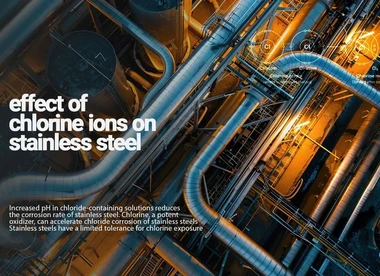
Effect of chlorine ions on stainless steels
The effect of chlorine and chloride parameters on the corrosion of stainless steels and the parameters affecting their corrosion rate, as well as the acceptable limits of chlorine ion levels in water and the differences in the effects of free chlorine and chloride on the corrosion of corrosion-resistant steels, are stated.
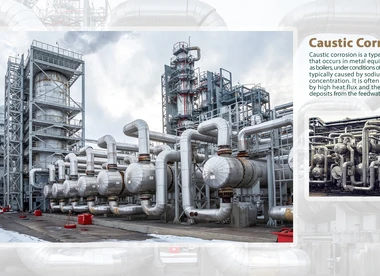
Caustic corrosion
Localized corrosion caused by the concentration of caustic or alkaline salts, which usually occurs under conditions of high evaporation or heat transfer. Caustic salt or caustic soda is one of the most widely used ionic compounds and is used in various industries including water treatment, cardboard and paper production, oil and refinery industries, aluminum production industries, food industries, alcohol production and glass.
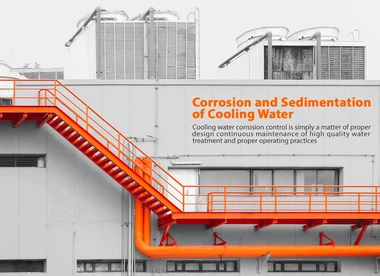
Corrosion and deposition of cooling water based on API 571
It refers to general or localized corrosion of carbon steels and other metals caused by dissolved salts, gases, organic compounds, or microbiological activity.

Microbial corrosion based on API 571
Microbial corrosion is a type of corrosion caused by living organisms such as bacteria, algae, or fungi. This type of corrosion is often associated with tubercles or slimy organic materials.
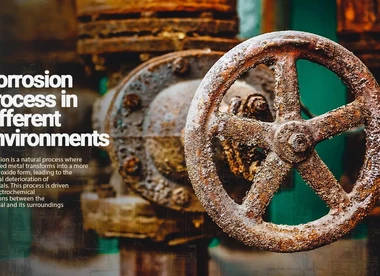
Corrosion process in different environments
Corrosion processes are divided into three groups in a more comprehensive classification: corrosion in aqueous solutions or environments, corrosion in molten salts and liquid metals, and corrosion in gases.
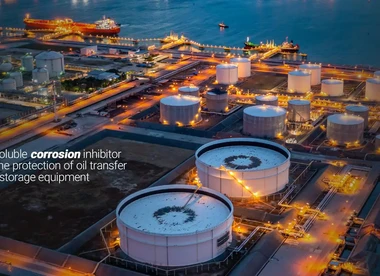
Oil-soluble corrosion inhibitor for the protection of oil transfer and storage equipment
Corrosion is a natural phenomenon that occurs as a result of the electrochemical reaction of metal with the surrounding environment. In the oil and gas industry, corrosion is one of the major problems that accounts for a huge amount of money annually. Part of these amounts are related to the corrosion of pipes or oil transmission lines. Effective ways to prevent corrosion of oil transmission and storage equipment are divided into two categories: physical and chemical solutions.

couponing
The coupon method or corrosion coupons is the simplest method of corrosion monitoring. Coupons are the oldest corrosion monitoring tool. Corrosion coupons are small pieces of metal or alloy of the material of interest that are immersed in the process medium and removed after a specified period of time and their weight or dimension loss is evaluated and examined.
Deaerators
Deaerators are mechanical devices that remove dissolved gases from the boiler feedwater. By reducing the concentration of oxygen and carbon dioxide in the solution, they minimize corrosion and protect the boiler from the effects of corrosive gases.
Submit your opinion
Your email address will not be published.