

MED Desalination Chemical Washing Steps — Implementation Guide
1404/12/02
The three main enemies of cooling towers: scale, corrosion, biofouling
1404/11/29
Can antifreeze also prevent the formation of deposits and corrosion?
1404/11/27
What is a chiller and what are its types? A comprehensive guide to choosing the best cooling system
1404/11/20
Signs of Need for Chemical Flushing of MED Water Desalination Plant - A Comprehensive Guide to Diagnosis, Analysis and Immediate Action

“In a MED desalination plant, scale is like ice — it progresses invisibly, but its final blow can completely shut down the system.”
In this expert guide, we’ll walk you through all the warning signs that your MED desalination plant needs chemical flushing. From increased steam consumption to reduced freshwater production. We’ll also teach you how to identify the type of scale, when to act, and how to perform chemical flushing safely and effectively.
This article is based on the implementation experience of dozens of real projects in refineries, power plants, and large industries in Iran.
Why read this article?
✅ Identify 6 key signs of a MED chemical cleaning need — before damage occurs
✅ Receive an operational checklist for operators and engineers
✅ Learn how to identify the type of scale (carbonate, sulfate, magnesium hydroxide, silica)
✅ Compare the cost of no cleaning vs. the cost of scheduled cleaning
✅ Access to a cleaning implementation guide or Abrizan’s specialized field services
✅ Links to real MED cleaning implementation projects in various industries
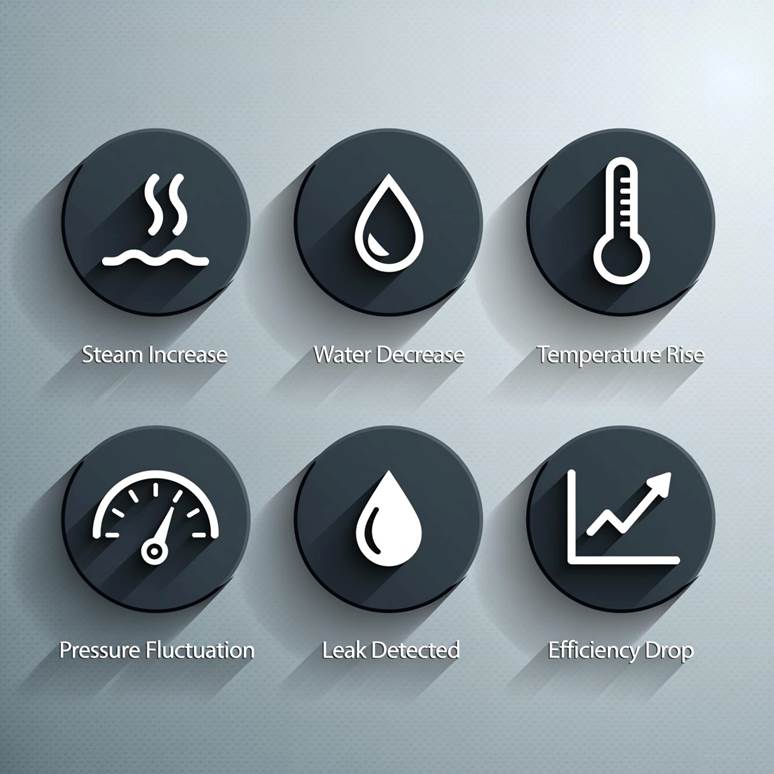
Warning Signs of a Need for Chemical Flushing of a MED Desalination Plant
Scaling in a MED desalination plant mainly forms on the evaporator tubes and condensers and gradually affects the system’s performance. Here are 6 key signs:
1. 10-20% increase in steam or energy consumption
→ Why does it happen?
The scale layer on the evaporator tubes reduces their performance as a heat exchanger → More steam is needed to compensate.
- Risk : Increased operating costs — Reduced project profitability.
- Diagnosis : Compare steam consumption to baseline data — Increase of more than 10% = Red alert.
Real-world example:
In a MED project at the South Refinery, after 10 months without flushing, steam consumption increased by 22% — Additional annual cost: 1.2 billion Tomans.
2. 10-25% decrease in fresh water production
→ Why does it happen?
Reduced heat transfer → Reduced evaporation → Reduced fresh water production.
- Risk :Failure to meet industry needs — process stoppage.
- Diagnosis :Reduced outlet water flow under constant conditions (inlet temperature, pressure, steam).
3. Increased Brine temperature at the outlet of the primary effects
→ Why does it happen?
Sedimentation causes reduced heat transfer in the primary effects → Condensed water (Brine) leaves the system at a higher temperature.
- Risk :Reduced thermal efficiency — increased load on subsequent effects.
- Diagnosis :Monitoring the Brine temperature at the outlet of each effect — an increase of more than 5 °C compared to normal conditions.
4. Increased pressure in the flash chambers
→ Why does it happen?
Reduced effective heat transfer surface → Reduced evaporation → Increased steam pressure in the chamber.
- Risk :Activation of safety valves — operational fluctuation.
- Diagnosis : Increased pressure in chamber gauges — Abnormal fluctuation.
5. Leakage at joints or welds (caused by subsoil corrosion)
→ Why does it happen?
Scale + chloride → Creates a local corrosive environment → subsoil corrosion → leakage.
- Danger : Freshwater contamination — Emergency stop — Safety damage.
- Diagnosis : Presence of salt water droplets at the fresh water outlet — or visual leakage at the joints.
6. Reduced thermal efficiency of the entire system
→ Why does it happen?
A combination of reduced heat transfer and increased energy consumption.
- Danger :Reduced equipment life — Increased maintenance costs.
- Diagnosis :Calculate thermal efficiency = (freshwater produced × ΔH) / steam consumption — Reduction of more than 15% = Need for flushing.
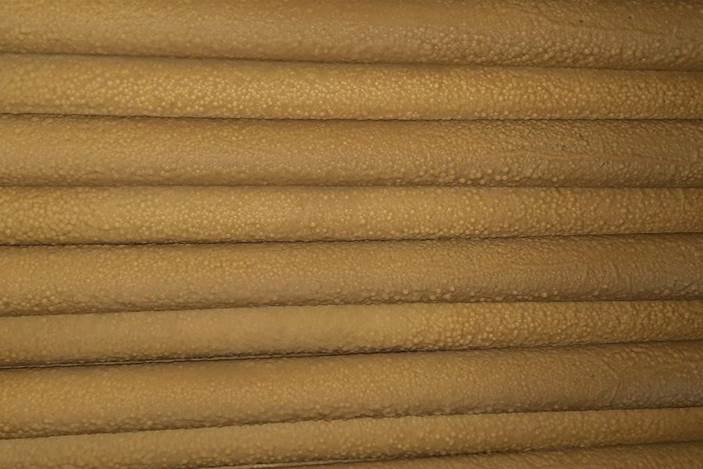
Sediment inside the MED desalination plant before sediment removal
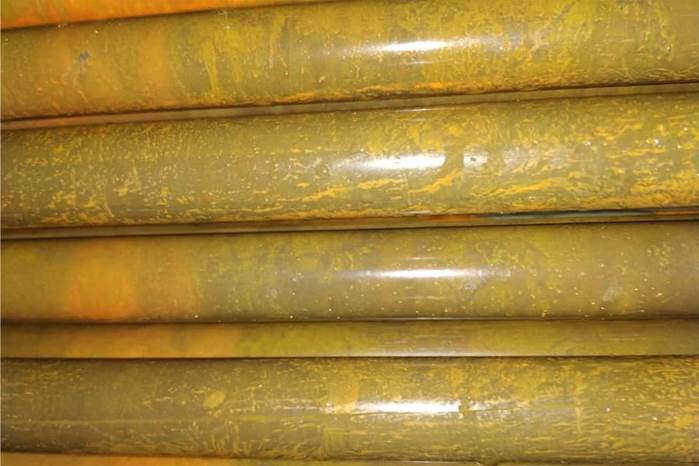
After sediment removal and chemical washing of MED desalination plant
How to identify the type of sediment in MED?
Common sediments in MED are:
Sediment type | Origin | Appearance | Diagnosis method |
Calcium carbonate (CaCO₃) | Water hardness + high pH | White, brittle | Dissolve in acid — CO₂bubbles |
Calcium sulfate (CaSO₄) | Sulfate + Calcium | White/yellow, very hard | Insoluble in HCl — requires XRD analysis |
Magnesium hydroxide (Mg(OH)₂) | Magnesium + pH > 10.5 | White, jelly-like | Dissolves in acid — no bubbles |
Silica (SiO₂) | Soluble silica | Glass, very hard | Need for SEM-EDS analysis |
Warning : 
Using the wrong descaling agent (e.g. strong acid for silica) can cause corrosion of metals instead of cleaning.
Practical solution: Abrizan Industrial Research Company — Accurate diagnosis and specialized MED cleaning
If you have observed one or more of the above symptoms, immediate action is necessary. Abrizan Industrial Research Company, relying on field experience, specialized laboratory and expert executive team, offers two solutions:
Option 1: Chemical washing by Abrizan's expert team (recommended for large systems)
✅ Implementation steps:
1. Sediment sampling at the project site
2. Laboratory analysis (XRD, SEM, ICP) in less than 72 hours
3. Mitreh's specific product formulation based on the type of sediment
4. Washing by a specialist team with specialized equipment (Abrizan Visit Site)
5. Performance report before and after washing + ICP analysis of wastewater
Advantages:
- No need for internal expertise
- Safe and controlled execution
- Guaranteed return to initial performance
Some real projects of Abrizan's team:
- Sediment removal of desalination plant, 12th refinery, South Pars Gas Complex
- Sediment removal of MED desalination plant, 3rd refinery, Asaluyeh
- Washing of MED desalination plant, 7th refinery, South Pars Gas Complex
Option 2: Receive Mitreh's executive guide and product (For domestic teams with expertise)
✅ Services:
Send sediment sample → Free analysis → Formulation proposal
Send Persian implementation manual including:
- Precise dosage
- Washing schedule
- Parameter control (pH, temperature, flow rate)
- Wastewater neutralization and disposal method
Provide Mitreh products:
- Special anti-scalant for thermal water desalination packages
- Special anti-scalants for high and low hardness waters
- Special anti-scalants for brackish waters
- Special anti-scalants for seawater
- Alkaline anti-scalants
- Special anti-scalants for waters containing compounds such as iron, sulfur, bromine, fluoride, etc.
Advantages:
- Full process control by domestic team
- Reduced dispatch costs
- Flexibility in scheduling
Quick Checklist — Does Your MED Need a Flush?
Assess the Status of Your System in 30 Seconds:
✅ Has Steam Consumption Increased by More Than 10%?
✅ Has Freshwater Production Decreased by More Than 10%?
✅ Has the Brine Temperature Increased at the Outlet of the Primary Effects?
✅ Is the Pressure Fluctuating in the Evaporation Chambers?
✅ Has Leakage or Contamination of the Outlet Water Been Observed?
✅ Has It Been More Than 6 Months Since the Last Chemical Flush?
If You Answered “Yes” to 2 or More Items, Your System Needs an Urgent Chemical Flush!
What to Do? — What’s Next
- If You Have a Specialist In-House Team:
- Request a Sediment Sample Analysis + Implementation Guide
- If You Need a Professional Implementation Team:
- Request a Drainage Specialist Team — Fully Equipped
- If You Want to Learn More:
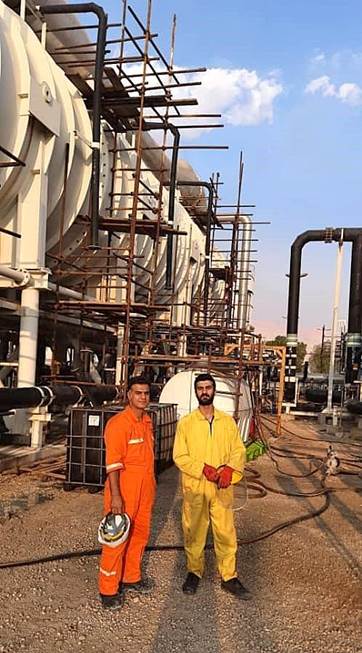
Abrizan’s executive unit performing chemical washing of a MED unit at a refinery
✅ Final Summary:
Sedimentation in a MED desalination plant is a silent enemy — but its warning signs are quite clear. By detecting it early, accurately identifying the type of sediment, and performing scheduled washing, you can avoid high energy costs, production downtime, and safety hazards. (Sediment control)
Abrizan Industrial Research Company with the Mitreh brand, relying on a specialized laboratory, formulated products, and a professional executive team, is ready to increase your system’s efficiency, reduce operating costs, and extend the life of your equipment by up to 2 times.
share :
MED Desalination Chemical Washing Steps — Implementation Guide
1404/12/02The three main enemies of cooling towers: scale, corrosion, biofouling
1404/11/29Can antifreeze also prevent the formation of deposits and corrosion?
1404/11/27What is a chiller and what are its types? A comprehensive guide to choosing the best cooling system
1404/11/20
Related Articles
Chemical vs. Mechanical Washing in MED: Which Method is Better?
Which method is better for cleaning MED devices? Technical comparison, cost and risk of chemical vs. mechanical cleaning.
When is the best time to thermal desalination plant washing?
Signs of need for thermal desalination plant flushing (MED/MSF) + Data-based decision-making guide.

Common challenges in desalination plant maintenance and practical solutions
6 key challenges in power plant desalination plant maintenance + practical solutions to prevent power generation outages.
Types of deposits and corrosion in heat exchangers and identification methods
A comprehensive guide to identifying calcium carbonate, sulfate, silica, iron oxide, and MIC corrosion deposits in heat exchangers using XRD and SEM methods.
Step-by-step guide to chemical boiler cleaning — professional and safe execution
Step-by-step guide to chemical boiler cleaning in compliance with ASME standards, from system shutdown to final passivation. Safe and effective execution.
Warning signs that indicate the need for chemical cleaning of the heat exchanger
Has your heat exchanger lost its efficiency? 5 warning signs (increasing temperature, decreasing ΔT, high pressure, leakage, bad smell) + quick diagnosis checklist.
Comparison of boiler cleaning methods — chemical, mechanical or hydrojet
Which boiler cleaning method is best for you? A complete comparison of chemical, mechanical, and hydrojet methods in terms of cost, safety, time, and efficiency.
Signs of Needing Chemical Backwashing of RO Water Desalination — How to Know if an RO System is "Breathing"?
Is your RO system experiencing reduced water production, increased pressure, or reduced water quality? In this comprehensive article, we explore the 10 warning signs that your RO needs chemical flushing, with technical details, industry statistics, and practical guidance. Free consultation + free sediment sample analysis from your sink.
Submit your opinion
Your email address will not be published.