


Signs of the need for cooling tower chemical clean?

Introduction: Why you shouldn't wait for a "complete breakdown"?
Many engineers and plant managers think:
“As long as the machine is working, it’s okay.”
But in the case of cooling towers, this thinking is the most dangerous mistake.
Cooling towers act like the “lungs of the industry.” If their breathing is disrupted, the entire system will malfunction, energy consumption will increase, and ultimately, a sudden stop will occur.
Cooling tower chemical flushing should not be a “reaction to failure”; it should be part of a preventive maintenance program. But if you haven’t planned it yet, timely recognition of warning signs can prevent disasters.
In this article, you will learn about 10 technical, practical, and measurable signs that indicate:
Your cooling tower needs chemical flushing immediately.
10 definite signs that cooling tower chemical flushing is needed
1. Increased cooling tower outlet water temperature
Why is it important?
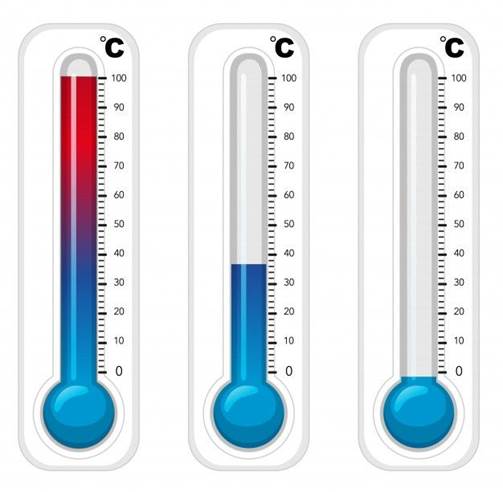
The cooling tower is responsible for returning hot water to a certain temperature (e.g. 32 °C). If the outlet temperature reaches 36-40 °C, it means that the heat transfer is seriously impaired.
Main cause:
Mineral scale layers (calcium carbonate, sulfate) on heat transfer surfaces such as fins and tubes that act as insulation.
Warning limit:
An increase of more than 3 °C compared to the design temperature requires immediate cleaning.
2. Increase the pressure of the water circulation pumps or reduce the flow rate
Why is it important?
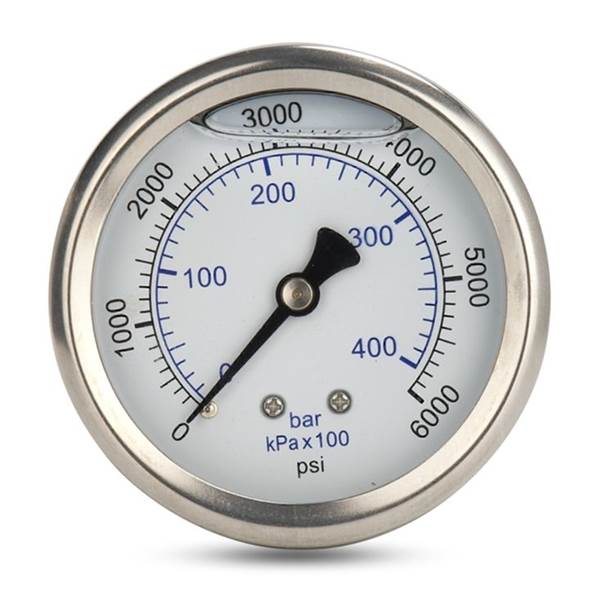
If pumps are operating at higher pressure or water flow is reduced, it means the water flow path is blocked.
Main cause:
- Deposits in pipes and spray nozzles
- Sludge and biofilm build-up in filters and drafts
- Formation of sulfate crystals in tight spots
Alarm threshold:
Pressure increase of more than 15% or flow reduction of more than 10% compared to normal values.
3. Increased energy consumption in connected systems (chiller, compressor, boiler)
Why is it important?
- Healthy cooling tower = optimal cooling = reduced workload on chillers and compressors.
- If your electricity bill is increasing, the root of the problem is probably in the cooling tower.
Calculate the impact:
Every 1°C increase in chiller inlet water temperature →2-4% increase in energy consumption.
Warning threshold:
More than 10% increase in cooling system energy consumption — no change in workload.
4. Physical appearance of scale or corrosion on visual inspection
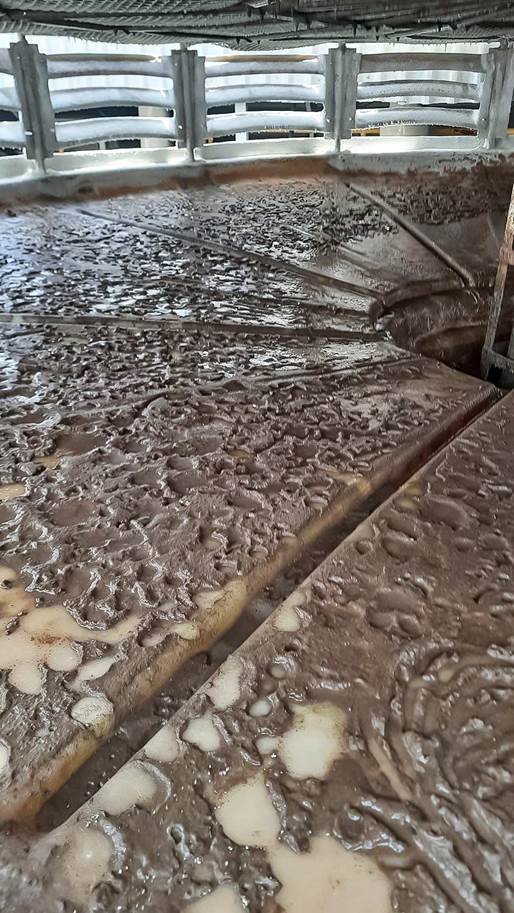
Why is it important?
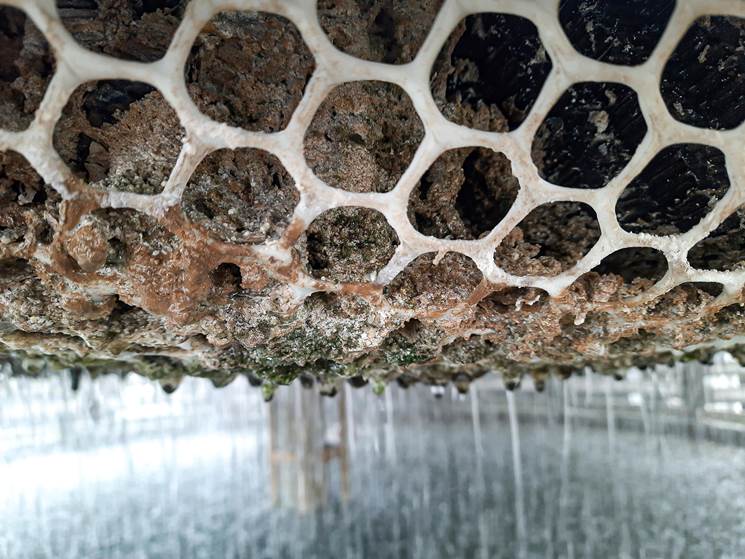
The human eye is the most accurate primary sensor. If you see during a routine inspection:
- White or gray deposits on metal surfaces
- Red spots (rust) or green (copper expansion)
- Pit holes in pipes (pitting corrosion)
- Algae or slimy layer (biofilm) in the basket or draft
→Take action immediately.
Technical tip:
- White deposits = calcium carbonate
- Hard, black deposits = sulfates or silicates
- Slimy layer and sewage odor = bacterial biofilm
5. Bad odor or algae growth in the cooling tower tank or draft
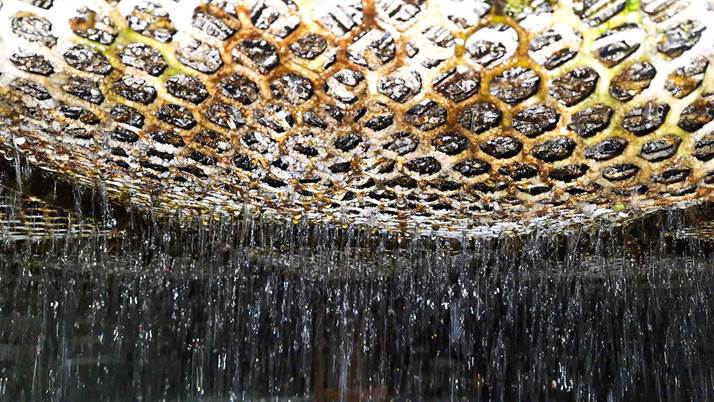
Why is it important?
A foul odor (like rotten eggs or sewage) is a sign of the growth of sulfate-reducing bacteria (SRB), the main cause of corrosion under biofilm.
Risks:
- Severe corrosion and perforation of pipes
- Microbial contamination in the food and pharmaceutical industries
- Risk of Legionella disease in public environments
Warning level:
Any unusual odor or algae growth — even if efficiency is still normal.
6. Reduced airflow in mechanical cooling towers
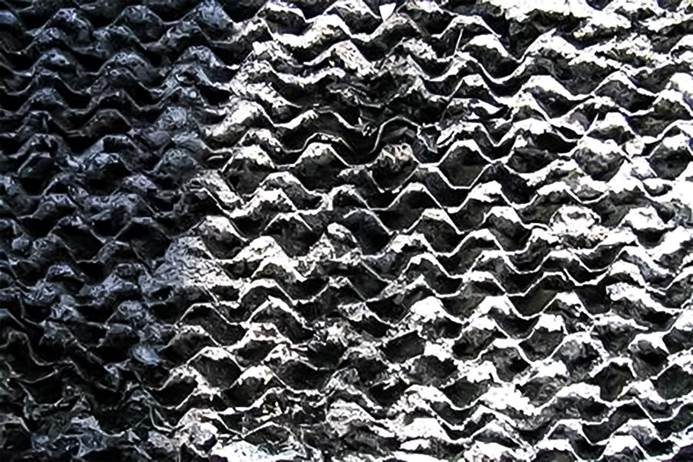
Why is it important?
In forced or induced cooling towers, airflow = heat transfer. If the fans are noisy or the airflow is reduced, it is likely that:
- The fins are clogged with sediment or sludge
- The draft is covered with algae
- The air filters are dirty
Diagnosis:
Use an anemometer to measure air velocity — more than 20% reduction from design = red alert.
7. Increased TDS (dissolved solids) and hardness of circulating water
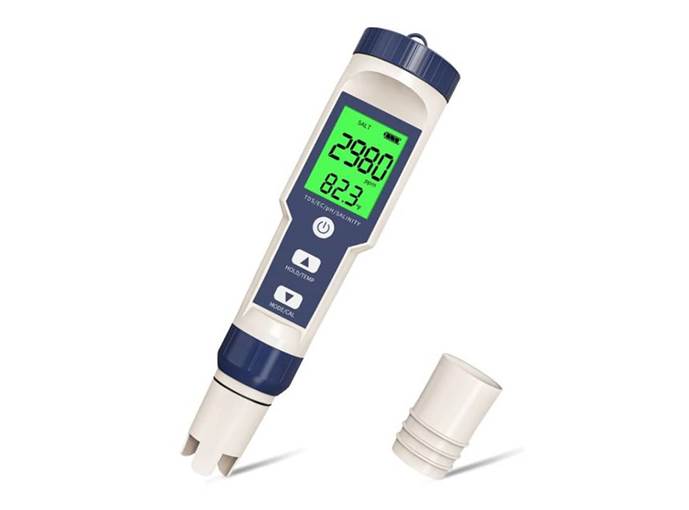
Why is it important?
In open loop systems, water is constantly evaporating — but salts remain. This causes the concentration of ions to increase and eventually scale to form.
Critical Values:
- Calcium Hardness > 500 ppm
- TDS > 3000ppm
- 8.5 > pH or pH < 7
Quick Fix:
Increase Bleed Off + Chemical Flushing.
8. Increased corrosion at welds
Why is it important?
Galvanic corrosion at welds or steel-copper joints is a sign of a chemical imbalance in the water — usually low pH or high chloride.
Risk:
These corrosions are often unnoticeable — until a leak occurs.
Diagnosis:
Corrosion Coupon test — corrosion rate > 5 mpy → Immediate need for chemical remediation.
9. Discoloration of circulating water or appearance of suspended particles
Why is it important?
- Red water = iron oxide particles (steel corrosion)
- Green water = copper particles or algae growth
- Black water = bacterial sludge or carbon particles
- Turbid water = sediment or biofilm buildup
Risk:
These particles can clog filters or cause wear on pumps.
10. Increased frequency of unplanned production line stops
Why is it important?
If your production line suddenly stops — and the cause is reported as “overheating” — the cooling tower is probably the culprit.
Costs:
- Cost of line downtime (even 1 hour = millions of dollars)
- Cost of immediate repair
- Cost of lost customers
Solution:
Accurately record downtime times and correlate with cooling tower parameters — if there is a pattern, immediate chemical flushing is necessary.
Summary table — When to act?
Sign | Measurable parameter | Warning limit | Immediate action |
Temperature increase | Outlet water temperature | +3°C above normal | Chemical washing |
Increased pressure | Pump pressure | +15% | Inspection + washing |
Increased energy | Chiller power consumption | +10% | Temperature analysis + washing |
Bad smell | Microbial test | Any unusual odor | Antimicrobial + wash |
Visual corrosion | Visual inspection | Any stains/holes | Corrosion test + washing |
Reduced airflow | Air speed (m/s) | -20% | Fin cleaning + washing |
Increased TDS | TDS Meter | >3000ppm | Increase Bleed Off + Rinse |
How to identify the type of chemical wash?
Chemical wash is not a one-size-fits-all. The type of chemical used should be appropriate for the type of contamination:
- Calcium carbonate deposits → Mild acids (citric, sulfamic)
- Sulfate/silica deposits → Stronger acids (hydrochloric — with caution)
- Biofilm and sludge → Alkaline + antimicrobial (non-oxidizing)
- Metal corrosion → Corrosion inhibitors (amines, phosphonates)
Critical point:
- Using the wrong chemical (e.g. strong acid on copper) can exacerbate the damage.
- It is always essential to take a sample + test the water before washing.
What not to do? — Common Mistakes
❌Using acid without testing pH and metal type
❌Washing with plain water and waiting for results
❌Delaying washing until “holidays” — it may be too late
❌Using substandard materials or without technical data sheets
❌Washing without final neutralization — causes secondary corrosion
If you need professional help...
If you are experiencing one or more of the above symptoms — or want to have a preventative plan before a problem occurs — you can seek advice from laboratory specialists with experience in chemical cleaning of cooling towers.
This specialized team:
- Analyzes your water sample for free
- Precisely identifies the type of scale or corrosion
- Recommends the best chemical product (scale remover, anti-corrosion, anti-biofilm) with precise concentration and time
- Performs the cleaning without stopping the production line
- Provides a performance report before and after cleaning + suggestions for future cycles
Contact our experts to receive technical advice and a free report on the condition of your cooling tower.
share :
Related Articles
Lithium Bromide Absorption Chillers: Application, Performance, and Maintenance Challenges
How do lithium bromide absorption chillers work? Why are they suitable for air conditioning systems? A comprehensive guide to their performance, benefits, limitations, and chemical maintenance.
What is an absorption chiller? A comprehensive guide to the operation, benefits and challenges of thermal cooling systems
How does an absorption chiller produce cold with heat? Differences from a compression chiller, chemical challenges and maintenance solutions + analysis of lithium bromide solution.
Types of cooling towers in terms of airflow | natural, mechanical, forced, induced, mixed
With a complete introduction to the 5 types of cooling towers in terms of airflow (natural, mechanical, forced, induced, mixed) and how each operates, choose the best chemical maintenance method to increase the efficiency and life of your equipment.
What is a chiller?
Chiller is derived from the Latin word Chill, meaning to cool. Various cycles are used to create refrigeration, the most important of which are the compression refrigeration cycle, the absorption refrigeration cycle, and the thermoelectric refrigeration cycle.
Power plant cooling system
Thermoelectric power plants boil water to create steam, which then turns turbines to generate electricity. The heat needed to boil the water can come from burning fuel, nuclear reactions, or the sun. As the steam passes through a turbine, it must be cooled back to water before it can be used again to generate more electricity. Colder water cools the steam more effectively, increasing the efficiency of electrical energy generation.
Types of refrigeration systems
Refrigeration is the process of absorbing heat from one fluid and releasing it to another. The fluid can be air, water, or any other gas or liquid. In all refrigeration systems, keeping cool involves absorbing heat from a lower-temperature material and releasing it to a higher-temperature environment.
Sediment investigation in the cooling tower and its control
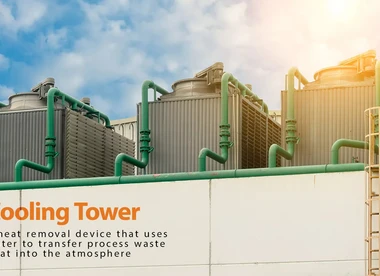
Cooling towers, as the name suggests, are used for cooling. Equipment used in industry for heat transfer is one of the important equipments, among which cooling towers are effective and practical for the continuation and continuity of operations and other processes.
Submit your opinion
Your email address will not be published.