

Why do industrial systems require anti-freeze/coolant in the summer?
1405/03/02
Cooling Tower Chemical Cleaning Steps — Implementation Guide
1405/02/07
Types of sediments in RO systems and methods for identifying them
1405/02/05
Benefits of using specialized solutions from Abrizan Company for MED
1404/12/09
Purification of feed water for industrial boilers and power plants

Boiler Water Treatment
In the boiler industry, high purity feed water is essential to ensure proper operation of steam generation systems. High purity water reduces the use of boiler chemicals due to the frequent reduction of blowdown output required (reducing blowdown frequency by up to 10 times). Low blowdown frequency also reduces fuel costs. Increased scale formation due to even low concentrations of impurities in the boiler feed water damages heat transfer surfaces. Low levels of impurities reduce corrosion in the boiler.
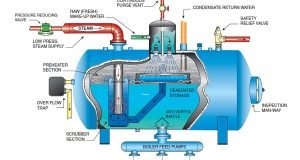
When a steam boiler is used to drive a steam turbine, turbine blade wear is reduced due to the high purity of the steam produced.
Reverse Osmosis (RO) in Wastewater Treatment
The use of reverse osmosis (RO) in wastewater treatment systems reduces chemical costs by reducing the need for ion exchange regeneration. A complete system that includes RO and ion exchange is typically more cost-effective than systems that do not use RO. However, the use of conventional RO requires the substantial use of pretreatment operations, which adds to the overall cost of the system.
Boiler Scale Removal
Silicate and colloidal scales reduce boiler efficiency and also cause premature failure of turbines. Ultrafiltration can remove more than 99% of colloidal silica, as well as precipitating iron and aluminum. The reduction of particulate matter, suspended solids, and total organic carbon (TOC) also increases turbine and boiler efficiency. However, the use of conventional membrane technologies faces significant membrane problems.
The Need for Boiler Feedwater Treatment
To improve performance, filtering the boiler feedwater stream places a high demand on an industrial or power plant boiler. Boiler feedwater treatment is essential to prevent excessive damage to thermal equipment and erosion of turbine blades.
The Vibration-Enhanced Shear Process in Water Treatment
Technological advances in membrane treatment systems are creating an opportunity for industrial boilers and steam power plants to treat boiler feedwater streams, thereby improving system performance. The Vibration-Enhanced Shear Process or VSEP®, developed by logical new research, makes it possible to filter wastewater or sewage effluent streams without any of the problems of conventional membrane systems. The membrane system significantly reduces TDS, TSS, TOC, turbidity, silica and hardness from municipal water, well water and river/surface water streams, thereby reducing treatment costs.
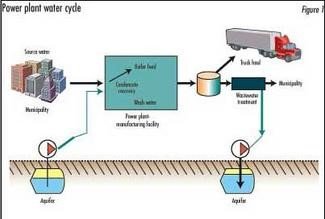
Boiler Feedwater Treatment
The treatment system uses ultrafiltration (UF), nanofiltration (NF) or RO membranes to treat the feedwater to produce a permeate stream that results in boiler feedwater meeting the appropriate criteria for suspended solids, silica and hardness. After final treatment with ion exchange resins, the treated water can be used as boiler feedwater. RO filtration can be used if almost all dissolved solids are removed, and some, for example, use a suitable spiral wound membrane as the final stage for this.
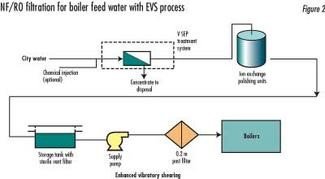
In short, the treatment system can be used to treat boiler feed water with only a minor final treatment with ion exchange resins. This alternative separation process eliminates the need for pretreatment and can significantly reduce the consumption of chemicals for conditioning, thereby reducing lost efficiency and reducing associated costs.
Advanced Technologies in Boiler Feed Water Treatment
Currently, various technologies are used for boiler feed water treatment. Among the competing technologies such as chemical additives/separator and filtration/spiral membrane systems, the vibrating shear technology has significant advantages over other methods.
For industrial boiler systems and power plants, membrane systems utilizing this process can be used, while traditional cross-flow membrane technologies in the past faced significant problems with membrane fouling. It is an attractive alternative to conventional filtration methods due to vibration and shear design.
share :
Why do industrial systems require anti-freeze/coolant in the summer?
1405/03/02Cooling Tower Chemical Cleaning Steps — Implementation Guide
1405/02/07Types of sediments in RO systems and methods for identifying them
1405/02/05Benefits of using specialized solutions from Abrizan Company for MED
1404/12/09
Submit your opinion
Your email address will not be published.