

Why do industrial systems require anti-freeze/coolant in the summer?
1405/03/02
Cooling Tower Chemical Cleaning Steps — Implementation Guide
1405/02/07
Types of sediments in RO systems and methods for identifying them
1405/02/05
Benefits of using specialized solutions from Abrizan Company for MED
1404/12/09

Wholesale purchase of anti-fouling and anti-corrosion for boilers

Industrial mitreh special for washing boiler

Special deoxygenator solution for boiler oxygen removal
Boiler cleaning

Boiler
Steam boilers are mainly made of carbon steels, and the internal surface of these metals that are in contact with water must be free of unwanted deposits. Deposits have a lower thermal conductivity than metals, which causes the temperature of the metal to rise on the combustion wall side. Therefore, more fuel is required to produce steam. (The heat transfer coefficient decreases.)
Formation of magnetite layer in a steam boiler
Steam at high temperatures reacts with iron ions and forms a uniform layer of iron oxide Fe3O4, known as magnetite. In a reducing atmosphere at temperatures above 100 degrees Celsius, water acts as an oxidizing agent and an electrochemical reaction occurs, causing the formation of a layer of magnetite.
Advantages and disadvantages of magnetite layer
The magnetite layer formed is dark, thin, and highly adhesive, which acts as a passive layer on the steel surface to prevent further surface corrosion. The formation of this magnetite layer in steam boilers is considered an advantage, as under ideal conditions the water-side surfaces of these metals are covered with this thin film. However, over time the magnetite layer grows and becomes porous or even breaks and separates. So this deposit layer becomes extremely thick locally. In addition, it has a negative effect on heat transfer and the non-uniformity of the deposit thickness causes the adhesion of other unwanted salt deposits such as calcium carbonate.
Reduced efficiency and the decision to clean the boiler
When the boiler efficiency decreases significantly or blockages or perforations occur in the pipes, it is usually decided to clean the boiler. This is usually done by cutting several pipes from the parts where the accumulation of deposits is expected to be higher in those areas. After extensive metallurgical examinations, the pipe sample along with the relevant deposits is tested for cleaning or the so-called acid washing process.
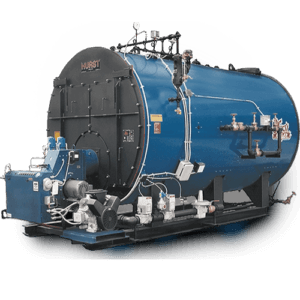
Pickling Steps
In order to carry out the appropriate process for pickling, knowing the amount of deposits per unit area is a prerequisite for the process. The steps are as follows:
- Degreasing
- Pickling with a mixture of HF and HCl acids
- Passivation using ammonium citrate and an oxidizing agent
Use of a preservative during pickling
During the pickling process, which is carried out by rotating hot hydrochloric and hydrofluoric acids, the magnetite layer reacts with the acid. Therefore, the concentration of iron in the pickling solution will increase, because it dissolves the magnetite. To protect the bare steel against the effects of acid, an acidic preservative is added to it. This acidic preservative reduces the corrosion rate to mpy50. The amount of iron in the pickling solution is actually a parameter of the pickling result and how the pickling was carried out. When the amount of iron in the solution remains constant, all the magnetite has dissolved and the pickling step is over.
Removing Iron Rust After Pickling
After the pickling step, the steel surface will be reactive and wet, and oxygen will form oxide. In fact, the last step in boiler cleaning is to remove this iron rust and create a passive iron oxide film. To remove this iron rust, a citric acid solution is first used, then the citric acid is neutralized with ammonia to form ammonium citrate with an alkaline pH. Usually, the dissolved iron will precipitate as hydroxide. However, due to the strong tendency of ammonium citrate to form complexes, the iron remains in solution.
A strong oxygenating agent is added to the ammonium citrate to activate the ferrous ions to oxidize, thus converting the metallic iron to a uniform ferric state.
This action causes the appearance of a thin, passive, and adherent layer of iron oxide Fe2O3.
share :
Why do industrial systems require anti-freeze/coolant in the summer?
1405/03/02Cooling Tower Chemical Cleaning Steps — Implementation Guide
1405/02/07Types of sediments in RO systems and methods for identifying them
1405/02/05Benefits of using specialized solutions from Abrizan Company for MED
1404/12/09
Related articles
Benefits of using specialized solutions from Abrizan Company for MED
Reduce corrosion, prevent scale and increase MED efficiency with specialized Mitreh solutions. Customized formulations for unique chemical challenges.
Why is the use of general acids prohibited in boiler cleaning? (Danger of explosion and corrosion)
Using hydrochloric acid in boiler cleaning causes severe corrosion and explosion hazard. Experience safe descaling without damaging the metal with Mitreh Abrizan's specialized solution. Free consultation.
Chemical vs. Mechanical Washing in MED: Which Method is Better?
Which method is better for cleaning MED devices? Technical comparison, cost and risk of chemical vs. mechanical cleaning.
When is the best time to thermal desalination plant washing?
Signs of need for thermal desalination plant flushing (MED/MSF) + Data-based decision-making guide.

Common challenges in desalination plant maintenance and practical solutions
6 key challenges in power plant desalination plant maintenance + practical solutions to prevent power generation outages.
Types of deposits and corrosion in heat exchangers and identification methods
A comprehensive guide to identifying calcium carbonate, sulfate, silica, iron oxide, and MIC corrosion deposits in heat exchangers using XRD and SEM methods.
Step-by-step guide to chemical boiler cleaning — professional and safe execution
Step-by-step guide to chemical boiler cleaning in compliance with ASME standards, from system shutdown to final passivation. Safe and effective execution.
Warning signs that indicate the need for chemical cleaning of the heat exchanger
Has your heat exchanger lost its efficiency? 5 warning signs (increasing temperature, decreasing ΔT, high pressure, leakage, bad smell) + quick diagnosis checklist.
Submit your opinion
Your email address will not be published.