

MED Desalination Chemical Washing Steps — Implementation Guide
1404/12/02
The three main enemies of cooling towers: scale, corrosion, biofouling
1404/11/29
Can antifreeze also prevent the formation of deposits and corrosion?
1404/11/27
What is a chiller and what are its types? A comprehensive guide to choosing the best cooling system
1404/11/20
Causes of tube corrosion in the economizer of the steam generation system

Steam Generation System
A typical steam generation system consists of a pre-boiler section (deaerators, piping, pumps, stage heaters, and economizer), a steam generation section (including boilers, superheaters, and reheaters), a post-boiler section (including process equipment, steam pipes, and condensate traps), and a condensate section (including pipes, flash tanks, pumps, and condensate storage tanks).
- Pre-boiler Section
- Steam Generation Section
- Post-boiler Section
- Condensation Section
Corrosion in Steam Generation Systems
Corrosion in steam generation systems causes many problems in refineries, gas plants, and petrochemical plants. Boiler corrosion is a function of the concentration of oxygen, carbon dioxide, and ammonia and the control of these species, and in some cases, due to the presence of hydroxide and chloride anions or high concentrations of chelating chemicals in the boiler water. However, in more advanced steam generation systems, control of water-soluble gases such as oxygen and carbon dioxide usually results in reduced corrosion of the inner wall of the tubes used in steam generation systems. Pitting corrosion, alkali embrittlement, alkali gouging, chelating attacks, and hydrogen embrittlement are the most common corrosion mechanisms in steam generation systems.
The main factor of boiler corrosion
The results of many studies show that the control of boiler corrosion is largely influenced by the quality of the feed water and the conditions of deposition. Oxygen is the main factor of boiler corrosion. If the pH of the boiler is controlled, the amount of corrosion upstream and inside the boiler will be controlled. Oxygen corrosion and corrosion products in the boiler cause heavy boiler maintenance costs. The failure of expensive equipment and the deposition of corrosion products lead to a decrease in the efficiency of the boiler system. Therefore, monitoring and controlling the oxygen concentration in the boiler is of particular importance. In practice, in order to prevent oxygen corrosion in the boiler, the oxygen concentration of the boiler water must be reduced to a few ppb and controlled at these low values.
Oxygen Corrosion
The economizer and feed water heater are the first areas to suffer from oxygen corrosion in an operating system. In cases where the dissolved oxygen content in the water is high, oxygen corrosion may also affect other parts of the boiler system. In most cases, the damage caused by oxygen corrosion is very high even if the oxygen content exceeds the permissible limit for a short period of time.
Function of Economizers
The economizer is a key factor in increasing the thermal efficiency of the boiler due to the use of energy from the gas leaving the boiler system. The economizer preheats the boiler feed water. Economizers also reduce the potential for thermal shock and severe fluctuations in the temperature of the water entering the drum or water walls. In economizers, the heat transfer coefficient on the gas side is much lower than on the water side, which is compensated for by the use of finned tubes in economizers. The ultimate goal of designing an economizer is to achieve the desired heat transfer at the lowest cost.
Corrosion and failure of economizer tubes (similar to other equipment used in the boiler system) is divided into two categories: water side 1 and flame side 2. Of course, the main corrosion problems are observed on the water side. In general, abrasion by gas flow, corrosion in low temperature water, fatigue corrosion and pitting corrosion due to the presence of oxygen are the main causes of failure of economizer tubes.
When steel is exposed to water containing dissolved oxygen, reaction (1) takes place.
2Fe + H2O + O2 = Fe2O3 + H2 (1)
Controlling Oxygen Corrosion in Boilers
In a working boiler system, this type of corrosion can be easily controlled by reducing the dissolved oxygen concentration in the water entering the system. However, sometimes the presence of dissolved oxygen due to improper operation of the deaerator system, inappropriate chemicals used to remove oxygen, or air leakage into the system causes oxygen corrosion.
Mechanical Deoxygenation of Water
Due to the high operating pressure of the boiler, the only way for oxygen to enter is through the feed water. The initial deoxygenation of the feed water is carried out by mechanical deaerators. At this stage, the feed water is brought into contact with steam and the gases dissolved in it are separated and removed with the steam. Modern deaerators must be able to reduce the amount of dissolved oxygen in the water. Subsequently, deoxygenating chemicals are injected to further reduce the dissolved oxygen concentration. The mechanical removal of oxygen must be carried out before its removal by chemicals. In fact, most of the deoxygenation of water is carried out by mechanical methods.
How to inject oxygen scavengers into the boiler?
Since oxygen scavengers require time to function, it is necessary to have a time interval between the injection of oxygen scavengers and the consumption of water in the boiler. For this reason, in order to provide the maximum time for the oxygen scavenger to function, its injection should be immediately after mechanical deaeration. Usually, the injection is done in the deaerator storage tank. In addition, the use of chemicals with catalytic ability to remove oxygen is recommended to reduce its operating time. Oxygen scavengers are used in catalyzed form (cobalt and manganese salts are usually used for sulfites and organic catalysts are usually used for volatile oxygen scavengers).
Source:Analysis of the causes of tube corrosion in the economizer of a steam generation system. Akram Nouri Delavar, Mohsen Sabouri, Amir Pasha, Mehdi Javanmardi. Specialized Scientific Extension Quarterly / Winter 2014 / Issue 4
share :
MED Desalination Chemical Washing Steps — Implementation Guide
1404/12/02The three main enemies of cooling towers: scale, corrosion, biofouling
1404/11/29Can antifreeze also prevent the formation of deposits and corrosion?
1404/11/27What is a chiller and what are its types? A comprehensive guide to choosing the best cooling system
1404/11/20
Related Articles
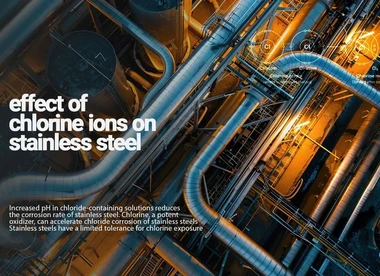
Effect of chlorine ions on stainless steels
The effect of chlorine and chloride parameters on the corrosion of stainless steels and the parameters affecting their corrosion rate, as well as the acceptable limits of chlorine ion levels in water and the differences in the effects of free chlorine and chloride on the corrosion of corrosion-resistant steels, are stated.
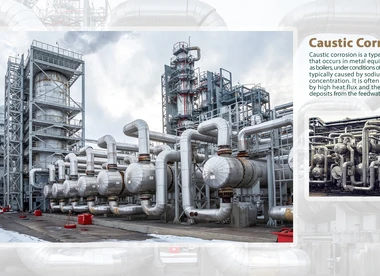
Caustic corrosion
Localized corrosion caused by the concentration of caustic or alkaline salts, which usually occurs under conditions of high evaporation or heat transfer. Caustic salt or caustic soda is one of the most widely used ionic compounds and is used in various industries including water treatment, cardboard and paper production, oil and refinery industries, aluminum production industries, food industries, alcohol production and glass.
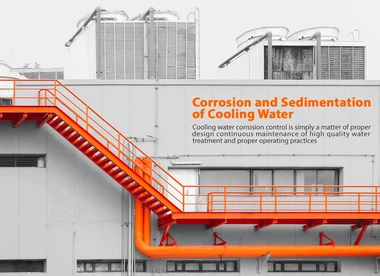
Corrosion and deposition of cooling water based on API 571
It refers to general or localized corrosion of carbon steels and other metals caused by dissolved salts, gases, organic compounds, or microbiological activity.
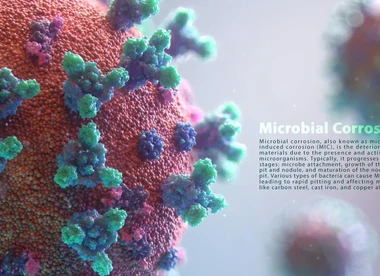
Microbial corrosion based on API 571
Microbial corrosion is a type of corrosion caused by living organisms such as bacteria, algae, or fungi. This type of corrosion is often associated with tubercles or slimy organic materials.
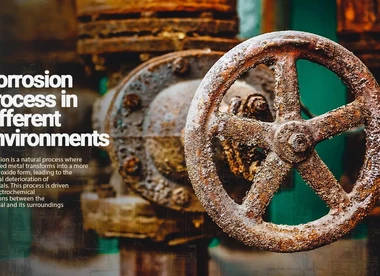
Corrosion process in different environments
Corrosion processes are divided into three groups in a more comprehensive classification: corrosion in aqueous solutions or environments, corrosion in molten salts and liquid metals, and corrosion in gases.
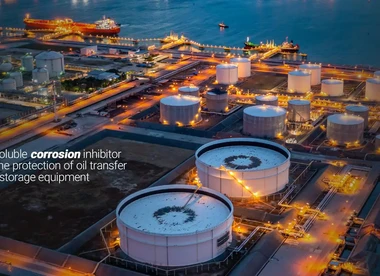
Oil-soluble corrosion inhibitor for the protection of oil transfer and storage equipment
Corrosion is a natural phenomenon that occurs as a result of the electrochemical reaction of metal with the surrounding environment. In the oil and gas industry, corrosion is one of the major problems that accounts for a huge amount of money annually. Part of these amounts are related to the corrosion of pipes or oil transmission lines. Effective ways to prevent corrosion of oil transmission and storage equipment are divided into two categories: physical and chemical solutions.

couponing
The coupon method or corrosion coupons is the simplest method of corrosion monitoring. Coupons are the oldest corrosion monitoring tool. Corrosion coupons are small pieces of metal or alloy of the material of interest that are immersed in the process medium and removed after a specified period of time and their weight or dimension loss is evaluated and examined.
Deaerators
Deaerators are mechanical devices that remove dissolved gases from the boiler feedwater. By reducing the concentration of oxygen and carbon dioxide in the solution, they minimize corrosion and protect the boiler from the effects of corrosive gases.
Submit your opinion
Your email address will not be published.