

Why do industrial systems require anti-freeze/coolant in the summer?
1405/03/02
Cooling Tower Chemical Cleaning Steps — Implementation Guide
1405/02/07
Types of sediments in RO systems and methods for identifying them
1405/02/05
Benefits of using specialized solutions from Abrizan Company for MED
1404/12/09
How is chloride measured?

Chloride
Chloride, in the form of the chloride ion (Cl-), is one of the most important mineral anions in water and wastewater. The salty taste varies with the chloride concentration and is dependent on the chemical composition of the water. Some waters containing 250 mg Cl-/L may have a detectable salty taste if the cation is sodium. On the other hand, the typical salty taste may be absent in waters containing 1000 mg/L chloride if the dominant cation is calcium or magnesium.

Chloride concentration
The chloride concentration in wastewater is higher than in raw water because sodium chloride (NaCl) is a common dietary component and passes through the digestive tract unchanged. Along the coast, chloride may be present in high concentrations due to saltwater seepage into the sewage system. It may also be increased through industrial processes. High chloride content may damage pipes and metal structures as well as plant growth.
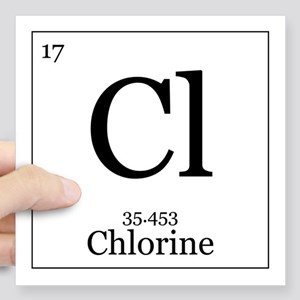
Methods for the Determination of Chloride
Six methods are presented for the determination of chloride. Since the first two methods are similar in most cases, their selection depends largely on personal preference.
The argenometric method (4500-Cl-.B) is suitable for use in relatively clear waters containing 0.15 to 10 mg of calcium per titrated portion.
The mercury nitrate method (4500-Cl-.C) has an easier endpoint to measure.
The potentiometric method (4500-Cl-D) is suitable for colored or turbid samples in which the endpoints may be difficult to distinguish. The potentiometric method can be used without a pre-correction step for samples containing ferric ions (if not present in excess of the chloride concentration), chromium, phosphate, and iron, and other heavy metals.
The ferricyanide method (4500-Cl-.E) is an automated method.
Flow injection analysis (4500-Cl-.G), an automated colorimetric method, is useful for analyzing large numbers of samples. If possible, we determine chloride by ion chromatography.
Chloride can also be determined by capillary ion electrophoresis.
Methods 4500-Cl-.C and G, which use mercury (a highly toxic substance), require special disposal measures to prevent improper discharge into wastewater.
Sampling and storage
Collect samples in chemically resistant glass or plastic bottles. The maximum volume required is 100 ml. If the sample is stored, no special preservative is required.
Water chloride measurement in Abrizan laboratory
Abrizan Industrial Research Company performs sampling and tests related to water analysis and all water parameters, such as measuring the amount of chloride in water, with high accuracy in its laboratories. Contact Abrizan Company for all tests related to water parameters.
share :
Why do industrial systems require anti-freeze/coolant in the summer?
1405/03/02Cooling Tower Chemical Cleaning Steps — Implementation Guide
1405/02/07Types of sediments in RO systems and methods for identifying them
1405/02/05Benefits of using specialized solutions from Abrizan Company for MED
1404/12/09
Related articles

What is the Langelier Index? A Complete Guide to Predicting Water Sedimentation and Corrosion
Find out if your water is prone to scaling or corrosion with Langelier Index (LSI), Reisnar and Pocurius. A practical guide for industries and water systems

Measuring Carbonate and Bicarbonate in Water: A Complete Guide to Alkalinity Control
Learn why water alkalinity with carbonate and bicarbonate is important, how to measure it, and what solutions there are to prevent scaling.

Measuring Iron (Fe) in Water: Why Can This Common Metal Disable Industrial Equipment?
Why is iron in water dangerous? Fe measurement method, limits, impact on equipment and control solutions + accurate laboratory analysis.

Water Parameter Analysis: A Complete Guide to Water Quality Control in Industry and the Environment.
What is water parameter analysis? How to prevent scale and corrosion? Comprehensive physical, chemical and microbial guide + answers to common questions

Orthophosphate - phosphate
Orthophosphates, pyrophosphates, metaphosphates, and other polyphosphates and organophosphates are phosphorus in natural waters and wastewaters that occur as phosphates. They are found in solution, in particulate or powder form, or in the form of aquatic organisms.

The origin and importance of magnesium
Magnesium is an essential element in chlorophyll and in red blood cells. Some magnesium salts are toxic if ingested or inhaled. Concentrations above 125 mg/L can also have a laxative and diuretic effect.

The origin and importance of iron
The solubility of iron ions is controlled by the concentration of carbonate. Since groundwaters are often oxygen-deficient, soluble iron in groundwaters is usually in the form of iron salts. Upon exposure to air or the addition of oxidants, iron is oxidized to the ferrous state and can be hydrolyzed to produce the insoluble red hydrated iron oxide.

Copper and its importance
Copper exists in its elemental state, but is also found in many minerals, the most important of which include sulfide compounds (such as chalcopyrite), as well as oxides and carbonates. Copper is widely used in electrical wiring, roofing materials, various alloys, pigments, cookware, plumbing, and the chemical industry. Copper salts are used in water supply systems to control biological growth in tanks and distribution pipes and to catalyze the oxidation of manganese.
Submit your opinion
Your email address will not be published.