

Why do industrial systems require anti-freeze/coolant in the summer?
1405/03/02
Cooling Tower Chemical Cleaning Steps — Implementation Guide
1405/02/07
Types of sediments in RO systems and methods for identifying them
1405/02/05
Benefits of using specialized solutions from Abrizan Company for MED
1404/12/09
Fatigue corrosion

Introduction:
Fatigue refers to the destruction of a metal as a result of applying periodic (alternating) stresses in a range less than the designed yield stress. Metal failure due to periodic (alternating) stresses in the vicinity of a corrosive environment is called fatigue corrosion.
Fatigue failures usually occur at stresses below the yield point and after a large number of variable and oscillating stresses. When the stress increases, the number of cycles required for failure to occur decreases. There is always a stress below which, even with an infinite number of cycles, no failure will occur, and this value is called the stability limit. In practice, the stability limit is defined as the stress value below which, up to one million cycles, no failure will occur.
The beginning of the destruction of a part due to fatigue is the formation of microscopic cracks and their subsequent propagation. Studies have shown that during the propagation stage of fatigue cracks in the metal, alternating stresses cause the fracture surfaces to collide with each other and flatten them. Crack propagation continues until the cross-sectional area of the metal is reduced enough that the stress on it exceeds the ultimate stress of the metal until brittle fracture occurs in the specimen. For this reason, the fracture will be sudden. In general, fatigue failure consists of a large area that is smooth and has a crystalline appearance.
The fatigue curve is usually called the S-N curve, where S is the applied stress and N is the number of cycles leading to failure. In fatigue tests, the number of cycles required for failure to occur in terms of stress is measured by applying a periodic stress and measuring the maximum time required for failure at different ranges.
This increase in fatigue speed by corrosion is called fatigue corrosion.
Therefore, fatigue corrosion, in other words, is the reduction in fatigue resistance due to the presence of a corrosive environment. Therefore, fatigue corrosion is not determined based on the appearance of the fracture, but is defined in terms of mechanical properties. Usually, a large area of the fracture cross-section is covered by corrosion products, and the small part that is formed by brittle fracture is rough and rough. It should be noted that the presence of corrosion products at the fracture site does not necessarily indicate fatigue corrosion. The effect of corrosion on fatigue life can only be determined by fatigue corrosion tests.
Fatigue corrosion is a special form of stress corrosion in which the mode of metal failure and the methods of preventing it are different, and therefore they are examined separately.
In normal fatigue, the frequency of the stress cycle has little effect on the fatigue resistance. This factor facilitates fatigue tests. Because the test can be performed at high frequencies and shorter times, but the resistance of this corrosion is strongly dependent on the frequency of the stress cycle. At low stress frequencies, this corrosion is more severe.
Environmental factors affect fatigue corrosion. For example, the amount of oxygen, temperature, pH of the environment and the chemical composition of the environment affect fatigue corrosion. For example, iron, steel, stainless steel and aluminum alloys have good resistance to fatigue corrosion in water. In seawater, aluminum and steels have only 70 to 80 percent of their normal fatigue resistance. High chromium alloys in seawater have only about 30 to 40 percent of their normal fatigue strength. It is obvious that fatigue must always be expressed in terms of the metal and its environment.
Failures in vibrating structures (drawn wires) exposed to air under stresses below the ultimate limit are usually due to fatigue corrosion. In the oil industry, exposure of tubing, drills, and suckers to salt water and salty crude oil can cause failures that are costly in terms of lost production and equipment replacement.
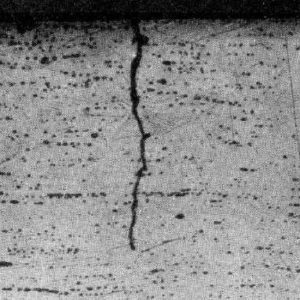
Corrosion-fatigue mechanism
The mechanism of fatigue corrosion is not quantitatively and completely clear, but its cause is qualitatively clear. Fatigue corrosion tests on iron and ferrous metals show that their fatigue life curves are very similar to the behavior of non-ferrous metals in conventional fatigue tests, and it has also been found that fatigue corrosion occurs more in environments where pitting attacks occur.
These two facts imply that the fatigue strength of the metal is reduced in corrosive environments and the pits resulting from corrosion act as sources for stress concentration and crack initiation points. Most likely, corrosion is more severe at the crack tip. Failures caused by this corrosion are usually intergranular and lack the branching that is characteristic of most failures caused by stress corrosion.
The final stages and states in fatigue corrosion and mechanical fatigue are almost the same and similar, and the final failure is 100% mechanical.
Methods for preventing fatigue corrosion
Fatigue corrosion can be prevented by various methods. Although increasing the tensile strength of a metal or alloy improves the normal fatigue life, it is detrimental to this type of corrosion. In cases where resistance to mechanical fatigue is desired, alloys with high tensile strength show greater resistance to the formation and progression of cracks.
It should be noted that when cracking begins in a metal with high tensile strength, it will grow and progress much faster than in metals with lower tensile strength. Therefore, in fatigue corrosion, cracks are easily formed due to the corrosive environment. Therefore, metals with high tensile strength will have lower corrosion resistance.
Fatigue corrosion can be controlled by using the following methods:
a) Reducing the amount of stress on the metal: By reducing the stress on the metal or changing the design of the object, applying stress relief heat treatment or shot peening to create compressive stresses on the surface, fatigue corrosion can be reduced or completely eliminated.
b) Using surface coatings such as zinc, cadmium, nickel, copper and nitriding can increase the fatigue corrosion resistance of the part.
c) Inhibitors have a positive effect on reducing and controlling fatigue corrosion, so their use is recommended.
share :
Why do industrial systems require anti-freeze/coolant in the summer?
1405/03/02Cooling Tower Chemical Cleaning Steps — Implementation Guide
1405/02/07Types of sediments in RO systems and methods for identifying them
1405/02/05Benefits of using specialized solutions from Abrizan Company for MED
1404/12/09
Related articles
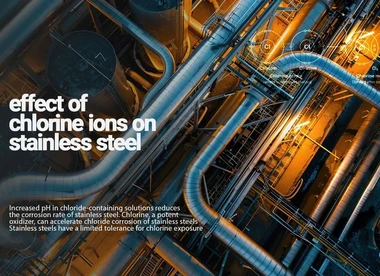
Effect of chlorine ions on stainless steels
The effect of chlorine and chloride parameters on the corrosion of stainless steels and the parameters affecting their corrosion rate, as well as the acceptable limits of chlorine ion levels in water and the differences in the effects of free chlorine and chloride on the corrosion of corrosion-resistant steels, are stated.
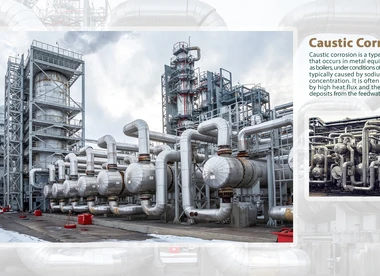
Caustic corrosion
Localized corrosion caused by the concentration of caustic or alkaline salts, which usually occurs under conditions of high evaporation or heat transfer. Caustic salt or caustic soda is one of the most widely used ionic compounds and is used in various industries including water treatment, cardboard and paper production, oil and refinery industries, aluminum production industries, food industries, alcohol production and glass.
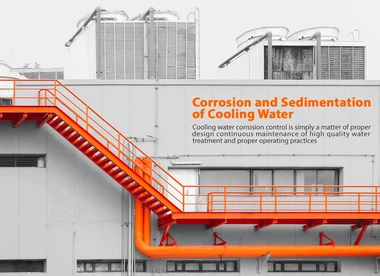
Corrosion and deposition of cooling water based on API 571
It refers to general or localized corrosion of carbon steels and other metals caused by dissolved salts, gases, organic compounds, or microbiological activity.
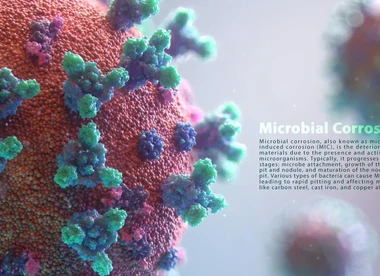
Microbial corrosion based on API 571
Microbial corrosion is a type of corrosion caused by living organisms such as bacteria, algae, or fungi. This type of corrosion is often associated with tubercles or slimy organic materials.
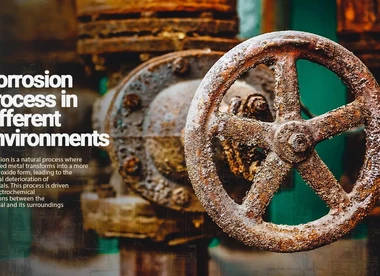
Corrosion process in different environments
Corrosion processes are divided into three groups in a more comprehensive classification: corrosion in aqueous solutions or environments, corrosion in molten salts and liquid metals, and corrosion in gases.
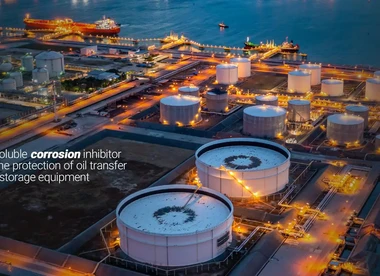
Oil-soluble corrosion inhibitor for the protection of oil transfer and storage equipment
Corrosion is a natural phenomenon that occurs as a result of the electrochemical reaction of metal with the surrounding environment. In the oil and gas industry, corrosion is one of the major problems that accounts for a huge amount of money annually. Part of these amounts are related to the corrosion of pipes or oil transmission lines. Effective ways to prevent corrosion of oil transmission and storage equipment are divided into two categories: physical and chemical solutions.

couponing
The coupon method or corrosion coupons is the simplest method of corrosion monitoring. Coupons are the oldest corrosion monitoring tool. Corrosion coupons are small pieces of metal or alloy of the material of interest that are immersed in the process medium and removed after a specified period of time and their weight or dimension loss is evaluated and examined.
Deaerators
Deaerators are mechanical devices that remove dissolved gases from the boiler feedwater. By reducing the concentration of oxygen and carbon dioxide in the solution, they minimize corrosion and protect the boiler from the effects of corrosive gases.
Submit your opinion
Your email address will not be published.