

Why do industrial systems require anti-freeze/coolant in the summer?
1405/03/02
Cooling Tower Chemical Cleaning Steps — Implementation Guide
1405/02/07
Types of sediments in RO systems and methods for identifying them
1405/02/05
Benefits of using specialized solutions from Abrizan Company for MED
1404/12/09
Hydrogen damage

Introduction
In many technical and engineering applications, it is of particular importance to understand the effects and mechanisms of hydrogen action. Atomic hydrogen produced through cathodic reactions penetrates metals and causes them to crack and fracture. The presence of hydrogen in steel affects its mechanical properties and generally reduces ductility and increases the tendency to brittle fracture and crack formation in the metal. Hydrogen reduces the load-bearing capacity of the metal, although this phenomenon is common in carbon and low-alloy steels, many metals and alloys are sensitive to hydrogen. Hydrogen damage is a general term that refers to mechanical damage to a metal caused by the presence or reaction with hydrogen. Hydrogen causes metal failure and hydrogen damage in various ways, including the following:
- Hydrogen blistering
- Hydrogen embrittlement
- Decarbonization
- Hydrogen attack
A brief description of each of the hydrogen damage is given below.
Hydrogen blistering
Blistering is caused by hydrogen penetration into the metal, which usually results in local deformation in the form of blisters on the metal. Hydrogen blistering can cause metal destruction in certain cases.
Atomic hydrogen is very small in size and easily penetrates into metals, and its penetration is even significant at low temperatures. The source of hydrogen can be from corrosion in acids, pickling and cleaning operations, electroplating, etc. Suppose we have an environment that contains hydrogen ions, and these hydrogen ions, which have high permeability, can be reduced to hydrogen on the metal surface. Now, if there is a hole in the metal as a defect, a hydrogen atom can enter the hole and form molecular hydrogen.
When atomic hydrogen is converted to molecular hydrogen, it can no longer leave the hole and this process is repeated continuously. Hydrogen gas is formed inside the hole and the pressure inside the hole increases, this pressure can rise to the point where it destroys the metal. The gas can produce an excess pressure of up to 300 atmospheres, which stretches the metal and creates blisters on the surface. Therefore, the production of molecular hydrogen inside the steel creates a lot of pressure in that area, which ultimately leads to blistering or destruction of the steel and hydrogen damage.
Hydrogen embrittlement
As mentioned, atomic hydrogen is the only element that can penetrate into the metal or steel, but molecular hydrogen cannot. Hydrogen embrittlement, which is a type of hydrogen damage, causes brittleness and a decrease in the flexibility and strength of the metal, which often occurs in steel-containing stresses.
The solubility and permeability of hydrogen decreases sharply with decreasing temperature. Therefore, when a large section of hydrogen-containing steel is cooled from high temperature to ambient temperature, hydrogen penetrates the steel and remains in the form of a gas. The pressure of hydrogen gas is often sufficient to cause internal cracking.
Hydrogen may be formed on the surface of the metal in aqueous environments and during corrosion reactions. Some of the atomic hydrogens on the metal surface combine to produce hydrogen gas that enters the environment, but another part of the atomic hydrogens penetrates into the metal and, if the metal is under tensile stress, hydrogen embrittlement occurs.
Cracks that occur as a result of hydrogen embrittlement may be intergranular or intergranular, and it is very difficult to distinguish whether stress corrosion cracking or hydrogen embrittlement has occurred.
The presence of various chemicals in the environment has a great effect on hydrogen embrittlement. For example, sodium chromate slows down the absorption or diffusion of hydrogen, while the presence of sodium silicate increases the absorption of hydrogen.
Note: Hydrogen blistering and hydrogen embrittlement usually occur at ambient temperature and are very similar to each other. Hydrogen blistering is more common in low-strength steels and hydrogen embrittlement in high-strength steels.
Decarbonization
Decarbonization of steel is often caused by contact of wet hydrogen with the metal at high temperatures, and as a result of this phenomenon, the tensile strength of the steel decreases.
In most cases, hydrogen gas is accompanied by water vapor, which can cause decarbonization of steel according to the following reaction.
H2+CO→ CFe+H2O
The carbon in the steel reacts with water vapor and produces hydrogen and carbon monoxide. The speed and extent of this reaction depends on the activity of the carbon in the alloy and the ratio of water vapor, carbon monoxide, and hydrogen in the environment.
Whenever steels are exposed to hydrogen at high temperatures, the following reaction occurs.
CH4+O2→CFe+2H2O
In this case, the carbon in the steel reacts with water to produce methane. Since atomic hydrogen easily and quickly penetrates steels, it causes cracks in the internal parts of the metal. By adding chromium and molybdenum to steels, their resistance to decarburization and cracking can be increased.
Hydrogen attack
This type of corrosion refers to the reaction between hydrogen and one of the alloying elements or components of the metal at high temperatures.
Methods for preventing hydrogen damage
Hydrogen blistering can be reduced by using one or more of the following methods:
- Use of clean steel: Frame steels have many pores, so replacing them with dead steels that are free of pores will increase resistance to hydrogen blistering.
- Use of coatings: To prevent hydrogen blistering, metallic, inorganic and organic coatings are used.
- Use of inhibitors: Inhibitors can reduce the corrosion rate and the rate of hydrogen ion reduction, thus preventing hydrogen blistering.
- Removal of harmful substances (hydrogen producers): Hydrogen blistering often occurs in corrosive environments that contain harmful substances for hydrogen production such as sulfides, arsenic compounds, cyanides, etc. and rarely occurs in pure acidic environments. Therefore, in oil refining operations, such harmful substances are present and cause hydrogen blistering.
- Alloy change: Nickel-containing steels and nickel-based alloys are less resistant to hydrogen penetration and these alloys are often used to prevent hydrogen blistering.
Hydrogen embrittlement can be reduced by using one of the following methods:
- Use of inhibitors: Hydrogen embrittlement often occurs in pickling operations where corrosion releases hydrogen. Therefore, by using inhibitors carefully, the corrosion of the metal in the pickling stage can be reduced and, as a result, the penetration of hydrogen into the metal can also be reduced.
- Annealing: Annealing can be used to remove hydrogen from steel. For steel, three hours of baking at a low temperature of 175 degrees Celsius is usually sufficient.
- Alloy change: High-strength steels are more sensitive to hydrogen embrittlement. Therefore, by adding nickel or molybdenum to steels, their sensitivity to hydrogen embrittlement can be reduced.
- Correct welding: If hydrogen embrittlement occurs in welding operations, high-quality and suitable electrodes should be used in welding. It is important to keep the weld area and surroundings dry during welding operations. Because water and water vapor are the main factors that create hydrogen.
share :
Why do industrial systems require anti-freeze/coolant in the summer?
1405/03/02Cooling Tower Chemical Cleaning Steps — Implementation Guide
1405/02/07Types of sediments in RO systems and methods for identifying them
1405/02/05Benefits of using specialized solutions from Abrizan Company for MED
1404/12/09
Related articles
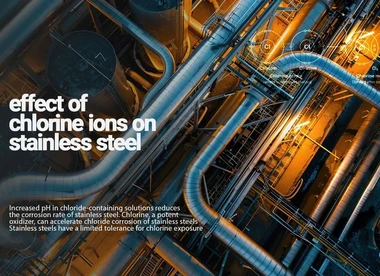
Effect of chlorine ions on stainless steels
The effect of chlorine and chloride parameters on the corrosion of stainless steels and the parameters affecting their corrosion rate, as well as the acceptable limits of chlorine ion levels in water and the differences in the effects of free chlorine and chloride on the corrosion of corrosion-resistant steels, are stated.
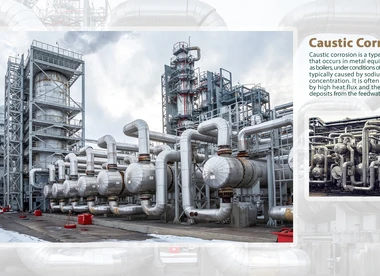
Caustic corrosion
Localized corrosion caused by the concentration of caustic or alkaline salts, which usually occurs under conditions of high evaporation or heat transfer. Caustic salt or caustic soda is one of the most widely used ionic compounds and is used in various industries including water treatment, cardboard and paper production, oil and refinery industries, aluminum production industries, food industries, alcohol production and glass.
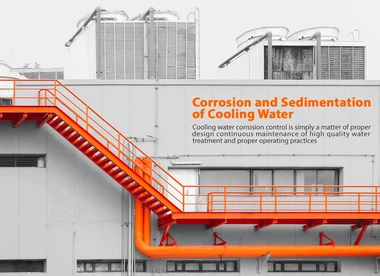
Corrosion and deposition of cooling water based on API 571
It refers to general or localized corrosion of carbon steels and other metals caused by dissolved salts, gases, organic compounds, or microbiological activity.
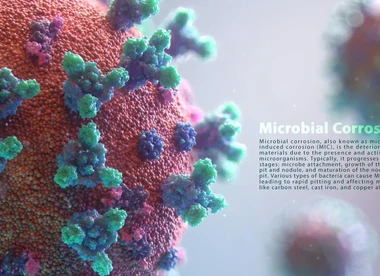
Microbial corrosion based on API 571
Microbial corrosion is a type of corrosion caused by living organisms such as bacteria, algae, or fungi. This type of corrosion is often associated with tubercles or slimy organic materials.
Corrosion process in different environments
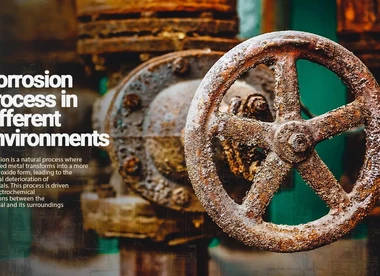
Corrosion processes are divided into three groups in a more comprehensive classification: corrosion in aqueous solutions or environments, corrosion in molten salts and liquid metals, and corrosion in gases.
Oil-soluble corrosion inhibitor for the protection of oil transfer and storage equipment
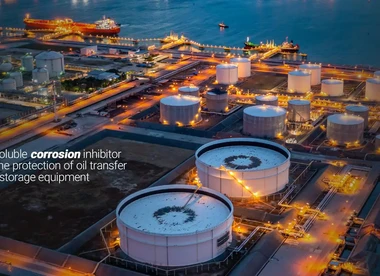
Corrosion is a natural phenomenon that occurs as a result of the electrochemical reaction of metal with the surrounding environment. In the oil and gas industry, corrosion is one of the major problems that accounts for a huge amount of money annually. Part of these amounts are related to the corrosion of pipes or oil transmission lines. Effective ways to prevent corrosion of oil transmission and storage equipment are divided into two categories: physical and chemical solutions.

couponing
The coupon method or corrosion coupons is the simplest method of corrosion monitoring. Coupons are the oldest corrosion monitoring tool. Corrosion coupons are small pieces of metal or alloy of the material of interest that are immersed in the process medium and removed after a specified period of time and their weight or dimension loss is evaluated and examined.
Deaerators
Deaerators are mechanical devices that remove dissolved gases from the boiler feedwater. By reducing the concentration of oxygen and carbon dioxide in the solution, they minimize corrosion and protect the boiler from the effects of corrosive gases.
Submit your opinion
Your email address will not be published.