

Why do industrial systems require anti-freeze/coolant in the summer?
1405/03/02
Cooling Tower Chemical Cleaning Steps — Implementation Guide
1405/02/07
Types of sediments in RO systems and methods for identifying them
1405/02/05
Benefits of using specialized solutions from Abrizan Company for MED
1404/12/09
Intergranular corrosion

Grain boundary corrosion is a type of localized corrosion. The grain boundary has a higher energy level than the grain itself and is therefore more chemically active and more susceptible to corrosion. In this case, the materials present at the grain boundaries act as the anode (with a smaller surface area) and the grains themselves (with a larger surface area) act as the cathode.
In grain boundary corrosion, attacks are concentrated at the grain boundaries and, along with relatively minor grain corrosion, cause the grains to separate from each other, which ultimately reduces the strength, flexibility and ductility of the metal.
The most important causes of grain boundary corrosion can be considered to be the accumulation of impurities at the grain boundaries of the metal and the depletion of the boundary from some alloying elements.
To better understand intergranular corrosion, consider the following examples:
- Depletion of the grain boundaries of stainless steel from the alloying element chromium facilitates the deposition of chromium carbide (Cr23C6) at the boundaries, thus making the boundaries susceptible to intergranular corrosion.
- Zinc separation in brass alloys in the boundary areas exacerbates intergranular corrosion.
Stainless steels have a high chromium content. In these types of steels, the chromium metal prevents corrosion of the rest of the metal by forming a protective layer, but at the grain boundaries, carbon may form chromium carbide with chromium. The deposition of chromium carbide at the grain boundary causes the chromium around the grain boundary to become depleted. If this deposition and depletion is relatively continuous, it makes stainless steel susceptible to intergranular corrosion. In this case, the corrosion attack will start and continue at the grain boundary.
Intergranular corrosion reduces the ability of a metal or alloy to undergo plastic deformation before failure. This type of corrosion, in more severe cases, also significantly reduces the tensile properties of the metal.
Intergranular corrosion occurs in two forms:
Weld line corrosion
One of the welding problems of stainless steels that we often encounter during welding operations is intergranular corrosion, which occurs more in the heat-affected zone and the weld zone, and this has caused a lot of damage.
When 8-18 stainless steel is heated for a period of time in the temperature range of 450-950 degrees Celsius, chromium carbide precipitates at the grain boundaries, and thus the grain boundaries are depleted of chromium. This phenomenon causes stainless steel to become sensitive.
Destruction and damage to welded steel structures along and near the weld line is called weld line corrosion.
Methods for preventing sensitization of austenitic steels
a) Reducing the carbon content in the steel to less than 0.03%, this will prevent the formation of sufficient carbides to cause intergranular corrosion.
b) Using temperature-time sensitization curves, it is possible to prevent sensitization and observe the effect of carbon content on this phenomenon. The amount of carbon can affect the degree of sensitization. Sensitization in 304 stainless steel occurs much faster with increasing carbon content. Studies show that under a given welding energy and speed, weld corrosion in 304 stainless steel increases with increasing carbon content.
c) Using stable steels. These stainless steels contain titanium or niobium, which tend to combine with carbon and easily form carbides, which allows chromium to remain in the solvent even when exposed to sensitization temperatures for a long time, minimizing the formation of chromium-rich grain boundary carbides.
The only solution to repair sensitized austenitic stainless steels is to anneal them.
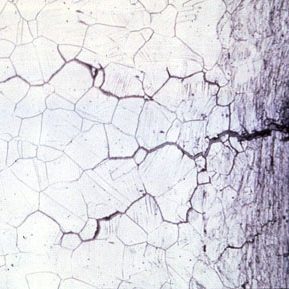
Pitting Corrosion
Although stable austenitic stainless steels are not susceptible to weld pitting, they can be susceptible to a different type of intergranular corrosion attack called pitting. Like weld pitting, pitting corrosion is caused by the deposition of chromium carbide at grain boundaries. This type of corrosion is different from pitting corrosion. The differences are:
- Pitting corrosion occurs in a narrow zone very close to the weld metal.
- Pitting corrosion occurs in stable stainless steels.
Methods for preventing pitting corrosion
a) Post-weld heat treatment in the temperature range of 1000 to 1100°C causes the dissolution of chromium carbide.
b) The use of low-carbon alloy steels reduces the likelihood of chromium carbide precipitation.
c) Sometimes pitting attack can be prevented by modifying the welding procedure or program.
share :
Why do industrial systems require anti-freeze/coolant in the summer?
1405/03/02Cooling Tower Chemical Cleaning Steps — Implementation Guide
1405/02/07Types of sediments in RO systems and methods for identifying them
1405/02/05Benefits of using specialized solutions from Abrizan Company for MED
1404/12/09
Related articles
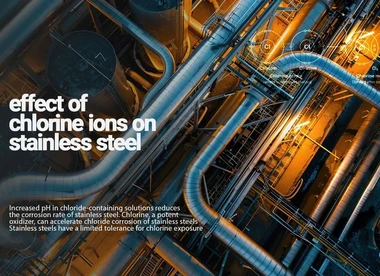
Effect of chlorine ions on stainless steels
The effect of chlorine and chloride parameters on the corrosion of stainless steels and the parameters affecting their corrosion rate, as well as the acceptable limits of chlorine ion levels in water and the differences in the effects of free chlorine and chloride on the corrosion of corrosion-resistant steels, are stated.
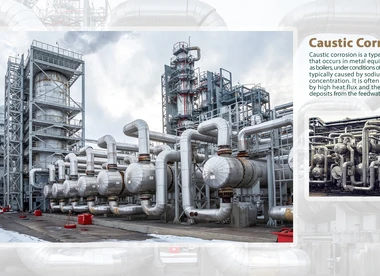
Caustic corrosion
Localized corrosion caused by the concentration of caustic or alkaline salts, which usually occurs under conditions of high evaporation or heat transfer. Caustic salt or caustic soda is one of the most widely used ionic compounds and is used in various industries including water treatment, cardboard and paper production, oil and refinery industries, aluminum production industries, food industries, alcohol production and glass.
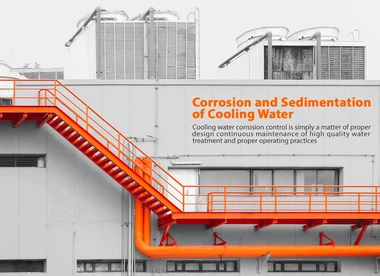
Corrosion and deposition of cooling water based on API 571
It refers to general or localized corrosion of carbon steels and other metals caused by dissolved salts, gases, organic compounds, or microbiological activity.
Microbial corrosion based on API 571
Microbial corrosion is a type of corrosion caused by living organisms such as bacteria, algae, or fungi. This type of corrosion is often associated with tubercles or slimy organic materials.
Corrosion process in different environments
Corrosion processes are divided into three groups in a more comprehensive classification: corrosion in aqueous solutions or environments, corrosion in molten salts and liquid metals, and corrosion in gases.
Oil-soluble corrosion inhibitor for the protection of oil transfer and storage equipment
Corrosion is a natural phenomenon that occurs as a result of the electrochemical reaction of metal with the surrounding environment. In the oil and gas industry, corrosion is one of the major problems that accounts for a huge amount of money annually. Part of these amounts are related to the corrosion of pipes or oil transmission lines. Effective ways to prevent corrosion of oil transmission and storage equipment are divided into two categories: physical and chemical solutions.

couponing
The coupon method or corrosion coupons is the simplest method of corrosion monitoring. Coupons are the oldest corrosion monitoring tool. Corrosion coupons are small pieces of metal or alloy of the material of interest that are immersed in the process medium and removed after a specified period of time and their weight or dimension loss is evaluated and examined.

Deaerators
Deaerators are mechanical devices that remove dissolved gases from the boiler feedwater. By reducing the concentration of oxygen and carbon dioxide in the solution, they minimize corrosion and protect the boiler from the effects of corrosive gases.
Submit your opinion
Your email address will not be published.