

Why do industrial systems require anti-freeze/coolant in the summer?
1405/03/02
Cooling Tower Chemical Cleaning Steps — Implementation Guide
1405/02/07
Types of sediments in RO systems and methods for identifying them
1405/02/05
Benefits of using specialized solutions from Abrizan Company for MED
1404/12/09
Miscellaneous forms of corrosion

Exfoliation Corrosion
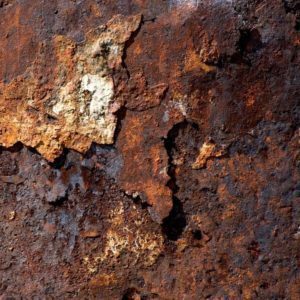
This type of corrosion progresses laterally from the corrosion initiation sites on the surface and usually continues intergranularly along planes parallel to the surface. Corrosion products produced at the grain boundaries force the metal out of the underlying layer, which ultimately leads to delamination or flaking of the metal. This type of corrosion mainly affects aluminum alloys.
This type of corrosion is usually related to the method of alloying, annealing of impurities in the alloy matrix, and the distribution of intermetallic compounds on the surface and grain boundaries. An example of this type of corrosion is shown in the figure below.
Copper-magnesium alloys of the 2000 series, zinc-copper-magnesium alloys of the 7000 series are susceptible to this type of corrosion (flaking) in industrial and marine environments.
Subprecipitation Corrosion
Subprecipitation corrosion occurs when the metal surface is covered by deposits or any other foreign body. This can lead to crevice corrosion. If the deposit formed on the metal surface is also conductive, galvanic corrosion is also possible.
Corrosion by condensed acid
During the start-up and shutdown of a plant, conditions may be such that the temperature and pressure are below the dew point of the vapors in the environment, which can cause these gases to condense on metal surfaces and cause corrosion. For example, in combustion chambers where sulfur is burned, sulfur may combine with water vapor to produce sulfuric acid, which, after condensing, can cause various types of corrosion on metal surfaces.
Corrosion in a non-operating state
As the name suggests, this type of corrosion occurs when the plant is not operating. Usually, in this case, moisture in the air or chemical vapors cause corrosion on metal surfaces.
Corrosion at high temperatures
If there are liquid or solid impurities on the metal surface, these impurities can react with the protective oxide layer and destroy this layer. These reactions usually occur at temperatures above 600 degrees Celsius, in which case the protective layer is destroyed and the metal undergoes hot corrosion or high-temperature corrosion.
As a result of the reaction of the metal with the environment containing hot gas, an oxide layer is formed on the surface of the metal. This oxide layer acts as a protector on the surface and prevents the continuation of corrosion reactions. However, in this layer, metal ions, electrons and oxygen ions can move, and in this way this oxide layer grows.
share :
Why do industrial systems require anti-freeze/coolant in the summer?
1405/03/02Cooling Tower Chemical Cleaning Steps — Implementation Guide
1405/02/07Types of sediments in RO systems and methods for identifying them
1405/02/05Benefits of using specialized solutions from Abrizan Company for MED
1404/12/09
Related articles
Effect of chlorine ions on stainless steels
The effect of chlorine and chloride parameters on the corrosion of stainless steels and the parameters affecting their corrosion rate, as well as the acceptable limits of chlorine ion levels in water and the differences in the effects of free chlorine and chloride on the corrosion of corrosion-resistant steels, are stated.
Caustic corrosion
Localized corrosion caused by the concentration of caustic or alkaline salts, which usually occurs under conditions of high evaporation or heat transfer. Caustic salt or caustic soda is one of the most widely used ionic compounds and is used in various industries including water treatment, cardboard and paper production, oil and refinery industries, aluminum production industries, food industries, alcohol production and glass.
Corrosion and deposition of cooling water based on API 571
It refers to general or localized corrosion of carbon steels and other metals caused by dissolved salts, gases, organic compounds, or microbiological activity.
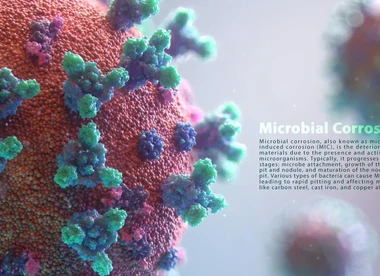
Microbial corrosion based on API 571
Microbial corrosion is a type of corrosion caused by living organisms such as bacteria, algae, or fungi. This type of corrosion is often associated with tubercles or slimy organic materials.
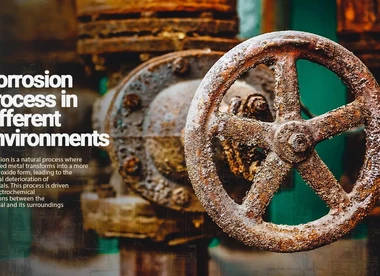
Corrosion process in different environments
Corrosion processes are divided into three groups in a more comprehensive classification: corrosion in aqueous solutions or environments, corrosion in molten salts and liquid metals, and corrosion in gases.
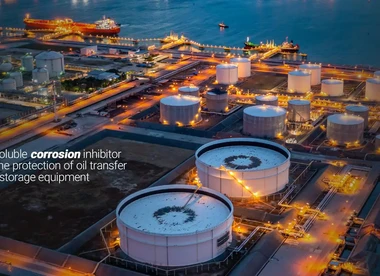
Oil-soluble corrosion inhibitor for the protection of oil transfer and storage equipment
Corrosion is a natural phenomenon that occurs as a result of the electrochemical reaction of metal with the surrounding environment. In the oil and gas industry, corrosion is one of the major problems that accounts for a huge amount of money annually. Part of these amounts are related to the corrosion of pipes or oil transmission lines. Effective ways to prevent corrosion of oil transmission and storage equipment are divided into two categories: physical and chemical solutions.

couponing
The coupon method or corrosion coupons is the simplest method of corrosion monitoring. Coupons are the oldest corrosion monitoring tool. Corrosion coupons are small pieces of metal or alloy of the material of interest that are immersed in the process medium and removed after a specified period of time and their weight or dimension loss is evaluated and examined.
Deaerators
Deaerators are mechanical devices that remove dissolved gases from the boiler feedwater. By reducing the concentration of oxygen and carbon dioxide in the solution, they minimize corrosion and protect the boiler from the effects of corrosive gases.
Submit your opinion
Your email address will not be published.