

Why do industrial systems require anti-freeze/coolant in the summer?
1405/03/02
Cooling Tower Chemical Cleaning Steps — Implementation Guide
1405/02/07
Types of sediments in RO systems and methods for identifying them
1405/02/05
Benefits of using specialized solutions from Abrizan Company for MED
1404/12/09
Uniform corrosion

Uniform corrosion is the most common type of corrosion, which occurs over the entire surface of the metal due to contact with the corrosive medium, resulting in a uniform reduction in the thickness of the metal. This type of corrosion is schematically shown in the figure below. In this type of corrosion, the reduction in the dimensions of the metal due to corrosion is completely uniform, so the corrosion rate is expressed in terms of the reduction in dimensions per unit of time.
Corrosion units
The rate of corrosion is measured in different units, but the most commonly used units are millimeters per year (m/y), mil inches per year (mpy), milligrams per square decimeter per day (mmd), and inches per year (ipy). Steel corrodes relatively uniformly in seawater, which is about 25 mmd or 0.005 ipy.
An example of uniform corrosion is the corrosion of a piece of steel in a dilute sulfuric acid environment. In this case, the entire surface of the steel corrodes at the same rate at all points of the piece, and eventually the piece loses its functionality due to the reduction in thickness. This type of corrosion has the highest incidence in terms of metal weight loss and is the most common cause of industrial equipment and parts loss. An example of a part affected by uniform corrosion is shown in the figure below. Unfortunately, due to the simplicity of the mechanism of this type of corrosion, less research has been done in this field.
Uniform corrosion is not very important from a technical point of view because this type of corrosion is easily predictable and by performing a simple test, it is possible to understand when and how much of the part is corroded and when the part should be replaced.
Different metals and alloys in terms of their susceptibility to uniform corrosion
a) Noble metals: Metals in this group have very good resistance to corrosion, and their corrosion rate is usually less than 0.15 millimeters per year (mm/y). These metals are mostly used in the manufacture of sensitive parts such as internal valve seats, ship shafts and propellers, and turbine blades.
b) Metals with relative resistance: The corrosion rate of this group of metals is between 0.15 and 1.5 mm per year, which is why this metal is used to make water storage tanks, valve bodies, etc.
c) Metals with high corrosion rate: Such metals usually have a corrosion rate greater than 1.5 mm per year, so their use in corrosive environments is not recommended.
To protect the metal against uniform corrosion, methods such as: coating the part (such as plating, painting the surfaces, etc.), using corrosion inhibitors, and finally cathodic protection are used.
Noble metals such as gold, silver, and platinum are resistant to acidic and alkaline solutions, and their corrosion rate is independent of pH. However, metals such as zinc, aluminum, lead, and tin are not resistant to acidic and alkaline solutions, because they are amphoteric and their corrosion products are soluble in acids and bases. Metals such as iron, manganese, nickel, copper, cadmium, cobalt, chromium and magnesium are sensitive to acidic environments and immune to alkaline environments. The reason for this is that the hydroxides of these metals are easily dissolved in acid while they are not dissolved in alkali.
It should be noted that any change in the corrosion rate cannot be attributed to changes in pH. Because there are other factors such as the formation or destruction of the protective layer that affect the corrosion rate. For example, aluminum at the same pH, corrodes much faster in hydrochloric acid solution than in nitric acid solution. While this layer is destroyed in hydrochloric acid solution.
Numerous studies show that a metal does not always corrode uniformly. In other words, corrosion does not cover the entire surface, but for many reasons it is concentrated in a specific part of the parts or industrial equipment, such corrosion is called localized corrosion.
Localized corrosion itself is divided into several different categories that occur in industrial parts in different ways.
share :
Why do industrial systems require anti-freeze/coolant in the summer?
1405/03/02Cooling Tower Chemical Cleaning Steps — Implementation Guide
1405/02/07Types of sediments in RO systems and methods for identifying them
1405/02/05Benefits of using specialized solutions from Abrizan Company for MED
1404/12/09
Related articles
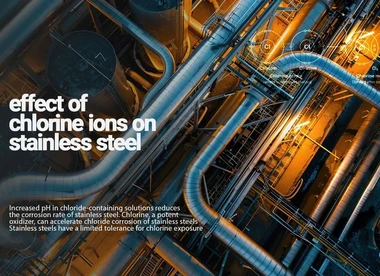
Effect of chlorine ions on stainless steels
The effect of chlorine and chloride parameters on the corrosion of stainless steels and the parameters affecting their corrosion rate, as well as the acceptable limits of chlorine ion levels in water and the differences in the effects of free chlorine and chloride on the corrosion of corrosion-resistant steels, are stated.
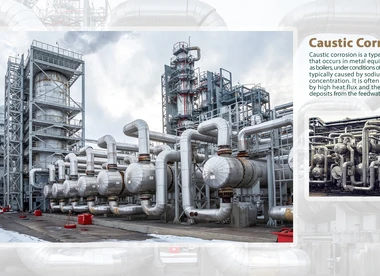
Caustic corrosion
Localized corrosion caused by the concentration of caustic or alkaline salts, which usually occurs under conditions of high evaporation or heat transfer. Caustic salt or caustic soda is one of the most widely used ionic compounds and is used in various industries including water treatment, cardboard and paper production, oil and refinery industries, aluminum production industries, food industries, alcohol production and glass.
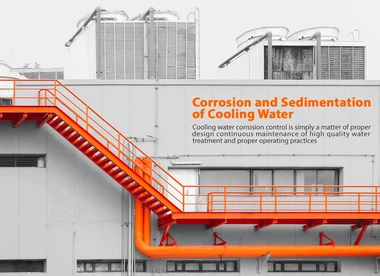
Corrosion and deposition of cooling water based on API 571
It refers to general or localized corrosion of carbon steels and other metals caused by dissolved salts, gases, organic compounds, or microbiological activity.

Microbial corrosion based on API 571
Microbial corrosion is a type of corrosion caused by living organisms such as bacteria, algae, or fungi. This type of corrosion is often associated with tubercles or slimy organic materials.
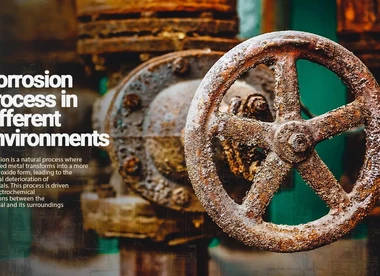
Corrosion process in different environments
Corrosion processes are divided into three groups in a more comprehensive classification: corrosion in aqueous solutions or environments, corrosion in molten salts and liquid metals, and corrosion in gases.
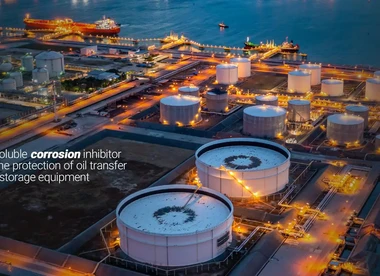
Oil-soluble corrosion inhibitor for the protection of oil transfer and storage equipment
Corrosion is a natural phenomenon that occurs as a result of the electrochemical reaction of metal with the surrounding environment. In the oil and gas industry, corrosion is one of the major problems that accounts for a huge amount of money annually. Part of these amounts are related to the corrosion of pipes or oil transmission lines. Effective ways to prevent corrosion of oil transmission and storage equipment are divided into two categories: physical and chemical solutions.

couponing
The coupon method or corrosion coupons is the simplest method of corrosion monitoring. Coupons are the oldest corrosion monitoring tool. Corrosion coupons are small pieces of metal or alloy of the material of interest that are immersed in the process medium and removed after a specified period of time and their weight or dimension loss is evaluated and examined.
Deaerators
Deaerators are mechanical devices that remove dissolved gases from the boiler feedwater. By reducing the concentration of oxygen and carbon dioxide in the solution, they minimize corrosion and protect the boiler from the effects of corrosive gases.
Submit your opinion
Your email address will not be published.