

Why do industrial systems require anti-freeze/coolant in the summer?
1405/03/02
Cooling Tower Chemical Cleaning Steps — Implementation Guide
1405/02/07
Types of sediments in RO systems and methods for identifying them
1405/02/05
Benefits of using specialized solutions from Abrizan Company for MED
1404/12/09
Classification of corrosion inhibitors according to mechanism and composition

Introduction to Corrosion Inhibitors
Corrosion inhibitors are substances that, when added in small amounts to a corrosive environment, slow down the rate of corrosion. In fact, an inhibitor can be considered an inhibitory catalyst. There are many inhibitors with different compositions. Most of these substances have been found and modified through experimental tests, and many of them are sold under trade names and their chemical compositions are kept secret. For this reason, the protection process by this method is not completely clear. However, corrosion inhibitors can be classified according to mechanism and composition.
Adsorption inhibitors
These substances are the largest group of corrosion inhibitors. In general, these types of inhibitors are organic compounds that are adsorbed to the metal surface and slow down the metal dissolution and reduction reactions. In most cases, adsorption inhibitors affect both the anodic and cathodic processes, although in some cases this effect is not the same. Organic amines are an example of this group.
Hydrogen Sublimation Poisons
These substances, such as arsenic and antimony ions, prevent the hydrogen release reaction. As a result, such substances are very effective in acidic solutions, but are ineffective in environments where other cathodic reactions, such as oxygen reduction, are controlling.
Harmful Agent Absorbers
These substances remove corrosive agents from the environment. Examples of this type of inhibitor include sodium sulfite and hydrazine, which combine with dissolved oxygen in the environment according to the following relationships:
2Na2SO3 + O2 = 2Na2SO4
N2H4 + O2 = N2.H2O
It is clear that these types of corrosion inhibitors will work very well in solutions where oxygen reduction is controlling and will not be effective in strongly acidic solutions.
Oxidizing Agents
Substances such as chromates, nitrates, and ferric salts are also used in many cases as a corrosion inhibitor. Generally, these materials are used to prevent corrosion of metals and alloys that exhibit active-passive transfer, such as steel and its alloys and stainless steels.
Vapor phase inhibitors
These compounds are very similar to absorption inhibitors and have very high vapor pressures. As a result, these materials can be used to prevent atmospheric corrosion of metals without direct contact. In practice, these inhibitors are placed close to the metal to be protected, so that their evaporation and condensation on the metal surface protect the metal. Vapor phase inhibitors are usually effective when used in a confined space, such as inside the packaging of parts or inside machinery during storage and transportation.
It should be noted that inhibitors are usually unique in terms of metal, corrosive environment, temperature, and concentration. As mentioned above, the concentration and type of inhibitor to be used in a given corrosive environment is determined by testing and experience, and such information is usually available from the manufacturers of the materials.
Inhibitor Concentration
If the concentration of corrosion inhibitors is too low, corrosion may be accelerated, especially localized corrosion such as pitting. Therefore, if the inhibitor concentration is too low, the damage will be greater than if the inhibitor was not used at all. To avoid this risk, the concentration of corrosion inhibitors should always be higher than the required amount and its concentration should be determined intermittently. When two or more inhibitors are added to a corrosive system, their effect is sometimes greater than the effect of each one alone. This property is called the additive effect. The mechanism of the additive effect is not completely clear.
Limitations of Corrosion Protection
Although inhibitors can be used effectively in many applications, there are limitations to this type of corrosion protection. Adding inhibitors to a system may not be practical due to environmental contamination. In addition, many inhibitors are toxic and their use is limited to environments that are not directly or indirectly involved in the production of food or other products used by humans.
For this reason, arsenic salts, which are effective inhibitors in many strong acids, have limited use. Inhibitors are mainly used in closed systems and are not usually used in completely open systems. Finally, as the temperature and concentration of the environment increase, the effectiveness of the inhibitors rapidly decreases.
Inhibitory Tools
In his opening address to the NACE Annual Congress, Rosenfeld discusses theoretical and applied quantum chemical calculations, X-ray photoelectron spectroscopy, radioactive tracers such as (Cl 36), and chemical polarization as "tools" for studying the phenomenon of inhibition.
Inhibition can be achieved by both adsorption and phase layers on the metal surface. He shows that inhibition by adsorption prevents pitting of stainless steels. The protection is attributed to the adsorption of deactivating ions to the metal surface and their substitution for the destructive agent (Cl–). The protection is attributed to the substitution power rather than the oxidizing power, the anion NO3 being more effective than CrO4, although the latter is a stronger oxidizing agent.
Rosenfeld shows that the protection of steel against corrosion by hydrogen sulfide is due to the appearance of phase films consisting of iron, sulfur, and inhibitory components on the steel surface. He also points out that only a percentage of
A small portion (in one case 4%) of the surface must be covered by the adsorbed inhibitor to stop corrosion. Adsorption is in some cases chemical in nature. The main point of Rosenfeld's statement is that "the mechanism of inhibition, regardless of the amount adsorbed to the surface, consists in changing the electrophysical properties of the surface atoms by surface reactions to coat the metal surface and isolate it from the corrosive environment."
Corrosion Prevention by Formation of a Protective Phase or Adsorption to the Metal Surface
An international conference on inhibition was held in May 1983. Evidence has been presented in recent years that many organic and inorganic inhibitors protect by interacting with one of several corrosion products and forming a protective phase rather than by adsorption to the metal surface.
The conference emphasized the distinction between corrosion inhibitors that are adsorbed to the metal surface or that protect by forming phases. The proceedings of this conference, containing about 30 papers, were published by NACE in 1984. A color remover and inhibitor with the trade name KO-99 is of the fusible type.
An important cause of corrosion in the upper reaches of oil refineries is corrosion by hydrogen sulfide and hydrochloric acid. In these cases, film-forming inhibitors are recommended by Nathan and Progioni. Corrosion inhibitors are also useful in reducing hydrogen blistering.
Environmental considerations have led to the development of corrosion inhibitors containing light metals (e.g., the use of chromates has been banned).
An article by Breske provides information on tests and practical experiences with these corrosion inhibitors in aquatic environments. Algal growth (and fouling) is also discussed. Brown has replaced chromate with a triazole inhibitor.
Viocasvish and Sullivan studied the combined and separate effects of molybdate, phosphate, and borate with nitrate and triazole in automobile coolants and described the experimental procedure. Adding 0.2% water to ammonia hydrated it and stopped the corrosion of steel.
share :
Why do industrial systems require anti-freeze/coolant in the summer?
1405/03/02Cooling Tower Chemical Cleaning Steps — Implementation Guide
1405/02/07Types of sediments in RO systems and methods for identifying them
1405/02/05Benefits of using specialized solutions from Abrizan Company for MED
1404/12/09
Related articles
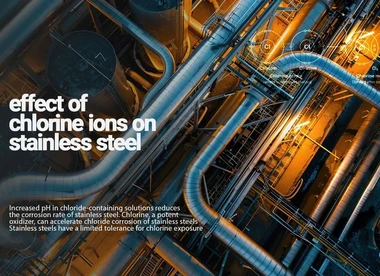
Effect of chlorine ions on stainless steels
The effect of chlorine and chloride parameters on the corrosion of stainless steels and the parameters affecting their corrosion rate, as well as the acceptable limits of chlorine ion levels in water and the differences in the effects of free chlorine and chloride on the corrosion of corrosion-resistant steels, are stated.
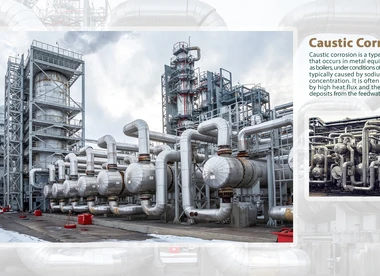
Caustic corrosion
Localized corrosion caused by the concentration of caustic or alkaline salts, which usually occurs under conditions of high evaporation or heat transfer. Caustic salt or caustic soda is one of the most widely used ionic compounds and is used in various industries including water treatment, cardboard and paper production, oil and refinery industries, aluminum production industries, food industries, alcohol production and glass.
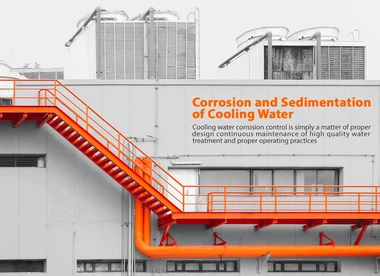
Corrosion and deposition of cooling water based on API 571
It refers to general or localized corrosion of carbon steels and other metals caused by dissolved salts, gases, organic compounds, or microbiological activity.
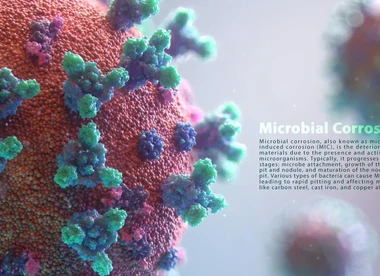
Microbial corrosion based on API 571
Microbial corrosion is a type of corrosion caused by living organisms such as bacteria, algae, or fungi. This type of corrosion is often associated with tubercles or slimy organic materials.
Corrosion process in different environments
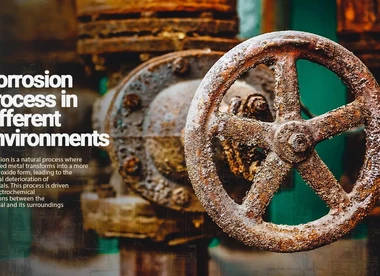
Corrosion processes are divided into three groups in a more comprehensive classification: corrosion in aqueous solutions or environments, corrosion in molten salts and liquid metals, and corrosion in gases.
Oil-soluble corrosion inhibitor for the protection of oil transfer and storage equipment
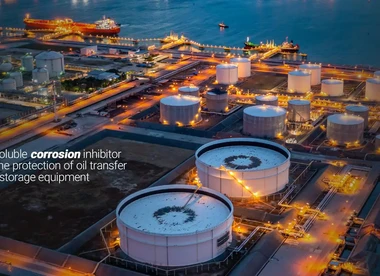
Corrosion is a natural phenomenon that occurs as a result of the electrochemical reaction of metal with the surrounding environment. In the oil and gas industry, corrosion is one of the major problems that accounts for a huge amount of money annually. Part of these amounts are related to the corrosion of pipes or oil transmission lines. Effective ways to prevent corrosion of oil transmission and storage equipment are divided into two categories: physical and chemical solutions.

couponing
The coupon method or corrosion coupons is the simplest method of corrosion monitoring. Coupons are the oldest corrosion monitoring tool. Corrosion coupons are small pieces of metal or alloy of the material of interest that are immersed in the process medium and removed after a specified period of time and their weight or dimension loss is evaluated and examined.
Deaerators
Deaerators are mechanical devices that remove dissolved gases from the boiler feedwater. By reducing the concentration of oxygen and carbon dioxide in the solution, they minimize corrosion and protect the boiler from the effects of corrosive gases.
Submit your opinion
Your email address will not be published.