

Why do industrial systems require anti-freeze/coolant in the summer?
1405/03/02
Cooling Tower Chemical Cleaning Steps — Implementation Guide
1405/02/07
Types of sediments in RO systems and methods for identifying them
1405/02/05
Benefits of using specialized solutions from Abrizan Company for MED
1404/12/09
Coastal freshwater sediment removal (MED)

Periodic desalination plant sedimentation
One of the methods of producing fresh water for industrial use is the use of multi-stage thermal desalination plants to desalinate seawater. Given the high content of soluble and insoluble compounds in seawater and the high temperature shock in desalination packages, sedimentation in these packages is unavoidable. For this reason, periodic sedimentation of desalination plants should be carried out.
What are the components of coastal desalination plant sediments?
The important and noteworthy point here is the use of a safe sediment removal agent with a low corrosion rate that, while removing maximum sediments, does not damage the device. The sediments formed in such packages (according to the analysis of the water entering the package) usually include compounds such as carbonates, sulfates, sludge, iron oxides and other corrosion products, etc.
Removal of sediments in coastal desalination plants
Given the high compositional diversity of the sediments formed and also the calcination of the sediment due to high heat transfer and increased thermal shocks, it is very important to choose a sediment removal solution that has the ability to remove all types of sediment and does not damage the main alloy of the device.
The cold Mitreh solution with the code MDA0102, which has been formulated and invented by Iranian researchers and researchers through years of research and testing, has the ability to remove a wide range of sediments. An important point about this solution is its low corrosion rate, which is less than 30 mpy.
Performance of cold Mitreh in sediment removal in coastal desalination plants
A pilot study was conducted to investigate the performance of the cold Mitreh solution MDA0102 in removing sediments formed in the MED desalination plant package, which is discussed below.
The produced fresh water is produced by four five-stage thermal desalination plants (four packages) with a design capacity of 166.7 tons per hour. The first five-stage thermal desalination plant (the first package) along with the other three packages faced a high rate of sedimentation from the beginning of the commissioning due to various reasons such as lack of continuous anti-scale injection, etc.
Acid washing with cold Mitreh
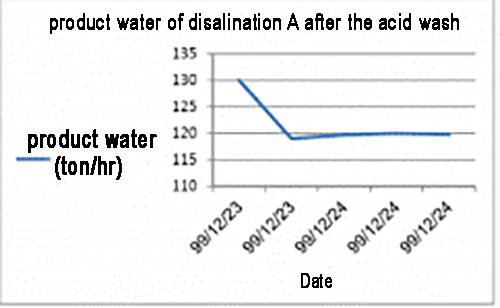
The acid washing operation of the package was carried out in cooperation with Abrizan Industrial Research Company and with a scale removal solution with a controlled corrosion rate of cold Mitreh MDA0102, after which a significant increase in its efficiency was witnessed. In this report, the performance of the first package before and after scale removal with cold Mitreh has been evaluated.
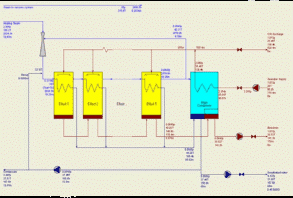
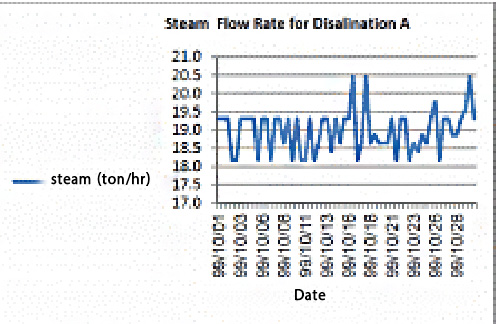
Performance of the desalination package before pickling:
The two figures below show the amount of steam and fresh water produced before the pickling operation.
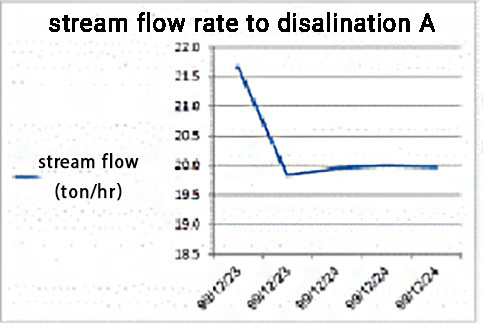
Performance of the desalination package after acid washing:
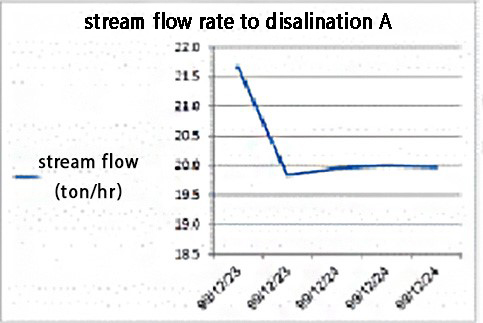
The two figures below show the performance of the package after the acid washing operation.
Cold Mitreh and Desalination Efficiency
In order to analyze the performance of a MED desalination plant, the effect of process variables of the first desalination package on the efficiency of the package was investigated. It should be noted that the minimum number of desalination stages is determined by capacity, economic considerations, construction and design of the system.
Also, the use of a scale-removing agent under the trade name Cold Mitreh increases the heat transfer of the package and as a result, the temperature difference between the stages becomes closer and as a result the temperature of each stage increases, which increases the desalination efficiency ratio.
The temperature of the steam entering the first stage must be able to evaporate the seawater covered on the tube bundle. On the other hand, the boilers available on site are used to supply this steam. By increasing the temperature of the steam entering the first stage, the temperature difference between the stages increases and this causes a decrease in GOR.
Sediment sampling of the desalination plant of the 7th refinery intake unit
In the technical meeting of the 7th refinery intake unit, the reduction in the efficiency and productivity of the number one desalination plant was raised due to the presence of sediments on the pipes of the plant. This problem had caused a decrease in water production and an increase in steam consumption. Abrizan experts, by analyzing the sediment and selecting the appropriate sediment removal materials (MDA0102) and providing a precise implementation method, implemented this project with high quality in cooperation with the technical team of the intake unit and the presence of their experts.
The effect of cold mitreh on coastal desalination
The effect of process variables such as the intensity of the feed water flow (seawater) to the package and also the intensity of the flow and temperature of the driving steam entering the first stage before and after acid washing showed that the solution produced by Abrizan Industrial Research Company (Daneshbonyan) under the trade name "Cold mitreh" had a significant effect on desalination and increasing the performance coefficient of the desalination plant.
share :
Why do industrial systems require anti-freeze/coolant in the summer?
1405/03/02Cooling Tower Chemical Cleaning Steps — Implementation Guide
1405/02/07Types of sediments in RO systems and methods for identifying them
1405/02/05Benefits of using specialized solutions from Abrizan Company for MED
1404/12/09
Related articles
Types of sediments in RO systems and methods for identifying them
Technical guide for engineers: Accurately diagnose RO deposits (calcium carbonate, silica, biofilm) and select an effective cleaning solution.
Smart non-stop oil exchanger cleaning: CIP pilot in Gachsaran
Reducing pressure drop from 4.5 to 0.5 bar with chemical cleaning in place (CIP). A smart solution for oil exchangers without the need to stop the unit.
Complete guide to chemical washing of industrial equipment Methods, detergents and safety tips
A comprehensive guide to chemical cleaning and descaling of industrial equipment — a variety of methods, detergents, safety tips, and an introduction to the MDA0102 cold miter as a safe, on-line solution. Increase efficiency, reduce costs, and protect equipment.
Physical and chemical descaling methods
In industries such as oil, gas and petrochemical, there is always an attempt to prevent the formation of deposits using different methods in equipment such as heat exchangers and boilers. In this field, a lot of money is spent on chemical materials and additives. But most industrial heat exchangers are exposed to sedimentation due to various reasons such as the low quality of water in different areas. These deposits are mostly formed in the pipes of the converters. In order to reduce the losses caused by sedimentation, the converter must be continuously monitored and cleaned.
Sediment formation in boilers
Boiler feed water should be free of hardness. Sometimes, due to the short or improper operation of the hardness device or the failure to regenerate the resins in time, some hardness enters the boiler feed water. Increasing the water temperature in the boiler reduces the solubility of water solutes. The water near the hot surfaces becomes saturated and the conditions for deposition of less soluble substances are provided and eventually sediment is formed.
Remove the sediment solution Mitreh
Mitreh is a superior solution for dealing with scale in various industries. Mitreh scale removal solution, a revolutionary product from Abrizan Industrial Research Company, is an efficient alternative to traditional scale removal methods. This product offers a comprehensive solution to the scale problem in various industries by overcoming the limitations of existing physical and chemical methods.
Sediment and problems caused by it in facilities
When water is used as a thermal fluid, the salts and hardness in the water are separated due to the temperature shock and settle on the surfaces, forming deposits. These deposits are one of the most important factors of erosion and corrosion in heating and cooling installations.
Methods to prevent sediment formation
The most important method for preventing sediment formation is to improve the quality of water used in various industries. This method is carried out in various forms such as sedimentation, filtration, deaeration, degreasing, using the under-water rinsing method, and softening the water used.
Submit your opinion
Your email address will not be published.