

Why do industrial systems require anti-freeze/coolant in the summer?
1405/03/02
Cooling Tower Chemical Cleaning Steps — Implementation Guide
1405/02/07
Types of sediments in RO systems and methods for identifying them
1405/02/05
Benefits of using specialized solutions from Abrizan Company for MED
1404/12/09
Earth's water reserves

The amount of water reserves on Earth
Water is the source of life and continuity of life for living organisms and is also a fundamental factor in the emergence of human communities and civilizations. Today, the total volume of water on Earth, which is the source of life for all organisms, has remained almost constant and unchanged since its formation. These water resources were created about 4.5 billion years ago.
The amount of fresh water in the world
The total amount of water on Earth is 1,650 million cubic kilometers, of which approximately 97% is unusable for human consumption and only 3% is freshwater. In total, 78% of freshwater resources are not directly available because they are either in glaciers and groundwater tables, or have been contaminated.
Increasing demand for water in the world
In the past century, with the increase in population and the rise in living standards, economic growth and industrial advances and agricultural development, water consumption has increased, and this has led to a decrease in per capita water. Currently, water consumption has tripled, of which 230 percent is due to population growth and the rest is the result of increased per capita water consumption. Over the past century, the exploitation of world water resources has increased sevenfold and industrial consumption has increased 30fold, and water demand is increasing by 2.3 percent each year.
The average rainfall in Iran is 248 mm or 413 billion cubic meters. This is one-third of the average rainfall in the world.
Water consumption in Iran and the world
While one percent of the world's population lives in Iran, Iran's share of renewable water resources is only 36 percent. Of the 413 billion cubic meters of annual rainfall, 269 billion cubic meters is lost in various ways.
Average world water consumption
Given that 92 percent of the water consumed in the country is related to the agricultural sector, the average global water consumption in the agricultural sector is 70 percent, which shows that Iran consumes 22 percent more than the global average.
Water consumption in the agricultural sector
95 billion cubic meters of water are consumed annually in the country, of which 92% is consumed in the agricultural sector, 6% in the rural and urban drinking and domestic sectors, 1% in the industrial sector, and 1.5% in the public sector and parks.
The consumption of 92% of water in the agricultural sector is very high because the average water consumption in the world in the agricultural sector is 70%, and some countries have even succeeded in reducing this consumption to 50%.
The average water consumption in the drinking sector in the world is 10 to 12%, while in the country this rate is 6%.
Water Resources and Industry
However, water consumption in the industrial sector is very low, so the water consumption pattern in the industrial sector should be a priority. However, this has caused numerous problems in the formation of sediment, which should be investigated and measures should be taken to control and prevent it, to the extent that this change in attitude leads to a change in behavioral patterns and prevention of sediment formation and hardness control replaces acid washing.
The relationship between water resources and sediment
A direct relationship between water resources and sediment directly affects each other, meaning that the more abundant and available water is, the easier it is to control and maintain facilities, along with technical knowledge, and the current costs of craftsmen are also reduced.
Preventing corrosion of installations
Now, considering the very limited water resources and the hardness of the water due to the limestone wells that constitute most of the water resources of industrialists in Iran, it is appropriate to replace the old devices with modern control and maintenance methods and, while maintaining high efficiency in all heating and cooling systems, to be more careful in protecting the installations against corrosion.
In this regard, Abrizan Industrial Research Company, using its experts, has presented inventions in the field of sediment removal to various industries. The specialized chemical solutions produced by this company, which are used in the field of water to prevent sediment and corrosion of installations in various industries, include:
- Types of anti-sediment and dispersants
- Types of anti-sediment and corrosion
- Anti-scalants
- Oxygen removers
- And ...
For more information about all the products and inventions of Abrizan Manufacturing Company, please refer to the Abrizan products page.
share :
Why do industrial systems require anti-freeze/coolant in the summer?
1405/03/02Cooling Tower Chemical Cleaning Steps — Implementation Guide
1405/02/07Types of sediments in RO systems and methods for identifying them
1405/02/05Benefits of using specialized solutions from Abrizan Company for MED
1404/12/09
Related articles
Membrane processes
Membrane processes refer to physical methods for separating a solvent from its dissolved salts using semipermeable membranes. These processes have made great progress in recent years. The history of using membranes for filtration dates back to the early 20th century.
Cation and anion resins (ion exchange)
The process of ion exchange has been used since ancient times. Eratosthenes Thallis used this process to contact salt water with soil to produce fresh water. In 1845, Thomson showed that when water containing ammonium sulfate was passed through soil, calcium sulfate would be produced in the effluent.
Sedimentation water softening processes
Softening processes are used to reduce water hardness. Using chemicals, water hardness undergoes chemical reactions and precipitates. As a result, water hardness is reduced. Water hardness is due to the presence of carbonates, sulfates, chlorides, and nitrates of the metals calcium, magnesium, iron, and aluminum.
Types of water transfer systems
Water transmission systems include the channels necessary to transport water from one point to another. In most cases, it is necessary to transport water from its source to a treatment facility and from there to consumers. Pumping is used to provide the energy necessary to move the water from the beginning to the end of the transmission system. Pumping stations are usually located at the raw water intake, treatment plant and distribution network.
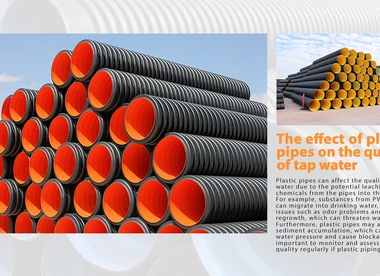
The effect of plastic pipes on the quality of tap water
The impact of plastic pipes on water quality in household plumbing and water distribution systems causes leakage of metals such as lead into drinking water. Lead, as the most widespread heavy and toxic element in the environment, is naturally present in river water at a level of 1 to 10 micrograms per liter. Lead compounds enter water sources as a result of mining, battery manufacturing, fossil fuel, paint, and glass and enamel industries.
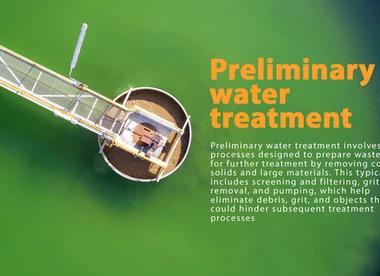
Preliminary water treatment for optimal use of membrane in reverse osmosis
Preliminary treatment is performed to optimize the use of membranes and increase membrane operating time. During this operation, water is prepared to pass through the membrane.
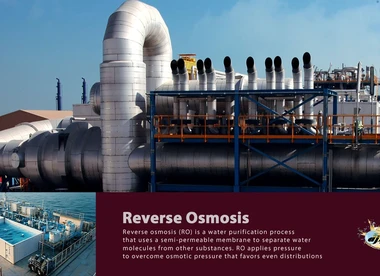
What is reverse osmosis and natural osmosis?
Osmosis is the movement of a solvent from a dilute solution to a concentrated solution through a semipermeable membrane. Reverse osmosis is a widely used separation technique with a variety of applications. Desalination of seawater and separation of organic and toxic substances from industrial wastewater are two important applications of this technology.
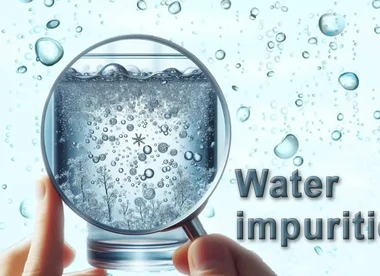
Impurities in water
Pure water does not exist in nature due to its high solubility and contains various impurities. Water impurities are classified into three general categories: dissolved solids, suspended and colloidal solids, and gases.
Submit your opinion
Your email address will not be published.