

Why do industrial systems require anti-freeze/coolant in the summer?
1405/03/02
Cooling Tower Chemical Cleaning Steps — Implementation Guide
1405/02/07
Types of sediments in RO systems and methods for identifying them
1405/02/05
Benefits of using specialized solutions from Abrizan Company for MED
1404/12/09
Impurities in water

Introduction to impurities in water
Pure water does not exist in nature due to its high solubility and contains various impurities. Water impurities are classified into three general categories: dissolved solids, suspended and colloidal solids, and gases.
Water-soluble solids
A category of impurities that make up water are substances that are soluble. In general, all substances dissolve in water, but their solubility varies. Dissolution in water occurs in three forms: molecular, polar, and ionic. Soluble solids are divided into two general groups: ionic substances and non-ionic substances.
Insoluble and suspended substances in water
Fine and coarse particles of insoluble substances suspended in water are important in various ways. These suspended substances cause water turbidity. Some of these particles, which are larger, have the ability to settle, and by removing them, the water becomes clearer. Some of these suspended particles have very low sedimentation capacity and require a long time to settle or are generally non-sedible. Some of these suspended substances include:
a) Fine particles of soil and rock and riverbed materials that have been created by land erosion.
b) Microorganisms such as bacteria.
c) Moss and algae particles.
d) Paints and oils.
e) Colloidal silica, colloids, suspensions and emulsions.
Gases dissolved in water
Different gases dissolve in water in different amounts. The amount of dissolved gas depends on the pressure of the gas and the type of gas on the one hand and on the temperature of the water, the substances present in the water and its pH on the other. Some of the gases that are considered in purified water are:
NH3, CH4, H2S, Cl2, O2, CO2
Physical properties of water according to the type and amount of its impurities
Substances in water cause changes in the color, odor, taste, and turbidity of water that can be approximately detected by the five human senses. These properties, which are affected by environmental conditions and indicate the appearance of water, are, along with temperature, the physical properties of water.
Water color
Pure water is colorless, but impure water may have a color depending on the amount and type of dissolved or suspended substances in it. For example, yellow water can indicate the presence of organic acids, and brown water indicates the presence of iron ions. The color can be removed by surface adsorption or coagulation or oxidation processes.
Water turbidity
The turbidity or lack of transparency of water is due to the presence of suspended or colloidal substances in water. Turbidity of water causes scattering or absorption of light incident on it. To measure the turbidity of water, a standard solution is used, which is a standard unit of measurement for turbidity, and each unit is equal to the turbidity of water containing one part per million of silica. The turbidity of drinking water should be less than five units.
Odor and Taste of Water
Pure water is odorless and tasteless, the presence of various substances in water can give water specific odors and tastes, some of which are unpleasant. For example, stagnant lake water smells like mud and tastes salty due to the presence of sodium chloride ions, and tastes bitter due to the presence of magnesium and potassium salts. Also, water with a high pH has an unpleasant soapy taste and tastes sour due to the presence of protons, which are acids. Water that contains some oxygen gas has a more desirable taste. The presence of some gases such as hydrogen sulfide (H2S) changes the smell of water.
Water temperature
As we know, water has three states: solid, liquid, and vapor. In fact, the existence of each of these three states depends on the temperature and pressure of the water. For example, at a pressure of one atmosphere, water freezes at a temperature of zero degrees and turns into a solid, at a temperature between zero and one hundred degrees Celsius, water is a liquid, and at a temperature above one hundred degrees Celsius, it turns into steam. Of course, pressure affects the melting point or boiling point; the higher the pressure, the higher the boiling point of water and the lower the melting point of ice. Also, by dissolving substances such as salt or antifreeze in water, the freezing point of water is lowered.
Water has the highest density at a temperature of 4 degrees Celsius, and its value is equal to 1000 kg / cubic meter. The graph of changes in the density of water and ice according to temperature is shown in the figure below:
Specific heat of water
The specific heat of water is high, and this factor allows water to retain large amounts of heat without a significant change in its temperature compared to other substances. This feature has made water the most important cooling fluid in home cooling systems (such as radiators and heating systems), industries (cooling and heating systems), automobiles (car cooling systems and radiators), buildings (engine rooms) and all water engineering process industries.
With its high heat capacity, this fluid performs exceptionally well in terms of heat transfer and is also considered the most economical and available fluid for this purpose, but it has significant shortcomings in some aspects. Water alone has a relatively low boiling point, meaning that it boils quickly at high temperatures, and it also has a high freezing point, meaning that it freezes quickly in the cold and causes great damage, so using water alone in these systems will cause problems. The best strategy in this case is to reduce and even eliminate the disadvantages of water and use modified water with better properties.
Latent heat of water
The latent heat of vaporization of water is the amount of heat that one gram of water at 100 degrees Celsius takes to completely turn into steam at a constant temperature, and its value for water is 539.4 calories per gram. Also, the latent heat of melting ice is the amount of heat that one gram of ice at a temperature of 0 degrees Celsius and a pressure of one atmosphere takes to change phase and melt at this constant temperature. The latent heat of melting ice at a pressure of one atmosphere is equal to 79.7 calories per gram.
share :
Why do industrial systems require anti-freeze/coolant in the summer?
1405/03/02Cooling Tower Chemical Cleaning Steps — Implementation Guide
1405/02/07Types of sediments in RO systems and methods for identifying them
1405/02/05Benefits of using specialized solutions from Abrizan Company for MED
1404/12/09
Related articles
Membrane processes
Membrane processes refer to physical methods for separating a solvent from its dissolved salts using semipermeable membranes. These processes have made great progress in recent years. The history of using membranes for filtration dates back to the early 20th century.
Cation and anion resins (ion exchange)
The process of ion exchange has been used since ancient times. Eratosthenes Thallis used this process to contact salt water with soil to produce fresh water. In 1845, Thomson showed that when water containing ammonium sulfate was passed through soil, calcium sulfate would be produced in the effluent.
Sedimentation water softening processes
Softening processes are used to reduce water hardness. Using chemicals, water hardness undergoes chemical reactions and precipitates. As a result, water hardness is reduced. Water hardness is due to the presence of carbonates, sulfates, chlorides, and nitrates of the metals calcium, magnesium, iron, and aluminum.
Types of water transfer systems
Water transmission systems include the channels necessary to transport water from one point to another. In most cases, it is necessary to transport water from its source to a treatment facility and from there to consumers. Pumping is used to provide the energy necessary to move the water from the beginning to the end of the transmission system. Pumping stations are usually located at the raw water intake, treatment plant and distribution network.
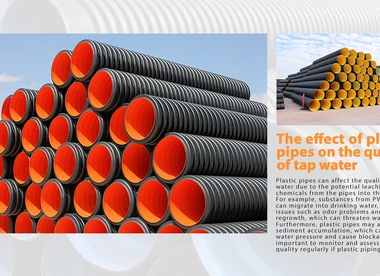
The effect of plastic pipes on the quality of tap water
The impact of plastic pipes on water quality in household plumbing and water distribution systems causes leakage of metals such as lead into drinking water. Lead, as the most widespread heavy and toxic element in the environment, is naturally present in river water at a level of 1 to 10 micrograms per liter. Lead compounds enter water sources as a result of mining, battery manufacturing, fossil fuel, paint, and glass and enamel industries.
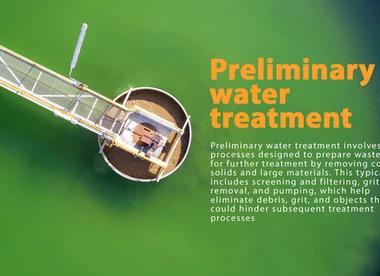
Preliminary water treatment for optimal use of membrane in reverse osmosis
Preliminary treatment is performed to optimize the use of membranes and increase membrane operating time. During this operation, water is prepared to pass through the membrane.
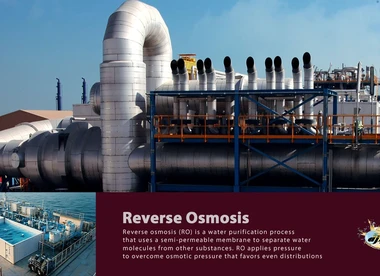
What is reverse osmosis and natural osmosis?
Osmosis is the movement of a solvent from a dilute solution to a concentrated solution through a semipermeable membrane. Reverse osmosis is a widely used separation technique with a variety of applications. Desalination of seawater and separation of organic and toxic substances from industrial wastewater are two important applications of this technology.

Earth's water reserves
Water is the source of life and the continuation of life for living organisms, as well as a fundamental factor in the emergence of human communities and civilizations. Today, the total volume of the Earth's water, which is the source of life for all organisms, has remained almost constant and unchanging since its formation. These water resources were created about 4.5 billion years ago.
Submit your opinion
Your email address will not be published.