

Why do industrial systems require anti-freeze/coolant in the summer?
1405/03/02
Cooling Tower Chemical Cleaning Steps — Implementation Guide
1405/02/07
Types of sediments in RO systems and methods for identifying them
1405/02/05
Benefits of using specialized solutions from Abrizan Company for MED
1404/12/09
Process units in oil refineries and petrochemical industries

Oil Refinery
An oil refinery consists of several operating units and process units. An operating unit is a fundamental step in a process. Like the evolution of the planet, life and technology, the oil refining industry has been developing with increasing complexity since its founding in 1859. An operating unit includes physical and chemical processes. Physical transformations, such as salting out, distillation, filtration and evaporation, are related to separation. Chemical transformations, such as isomerization, hydrogenation, oxidation and polymerization, are related to chemical reactions. Operating units are related to process units. The main purpose of refinery units is to extract useful substances from crude oil. An oil refinery and a petrochemical plant are like organs of a living organism, which are closely connected and dependent on each other.
Utilization of waste in oil refineries
The dream of the creator of the periodic table of elements, Dmitri Mendeleev, is that none of the chemical plants produce any waste, which is realized in the refinery. The product obtained in one unit is actually the raw material for another unit. Almost all the waste is used. With the exception of some gases (mainly CO2) and water vapor that are released into the atmosphere. Even today, this CO2 can be used in the refining and petrochemical industries.
In a refinery, there are other related departments such as the water cooling system, the power plant (with water treatment and steam supply) and units related to environmental and human protection (use of hydrocarbon waste, treatment of wastewater and exhaust gases and deodorization). In short, each oil refinery is a very complex living “organism”. Each oil refinery has its own unique processing plan, which is determined based on the available process equipment, the characteristics of the crude oil consumed, operating costs and product demand. No two refineries in the operating basin are exactly the same, but in most cases the problems and ways to prevent corrosion in refineries may be similar.
In which process units does corrosion occur most?
Crude Oil Distillation Unit
The crude oil distillation unit is the “heart” of any oil refinery and consists of a preheater section, a desalination section, a preflash drum, a furnace, atmospheric and vacuum distillation columns. Crude oil that comes from a storage tank or a transportation pipeline is not necessarily distilled.
First, the crude oil is refined, then prepared in salt solutions to remove dissolved salts. It is then heated in furnaces and the resulting vapor-liquid mixture flows through a transfer line to the flash drum area and passes through the furnace, and then the crude oil enters the atmospheric distillation column. This column is the “main organ” of any oil distillation unit, where crude oil is distilled and various types of petroleum products are obtained. These products are sent for further processing to obtain suitable fuels or other raw materials as raw materials for the petrochemical, chemical and pharmaceutical industries. The heaviest product that has settled flows into the vacuum distillation column where it is distilled under vacuum and converted into valuable petroleum products.
Desalting Unit
Crude oil is an emulsion containing small amounts of water and various salts. These salts, in the presence of water, cause corrosion, sedimentation and reduce the efficiency of catalysts in downstream processing units of the crude oil distillation section. Desalination is the process of diluting the salt using fresh water, electric fields and special chemicals (anti-emulsifiers and surfactants). Therefore, the function of the desalination is to absorb water-soluble salts (more than 90% by weight) and suspended solids (corrosion products, soil, sludge and sand) from the crude oil into the aqueous phase (bottom layer in the desalting unit). The heavy aqueous phase containing soluble salts, H2S and suspended solids is sent to a sour water stripper. The light crude oil phase (containing a small amount of H2S and negligible amounts of water and salt) is transferred to the middle section of the preheater.
Preheater Unit
The preheater consists of many heat exchangers and the crude oil is usually processed in the tube section and then enters the furnace. Following the temperature variations of the crude oil, the preheater is typically divided into a cold section (upstream of the salting drum), intermediate section between the salting drum and the preflash drum), and hot section (downstream of the preflash drum).
Kitchen Unit
A furnace is a flame heater into which crude oil is transferred at the desired inlet temperature from the preflash drum or distillation column. Crude oil units typically consist of furnaces upstream of the preflash drum and atmospheric and vacuum columns. Black oil, gas oil, or natural gas are used as fuel in the furnaces to heat the crude oil.
Preflash Drum Column
The preflash process separates the lighter hydrocarbon components from the crude oil before it enters the furnace. This process was proposed by Brugma A.J. in 1941. The use of preflash reduces the risk of two-phase flow in the hot section of the heater. While the gas phase passes through the furnace and enters the distillation column directly, the liquid phase is heated at the hot end of the preheater before entering the furnace. The crude oil is heated. If the crude oil enters an atmospheric column, it is heavy and contains almost no light hydrocarbons, and therefore it is possible to avoid using preflash.
Atmospheric distillation column
Crude oil is separated into petroleum products (also called primary products, extracts, fractions, or cuts) in this column at atmospheric pressure. Continuous fractional distillation is a physical chemical process in which a large number of hydrocarbons are separated according to their boiling points, yielding various chemical compounds. These chemical compounds (petroleum products) are removed from the column according to their boiling points.
Vand. Gases and naphtha are removed from the top of the distillation column.
The heavier components, gasoline, kerosene, light oil, heavy oil and black oil, are removed from different parts of the column. These petroleum products, ranging from gases to viscous liquids, are not complete fuels and their fates are different. Some of them are used for domestic needs in the refinery. Others are further processed to obtain final products. The third group is raw materials for the petrochemical industry.
Petroleum products
If we ask a non-specialist how many petroleum products he knows, he will probably name gasoline, kerosene and black oil. But in fact, more than 2000 petroleum products with different characteristics are produced. Only about 40 types of gasoline are produced by refineries. The sediments remaining after atmospheric distillation are sent to the next unit.
The major products produced by Iran's petrochemical industry units mainly include:
Chemical fertilizers, urea, diammonium phosphate, ammonium nitrate mixed fertilizers, plastic raw materials, PVC and DOP, chemicals such as sulfuric acid, hydrochloric acid, ammonia, sulfur, carbon black, etc. However, these products are very small compared to the tens of thousands of derivatives obtained from oil and natural gases with the help of advanced petrochemical technology, indicating that more effort and effort must be applied in this field to get closer to reality.
Vacuum distillation unit
Atmospheric distillation residues are distilled in a vacuum column in order to obtain usable petroleum products. By reducing the pressure, the boiling point of hydrocarbons decreases and their destruction is minimized. Therefore, the atmospheric distillation residue is converted into light hydrocarbons, light vacuum gas oil, and heavy vacuum gas oil. The lightest component is removed from the top of the distillation column along with the vapor. The vacuum residue is removed from the bottom of the column and sent to a visbreaker, coker, or crusher for further processing.
Reference: Corrosion Problems and Solutions in Oil Refining and Petrochemical Industry. Adrian V. Gheorghe, Old Dominion University, Norfolk, VA, USA. Paraphrase by Franklin P. Jones (1908–1980), an American journalist
share :
Why do industrial systems require anti-freeze/coolant in the summer?
1405/03/02Cooling Tower Chemical Cleaning Steps — Implementation Guide
1405/02/07Types of sediments in RO systems and methods for identifying them
1405/02/05Benefits of using specialized solutions from Abrizan Company for MED
1404/12/09
Related articles
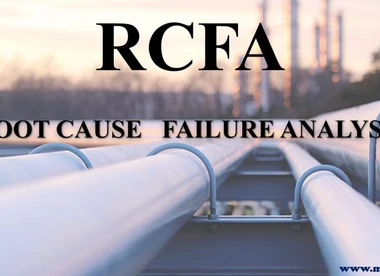
What is RCFA? A comprehensive guide to investigating the root causes of damage in industry + benefits and implementation steps
Are recurring failures causing heavy costs in your industrial unit? In this comprehensive article, learn about the RCFA (Root Cause Analysis) method, implementation steps, benefits, and real-world examples, and learn how to prevent failures from recurring.
Crisis management and securing industries and mines
The world today has become alarmingly vulnerable to natural crises and industrial disasters and their consequences. A crisis is an event that inflicts significant human casualties and financial and environmental damage on society in a short period of time, such that addressing the effects of these events requires fundamental and extraordinary measures.
Water management in refineries
Feedwaters to a refinery are usually treated before being used in various processes. The type of treatment depends on the quality of the source water and its end use in the refinery. Turbidity, sediment, and hardness are examples of source water characteristics that may require treatment.
Submit your opinion
Your email address will not be published.