

Why do industrial systems require anti-freeze/coolant in the summer?
1405/03/02
Cooling Tower Chemical Cleaning Steps — Implementation Guide
1405/02/07
Types of sediments in RO systems and methods for identifying them
1405/02/05
Benefits of using specialized solutions from Abrizan Company for MED
1404/12/09

Water management in refineries

Refinery Raw Water Treatment
Refinery feedwater is usually treated before being used in various processes. The type of treatment depends on the quality of the source water and its end use in the refinery. Turbidity, sediment, and hardness are examples of source water characteristics that may require treatment.
Water that contains a high amount of minerals is generally referred to as “hard water” and tends to form scale. When water is heated, calcium salts precipitate as scale, reducing the rate of heat transfer in heat exchangers and refrigeration systems. Calcium and magnesium salts form scale as water evaporates in steam equipment. These scales not only reduce the rate of heat transfer, but also restrict fluid flow. In fact, the removal of calcium and magnesium carbonate from water is the process of water softening, and common methods used for water softening include lime-soda, phosphate, ion exchange, reverse osmosis, resin softeners, electromagnetic softeners, and chemical additives.
Refinery
Other contaminants present in pure water and methods for their removal are shown in Table 1.
Pollutant | Problem | Removal method |
Water turbidity | Clouding of water and sedimentation in water lines and process equipment | Coagulant, purification and filtration |
Difficulty | The main source of scale formation in heat exchangers and pipelines | Softening, Distillation, Surfactant |
Alkalinity | Causes foaming in the steam system and damage to boiler steel. Bicarbonate and carbonate cause carbon dioxide to be produced in the steam which is very corrosive. | Softening with lime and soda lime, softening with zeolite, de-alkalization by ion exchange |
Sulfate | It is added to solid particles of water and combines with calcium to form the salt calcium sulfate. | Demineralization, distillation |
Chloride | Adds to solid particles and increases the corrosive properties of water | Demineralization, distillation, desalination (if using seawater) |
Silica | Deposits in heating and cooling equipment and pipelines | Anion exchange resins, distillation |
Iron and magnesium | Causes water discoloration and deposits in water lines and process equipment. | Aeration, coagulation and filtration, lime softening, cation exchange |
Fat | Source of deposits, sludge and foam in boilers. Impedes heat exchange. Has adverse effects in most processes. | Oil/water separator filter. Coagulation and filtration. Silica clay filtration |
Oxygen | Corrosion of water transmission lines, heat exchanger equipment, boilers, return lines, etc. | Deaeration, sodium sulfite, corrosion inhibitors |
Hydrogen sulfide | Creates unpleasant odor. Corrosion, toxicity | Aeration, chlorination, very strong anion exchanger |
Electrical conductivity | Electrical conductivity is due to ionized solids in solution. High conductivity can increase the corrosive properties of water. | Methods that reduce dissolved solids content also reduce conductivity, including demineralization and lime softening. |
Soluble solids | Dissolved solids is the total amount of dissolved matter. High concentrations of dissolved solids are troublesome due to their interference with the process and as a foaming agent in boilers. | Various softening processes, including lime softening and zeolite cation exchange, reduce dissolved solids. Demineralization, distillation |
Suspended solids | ‘Suspended solids’ is the amount of undissolved matter. Suspended solids clog lines due to deposits in heat transfer equipment, boilers, etc. | Sedimentation. Filtration, usually before coagulation and filtration. |
Raw Water Use in Refineries
The required purity of water depends on the intended use. Initial monitoring of all incoming raw water may include screening and sedimentation to remove suspended solids, but further monitoring will depend on the end use for each water system. The water supply may be divided into process, boiler feed, cooling, potable water, and service water systems.
A brief description of the various uses of water in refineries is given below.
Treated Water
In refineries, water is typically used for a variety of purposes that are usually closely related to hydrocarbons. Softened water is commonly used for these purposes.
Boiler Feed Water
The boiler feed water (BFW) required to produce steam in a refinery must be monitored prior to use. The higher the steam pressure the boiler produces, the purer the feed water required. Typically, the water is screened by the soda-lime process and treated by ion exchange or hot phosphate. Reverse osmosis can also be used to soften the water.
Typically, the effluent from water treatment systems is removed to prevent contamination. This effluent is sent to wastewater treatment and replaced with fresh water.
Cooling water
Cooling water condensers, product coolers (heat exchangers), and other heat exchangers can use a large amount of water in a refinery. Some refineries use air coolers, where heat is first exchanged with cool air before using a water-cooled heat exchanger. This minimizes the use of cooling water in the refinery.
Some refineries use a “once-through” water system, where the incoming water exchanges heat with the process fluids, and the warmer water is then returned to the water source. However, if a locality is experiencing a water shortage, it may be preferable to re-cool the water through a cooling tower and then return it to the process. In these circulating water systems, the water leaves at about 90°F and returns to the cooling tower at a maximum temperature of 120°F.
Some water treatment step is necessary even for single-pass cooling systems to prevent scale formation, corrosion, and the formation of sludge and algae. The level of monitoring required for recirculating systems is much higher because impurities are concentrated in the system due to evaporation. In cooling tower systems, an increase in salt concentration is inevitable as water evaporates in the cooling tower. Treated water is necessary to replace these losses.
Seawater has been successfully used as cooling water, especially in coastal areas where fresh water is scarce. Cathodic protection systems prevent excessive corrosion by using magnesium anodes installed in the float head and exchanger channels.
Deposits are minimized by limiting the increase in cooling water temperature below the point where calcium salts begin to precipitate.
Refinery drinking water
Drinking water is required for use in the kitchen, washing units and bathrooms in refineries, as well as in safety showers. City water or groundwater after treatment can be used for this purpose.
In remote areas or in small towns, part of the treated water from the softening unit can be used for drinking water. The treated water should be chlorinated to kill bacteria and then pumped into an independent system to prevent possible contamination. In some special chemical reactions, it may be necessary to use potable water of good quality (for example, as a diluent).
Fire water
Often, refineries collect rainwater or untreated water and store it in a tank dedicated to the fire water system. Regulations are usually made to connect (for emergency use) the fire water system to the largest available water tank. This is usually raw water, as fire water does not require treatment. Seawater or salt water is often used as firefighting water by complexes located in coastal areas.
Corrosion rate of firefighting water
Due to the lack of purification of firefighting water and its prolonged stagnation, this water can cause two major problems for the system and cause great damage. Considering that firefighting water has a corrosion rate of 2 to 5 mpy, this water has a high corrosive power and in order to prevent corrosion, the corrosion rate must be reduced to 1 mpy.
On the other hand, since the firefighting water system, unlike other refinery water systems, is used less often (only in case of fire), as a result, the water remains stagnant in the transmission lines for a long time and in different parts of the system, especially the ends of the pipes, in addition to corrosion, it creates sediment. These sediments reduce the diameter of the water passageways and in case of fire, the water cannot have the necessary pressure to extinguish the fire when it exits the pipe. Also, when the pump is turned on to use fire water, a sudden pressure is applied to the pipes, which can cause damage and even perforation of the pipe in weak points and points that have corroded. These seemingly simple issues can cause irreparable disasters in the event of a fire.
Water for use
Water for use is used for various washing operations, such as cleaning an operational area. This water should be free of sediments but does not require more advanced treatment steps.
Table 1 shows the common impurities in different types of water and the processes that are usually used to remove them.
Source: Petroleum refining water/wastewater use and management.Operations Best Practice Series 2010
share :
Why do industrial systems require anti-freeze/coolant in the summer?
1405/03/02Cooling Tower Chemical Cleaning Steps — Implementation Guide
1405/02/07Types of sediments in RO systems and methods for identifying them
1405/02/05Benefits of using specialized solutions from Abrizan Company for MED
1404/12/09
Related articles
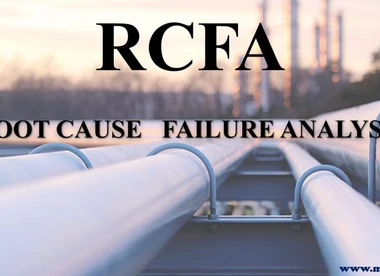
What is RCFA? A comprehensive guide to investigating the root causes of damage in industry + benefits and implementation steps
Are recurring failures causing heavy costs in your industrial unit? In this comprehensive article, learn about the RCFA (Root Cause Analysis) method, implementation steps, benefits, and real-world examples, and learn how to prevent failures from recurring.
Crisis management and securing industries and mines
The world today has become alarmingly vulnerable to natural crises and industrial disasters and their consequences. A crisis is an event that inflicts significant human casualties and financial and environmental damage on society in a short period of time, such that addressing the effects of these events requires fundamental and extraordinary measures.
Process units in oil refineries and petrochemical industries
An oil refinery consists of several operating units and process units. An operating unit is a fundamental step in a process. Like the evolution of the planet, life, and technology, the oil refining industry has been developing with increasing complexity since its founding in 1859. An operating unit consists of physical and chemical processes. The main purpose of refinery units is to extract useful substances from crude oil.
Submit your opinion
Your email address will not be published.