

Why do industrial systems require anti-freeze/coolant in the summer?
1405/03/02
Cooling Tower Chemical Cleaning Steps — Implementation Guide
1405/02/07
Types of sediments in RO systems and methods for identifying them
1405/02/05
Benefits of using specialized solutions from Abrizan Company for MED
1404/12/09
Types of metal corrosion and its classification criteria

Types of Corrosion Classification
Over the years, corrosion engineers and researchers have found that metal corrosion occurs in various types that have certain similarities and are divided into specific groups, many of which are not unique. The most familiar classification of metal corrosion types was presented by Fontana and Green. The basis of this classification is the appearance of the corroded metal.
Corrosion Classification Based on Appearance (Fontana and Green)
In this classification, eight types of corrosion are mentioned as the most important types of metal corrosion, which are:
- Uniform corrosion
- Gritting corrosion
- Galvanic corrosion
- Intergranular corrosion
- Selective separation
- Abrasive corrosion
- Stress corrosion
- Hydrogen damage
The above classification is based on the appearance of the attack of corrosive agents on the metal surface. It is worth noting that it is not possible to determine a clear boundary between the types of metal corrosion, because a number of types of corrosion overlap.
The incidence of each type of metal corrosion varies, and the importance of each type will vary among different systems and environments. On the other hand, there are striking commonalities in the distribution of damage from corrosion in similar industries, which, when compared, show that corrosion problems in similar industries are very similar.
Classical Classification of Corrosion (Ulick and Evans)
Some corrosion scientists, such as Ulick and Evans, have avoided using a specific classification framework and have simply examined the classical corrosion types according to the type of metal or alloy in question. Ulick has described the types of metal corrosion as follows:
- Bimetallic corrosion
- Localized corrosion
- Stress corrosion
- Microbial corrosion
- Fatigue corrosion
- Abrasive corrosion
- Flow corrosion
- Atmospheric corrosion
- Corrosion in soil
- Hydrogen cracking and stress cracking in the presence of sulfur
Types of metal corrosion
Among the important types of corrosion - without providing a specific division and grouping - the following corrosions can be mentioned:
- Uniform corrosion
- Bimetallic corrosion
- Corrosion by oxygen
- Intergranular corrosion
- Selective corrosion
- Bubble corrosion
- Hydrogen damage
- Stress corrosion
- Microbial corrosion
As can be seen, different researchers and scholars have introduced different types of metal corrosion as the most important corrosion mechanisms. Therefore, a uniform classification for the types of metal corrosion has not been provided by different authors and scholars, and only the types of corrosion have been introduced in a simple way.
Types of Metal Corrosion Based on Origin and Appearance
The Corrosion Reference Book from ASM Publications, one of the most authoritative references on corrosion science, divides corrosion into the following five main categories based on their origin and appearance:
- Uniform corrosion:This type of corrosion includes atmospheric corrosion, bimetallic corrosion, molten metal corrosion, and high-temperature corrosion.
- Localized corrosion:Includes filamentary corrosion, crevice corrosion, pitting corrosion, and localized corrosion due to the activity of living organisms.
- Corrosion caused by metallurgical factors:Includes intergranular corrosion, selective segregation or dealloying, and crevice corrosion in carbon steel.
- Corrosion caused by mechanical factors:Includes erosion, frictional corrosion, blistering and water droplet impact corrosion, fatigue corrosion, stress corrosion, hydrogen damage, and embrittlement due to contact with molten metal.
- Corrosion caused by environmental factors:Includes stress corrosion and cracking. In addition to the above-mentioned groupings, some scientists have considered other indicators and criteria for classifying types of corrosion and have presented different classifications from a different perspective. For example, corrosion can be divided into corrosion in wet environments and corrosion in dry environments according to the environment in which it occurs:
5-1 Corrosion in wet environments:includes bimetallic corrosion, selective corrosion, pitting and crevice corrosion, concentration pitting, grain boundary corrosion, intergranular corrosion, selective separation, abrasion corrosion (turbulence and impact velocity), blister corrosion, and crevice stress corrosion (stress concentration, fatigue, environmental cracking).
2-5 Corrosion in dry environments:includes high-temperature corrosion and high-temperature oxidation. High temperature corrosion is divided into three different categories:
- Low temperature (temperatures below 180 ° C, which cause hot corrosion in the boiler outlet)
- Medium temperature (temperatures around 1200 ° C, which cause corrosion of superalloys in gas turbine blades.)
- High temperature (temperatures around 1200 ° C, which cause corrosion of superalloys in gas turbine blades.)
Types of metal corrosion based on the equipment required to evaluate and identify corrosion
Another type of corrosion classification is based on the equipment required to evaluate and identify corrosion, which is divided into the following major groups:
a) Corrosions that can be detected by normal inspection and with the naked eye, such as uniform corrosion, pitting corrosion and bimetallic corrosion.
b) Corrosions that may require additional tools for detection, such as erosion corrosion, blister corrosion and grain boundary corrosion.
c) Corrosions that require more detailed microscopic (optical or electron) inspection, such as selective delamination, stress corrosion cracking, and fatigue corrosion.
Sometimes another classification of corrosion types is presented based on microscopic and macroscopic observations.
Mitreh Anti-Corrosion Solution
Abrizan Company produces a range of multi-purpose products that have anti-fouling and anti-corrosion capabilities at the same time. In addition to preventing fouling, these products control corrosion in open and closed circuit systems (depending on the type of alloy in the That system).
share :
Why do industrial systems require anti-freeze/coolant in the summer?
1405/03/02Cooling Tower Chemical Cleaning Steps — Implementation Guide
1405/02/07Types of sediments in RO systems and methods for identifying them
1405/02/05Benefits of using specialized solutions from Abrizan Company for MED
1404/12/09
Related articles
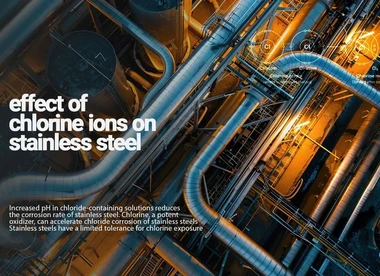
Effect of chlorine ions on stainless steels
The effect of chlorine and chloride parameters on the corrosion of stainless steels and the parameters affecting their corrosion rate, as well as the acceptable limits of chlorine ion levels in water and the differences in the effects of free chlorine and chloride on the corrosion of corrosion-resistant steels, are stated.
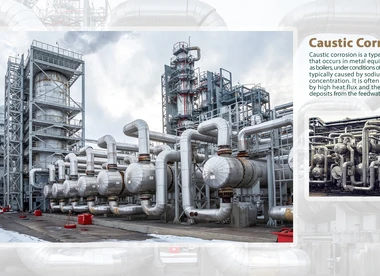
Caustic corrosion
Localized corrosion caused by the concentration of caustic or alkaline salts, which usually occurs under conditions of high evaporation or heat transfer. Caustic salt or caustic soda is one of the most widely used ionic compounds and is used in various industries including water treatment, cardboard and paper production, oil and refinery industries, aluminum production industries, food industries, alcohol production and glass.
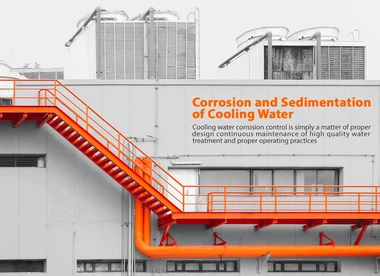
Corrosion and deposition of cooling water based on API 571
It refers to general or localized corrosion of carbon steels and other metals caused by dissolved salts, gases, organic compounds, or microbiological activity.
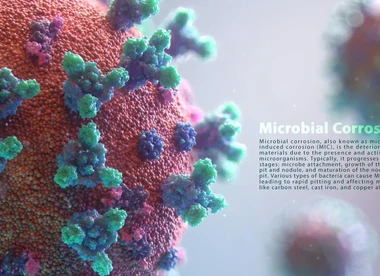
Microbial corrosion based on API 571
Microbial corrosion is a type of corrosion caused by living organisms such as bacteria, algae, or fungi. This type of corrosion is often associated with tubercles or slimy organic materials.
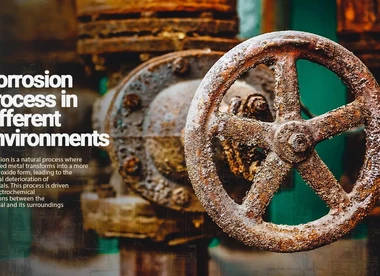
Corrosion process in different environments
Corrosion processes are divided into three groups in a more comprehensive classification: corrosion in aqueous solutions or environments, corrosion in molten salts and liquid metals, and corrosion in gases.
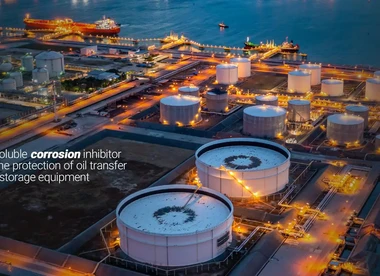
Oil-soluble corrosion inhibitor for the protection of oil transfer and storage equipment
Corrosion is a natural phenomenon that occurs as a result of the electrochemical reaction of metal with the surrounding environment. In the oil and gas industry, corrosion is one of the major problems that accounts for a huge amount of money annually. Part of these amounts are related to the corrosion of pipes or oil transmission lines. Effective ways to prevent corrosion of oil transmission and storage equipment are divided into two categories: physical and chemical solutions.

couponing
The coupon method or corrosion coupons is the simplest method of corrosion monitoring. Coupons are the oldest corrosion monitoring tool. Corrosion coupons are small pieces of metal or alloy of the material of interest that are immersed in the process medium and removed after a specified period of time and their weight or dimension loss is evaluated and examined.
Deaerators
Deaerators are mechanical devices that remove dissolved gases from the boiler feedwater. By reducing the concentration of oxygen and carbon dioxide in the solution, they minimize corrosion and protect the boiler from the effects of corrosive gases.
Submit your opinion
Your email address will not be published.