

Why do industrial systems require anti-freeze/coolant in the summer?
1405/03/02
Cooling Tower Chemical Cleaning Steps — Implementation Guide
1405/02/07
Types of sediments in RO systems and methods for identifying them
1405/02/05
Benefits of using specialized solutions from Abrizan Company for MED
1404/12/09
Ways to prevent corrosion

Definition of Corrosion Inhibition
Any process that delays corrosion is corrosion inhibition (prevention of corrosion). In general, corrosion inhibition means reducing the rate of oxidation of a metal or adding a chemical compound that will be in contact with the solution in the system. The corrosion inhibitor may be added in liquid, vapor, or both forms. Specifically, a corrosion inhibitor is a chemical compound that is added to the liquid phase in such a way that it affects the metal surface.
Ways to Prevent Corrosion
- Cathodic Protection Corrosion Prevention
- Anodic Protection
- Selecting Appropriate Materials (Metallurgy)
- Coating
- Design
- Changing the Environment and Corrosion Inhibition or (Inhibitors)
Corrosion Inhibitor Reaction Processes
There are two processes in the inhibitor reaction on the metal surface. The first step is the transfer of the inhibitor to the metal surface, and the second step involves the interaction between the inhibitor and the metal surface.
The transport of the inhibitor to the metal surface, the components that react with the surface during inhibition, and the chemistry of the system, which is influenced by the active inhibitor components present, will be the fundamental factors governing the inhibition process. The rate of flow, temperature, solubility, stability of the inhibitor, the properties of the attached components, and changes in corrosion conditions will determine the degree of inhibitor effect. It is also important to remember that factors such as the cavity, temperature and flow rate of the fluid, and the metal surface are of paramount importance.
Factors affecting corrosion inhibition
- Nature of the metal surface
- Chemical composition of the environment
- Inhibitor concentration
- Environmental pH
- Temperature
- Effects of microorganisms
- Sediment formation
- Liquid movement speed and aeration
- Fluidizers
- Neutralizers (neutralizing amines)
- Ammonia as an inhibitor of steam boilers, cooling water, fresh water, vapor phase
Antifouling and anticorrosion of Mitreh
Considering the above-mentioned materials and the amount of damage caused by corrosion to industries in the world and also in Iran, Abrizan Industrial Research Company, in the course of its research, studied a solution to reduce corrosion losses in industries and by inventing a solution that, in addition to removing sediment, also has anticorrosion capabilities (antifouling and anticorrosion of Mitreh), was able to take a big step towards reducing the costs caused by corrosion in large industries.
share :
Why do industrial systems require anti-freeze/coolant in the summer?
1405/03/02Cooling Tower Chemical Cleaning Steps — Implementation Guide
1405/02/07Types of sediments in RO systems and methods for identifying them
1405/02/05Benefits of using specialized solutions from Abrizan Company for MED
1404/12/09
Related articles
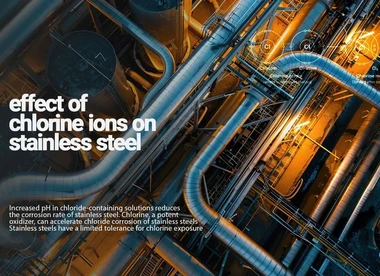
Effect of chlorine ions on stainless steels
The effect of chlorine and chloride parameters on the corrosion of stainless steels and the parameters affecting their corrosion rate, as well as the acceptable limits of chlorine ion levels in water and the differences in the effects of free chlorine and chloride on the corrosion of corrosion-resistant steels, are stated.
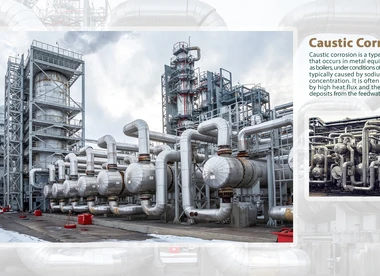
Caustic corrosion
Localized corrosion caused by the concentration of caustic or alkaline salts, which usually occurs under conditions of high evaporation or heat transfer. Caustic salt or caustic soda is one of the most widely used ionic compounds and is used in various industries including water treatment, cardboard and paper production, oil and refinery industries, aluminum production industries, food industries, alcohol production and glass.
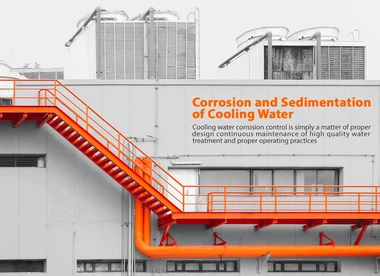
Corrosion and deposition of cooling water based on API 571
It refers to general or localized corrosion of carbon steels and other metals caused by dissolved salts, gases, organic compounds, or microbiological activity.
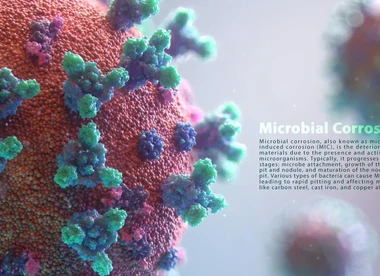
Microbial corrosion based on API 571
Microbial corrosion is a type of corrosion caused by living organisms such as bacteria, algae, or fungi. This type of corrosion is often associated with tubercles or slimy organic materials.
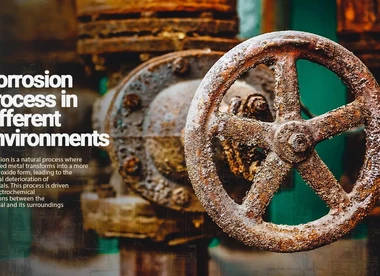
Corrosion process in different environments
Corrosion processes are divided into three groups in a more comprehensive classification: corrosion in aqueous solutions or environments, corrosion in molten salts and liquid metals, and corrosion in gases.
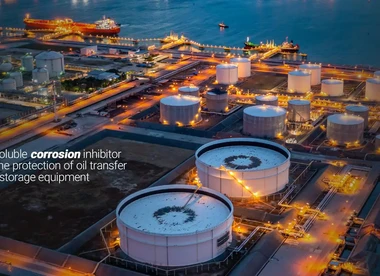
Oil-soluble corrosion inhibitor for the protection of oil transfer and storage equipment
Corrosion is a natural phenomenon that occurs as a result of the electrochemical reaction of metal with the surrounding environment. In the oil and gas industry, corrosion is one of the major problems that accounts for a huge amount of money annually. Part of these amounts are related to the corrosion of pipes or oil transmission lines. Effective ways to prevent corrosion of oil transmission and storage equipment are divided into two categories: physical and chemical solutions.

couponing
The coupon method or corrosion coupons is the simplest method of corrosion monitoring. Coupons are the oldest corrosion monitoring tool. Corrosion coupons are small pieces of metal or alloy of the material of interest that are immersed in the process medium and removed after a specified period of time and their weight or dimension loss is evaluated and examined.
Deaerators
Deaerators are mechanical devices that remove dissolved gases from the boiler feedwater. By reducing the concentration of oxygen and carbon dioxide in the solution, they minimize corrosion and protect the boiler from the effects of corrosive gases.
Submit your opinion
Your email address will not be published.