

Why do industrial systems require anti-freeze/coolant in the summer?
1405/03/02
Cooling Tower Chemical Cleaning Steps — Implementation Guide
1405/02/07
Types of sediments in RO systems and methods for identifying them
1405/02/05
Benefits of using specialized solutions from Abrizan Company for MED
1404/12/09

Anti-fouling and dispersant for oil and gas industries

Anti-sediment and anti-corrosion for systems with water circulation

Hydrogen sulfide remover for oil and gas industries

Deoxygenating solution for oil and gas industries

Special antifoam solution for drilling fluid
Dealing with corrosion in the well with corrosion inhibitors

Abstract:
Corrosion in wellbore is one of the most important problems faced by the oil and gas industry. By using various methods such as selecting appropriate materials, surface coating, using corrosion inhibitors and cathodic protection, the corrosion rate can be significantly reduced. A better understanding of corrosion mechanisms and the development of new technologies can help improve efficiency and reduce costs in this industry. In this article, the use of corrosion inhibitors based on film-forming chemicals is reviewed and the importance of these materials is explained.
Introduction:
Corrosion is one of the most important challenges facing the oil and gas industry, which can lead to reduced equipment life, increased maintenance costs and even accidents. Wellbores are among the environments that are highly exposed to corrosion due to specific environmental conditions, such as high pressure, high temperature and the presence of corrosive materials. Therefore, the use of anti-corrosion methods in these environments is of particular importance.
Types of Downhole Corrosion
- Uniform Corrosion:This type of corrosion occurs uniformly on the metal surface and usually occurs due to chemical reactions with the environment.
- Localized Corrosion:In this type, corrosion occurs in concentrated and localized spots that can cause small holes and holes in the equipment.
- Stress Corrosion:This type of corrosion is caused by a combination of mechanical stresses and a corrosive environment and usually occurs in areas under high stress.
Methods of dealing with downhole corrosion
- Use of corrosion-resistant materials:Choosing materials with high corrosion resistance is one of the most basic methods to reduce the corrosion rate. Stainless steels and nickel alloys are among the materials used in this field.
- Surface Coating:The use of protective coatings can act as a physical barrier between the metal and the corrosive environment. Epoxy, polyurethane and ceramic coatings are commonly used for this purpose.
- Corrosion inhibitors:These chemicals are added to the environment to reduce corrosion reactions. Anodic and cathodic inhibitors are among the most important types of these materials.
- Cathodic protection:This method involves using an external current source or connecting the metal to a sacrificial anode material to reduce corrosion reactions on the parent metal.
- Environmental control:Reducing the concentration of corrosive substances such as oxygen and hydrogen sulfide in the environment can help reduce the rate of corrosion. This is usually done through chemical or physical processes such as ventilation and filtration.
Corrosion inhibitors
Corrosion inhibitors are chemicals that are used to reduce or prevent corrosion in corrosive environments. In the oil and gas industry, the use of downhole corrosion inhibitors is of particular importance due to the specific conditions of these environments. These materials can effectively extend the life of equipment and reduce maintenance costs by reducing the chemical reactions of corrosion.
Types of Corrosion Inhibitors
Corrosion inhibitors can be divided into several categories, including:
- Anodic inhibitors:These inhibitors prevent anodic reactions by forming a protective layer on the metal surface. Examples of these substances include chromates and nitrates.
- Cathodic inhibitors:These inhibitors reduce the corrosion rate by reducing cathodic reactions. Compounds such as phosphates and polyphosphates fall into this category.
- Mixed inhibitors:These types of inhibitors are a combination of anodic and cathodic inhibitors and can therefore affect both anodic and cathodic reactions simultaneously. Examples of these substances include organic compounds such as amines and imidazolines.
- Film-forming inhibitors:These inhibitors prevent the corrosive environment from reaching the metal by forming a thin and continuous film on the metal surface. Fatty amines and phosphonates are examples of these inhibitors.
Mechanisms of action of corrosion inhibitors
- Formation of a protective layer:Corrosion inhibitors can prevent direct contact of the corrosive environment with the metal by absorbing it on the metal surface and forming a protective layer.
- Changing the pH of the environment:Some inhibitors make the conditions unfavorable for corrosion reactions by changing the pH of the environment. For example, the addition of amines can increase the pH and reduce the acidity of the environment.
- Formation of stable complexes:Some inhibitors prevent their participation in corrosion reactions by forming stable chemical complexes with metal ions.
Mixed Corrosion Inhibitors:
Mixed Corrosion Inhibitors are a type of chemical that simultaneously affects both anodic and cathodic corrosion reactions. These inhibitors prevent the corrosive environment from contacting the metal by creating a protective layer on the metal surface and reduce the corrosion rate. In environments with harsh and corrosive conditions in the well, the use of mixed inhibitors can significantly increase the life of equipment and reduce maintenance costs.
Mechanism of action of mixed corrosion inhibitors
Due to their special composition, mixed inhibitors act simultaneously in two ways:
- Anodic reaction inhibition:These inhibitors prevent metal oxidation by adsorbing on the anodic areas of the metal surface.
- Cathodic reaction inhibition:These substances prevent the reduction of oxygen or hydrogen by adsorbing on the cathodic areas of the metal surface.
This functional combination results in the formation of a uniform and stable protective layer on the metal surface, which effectively prevents corrosion.
Types of Mixed Corrosion Inhibitors
- Organic and Inorganic Compounds:Mixed inhibitors can include organic (such as amines and imidazolines) and inorganic (such as chromates and phosphates) compounds.
- Film-forming compounds:These inhibitors prevent corrosion by forming a thin and continuous film on the metal surface.
- Chelating compounds:These inhibitors prevent corrosion of metals by forming stable complexes with metal ions.
Corrosion inhibitor based on imidazolines
Imidazolines are known as one of the most effective classes of corrosion inhibitors in the oil and gas industry. Due to their specific chemical structure, these organic compounds are able to form a thin and stable layer on metal surfaces that prevents corrosion of downhole equipment.
Structure and mechanism of action of imidazolines compounds
Imidazolines are cyclic organic compounds that contain a five-membered ring with two nitrogens in positions 1 and 3. This chemical structure gives imidazolines high adhesion to metal surfaces and the formation of protective layers.
- Surface adsorption:Imidazolines are physically and chemically adsorbed on the metal surface.
- Protective film formation:Imidazoline molecules prevent the corrosive environment from directly contacting the metal surface by forming a continuous and thin layer.
- Reduction of electrochemical reactions:This protective layer reduces corrosion currents and electrochemical reactions, which leads to a reduction in the corrosion rate.
Advantages of using imidazolines
- High efficiency:Due to their specific chemical structure, imidazolines have a high ability to reduce the corrosion rate.
- Stability in harsh conditions:These compounds are stable under high temperature and pressure conditions and maintain their performance.
- Formation of a resistant protective layer:The layer formed by imidazolines is resistant and stable and can effectively protect the metal surface.
Application of Imidazolines-based corrosion inhibitors in the oil and gas industry
- Protection of downhole pipes and equipment:Imidazolines-based corrosion inhibitors are added to fluids injected into the well to protect pipes and equipment from corrosion.
- Use in drilling and completion fluids:These compounds are added to drilling and completion fluids to prevent corrosion of drilling and completion equipment.
- Protection of storage tanks and pipelines:Imidazolines can be added to fluids in storage tanks and pipelines to prevent corrosion of these equipment as well.
Challenges and Solutions of Using Imidazoline-Based Downhole Corrosion Inhibitors
- Cost:One of the challenges of using imidazolines is the relatively high cost of these compounds. However, considering the reduction in maintenance costs and the increase in the useful life of the equipment, the use of these compounds is cost-effective.
- Compatibility with Other Chemicals:Imidazolines must be compatible with other chemicals present in downhole fluids. Conducting field tests and laboratory simulations can help evaluate this compatibility.
- Stability of the Protective Film:To increase the stability of the protective film formed by imidazolines, it is necessary to optimize the formulation and select appropriate compounds.
Conclusion:
Imidazoline-based mixed corrosion inhibitors are known as one of the most effective methods for combating downhole corrosion. These compounds can significantly prevent corrosion of downhole equipment by simultaneously affecting both anodic and cathodic reactions and forming a stable protective layer. Despite the existing challenges, the advantages of using mixed inhibitors, including high efficiency and stability in harsh conditions, make these compounds a suitable choice for protecting equipment against corrosion. Continued research and optimization of mixed inhibitor formulations can help improve efficiency and reduce corrosion-related costs, and increase the productivity of oil and gas operations.
share :
Why do industrial systems require anti-freeze/coolant in the summer?
1405/03/02Cooling Tower Chemical Cleaning Steps — Implementation Guide
1405/02/07Types of sediments in RO systems and methods for identifying them
1405/02/05Benefits of using specialized solutions from Abrizan Company for MED
1404/12/09
Related articles
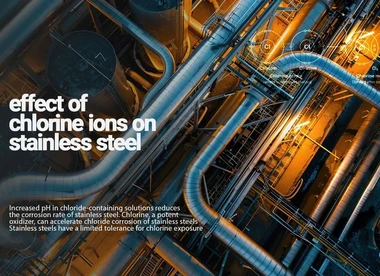
Effect of chlorine ions on stainless steels
The effect of chlorine and chloride parameters on the corrosion of stainless steels and the parameters affecting their corrosion rate, as well as the acceptable limits of chlorine ion levels in water and the differences in the effects of free chlorine and chloride on the corrosion of corrosion-resistant steels, are stated.
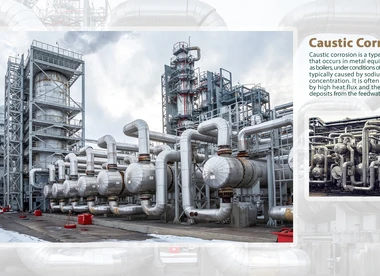
Caustic corrosion
Localized corrosion caused by the concentration of caustic or alkaline salts, which usually occurs under conditions of high evaporation or heat transfer. Caustic salt or caustic soda is one of the most widely used ionic compounds and is used in various industries including water treatment, cardboard and paper production, oil and refinery industries, aluminum production industries, food industries, alcohol production and glass.
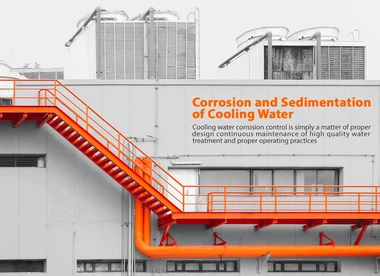
Corrosion and deposition of cooling water based on API 571
It refers to general or localized corrosion of carbon steels and other metals caused by dissolved salts, gases, organic compounds, or microbiological activity.

Microbial corrosion based on API 571
Microbial corrosion is a type of corrosion caused by living organisms such as bacteria, algae, or fungi. This type of corrosion is often associated with tubercles or slimy organic materials.
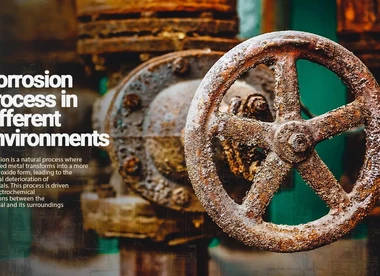
Corrosion process in different environments
Corrosion processes are divided into three groups in a more comprehensive classification: corrosion in aqueous solutions or environments, corrosion in molten salts and liquid metals, and corrosion in gases.
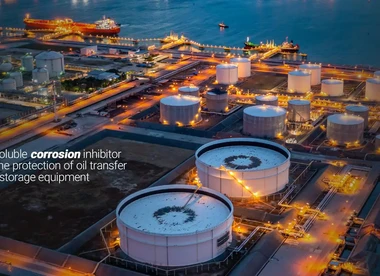
Oil-soluble corrosion inhibitor for the protection of oil transfer and storage equipment
Corrosion is a natural phenomenon that occurs as a result of the electrochemical reaction of metal with the surrounding environment. In the oil and gas industry, corrosion is one of the major problems that accounts for a huge amount of money annually. Part of these amounts are related to the corrosion of pipes or oil transmission lines. Effective ways to prevent corrosion of oil transmission and storage equipment are divided into two categories: physical and chemical solutions.

couponing
The coupon method or corrosion coupons is the simplest method of corrosion monitoring. Coupons are the oldest corrosion monitoring tool. Corrosion coupons are small pieces of metal or alloy of the material of interest that are immersed in the process medium and removed after a specified period of time and their weight or dimension loss is evaluated and examined.
Deaerators
Deaerators are mechanical devices that remove dissolved gases from the boiler feedwater. By reducing the concentration of oxygen and carbon dioxide in the solution, they minimize corrosion and protect the boiler from the effects of corrosive gases.
Submit your opinion
Your email address will not be published.