

Why do industrial systems require anti-freeze/coolant in the summer?
1405/03/02
Cooling Tower Chemical Cleaning Steps — Implementation Guide
1405/02/07
Types of sediments in RO systems and methods for identifying them
1405/02/05
Benefits of using specialized solutions from Abrizan Company for MED
1404/12/09
Corrosion in marine structures and port facilities

Corrosion in Marine Structures
Corrosion is often not uniform along the length of a member and is usually confined to the middle or ends of the member. In the case of piles, corrosion may be severe above the waterline and mild or absent below. This area of maximum corrosion is often further away from the sections of maximum anchorage and shear forces, but the rebar may be uniform throughout the member.
As corrosion progresses, eventual failure occurs. The ultimate structural outcome depends on the amount of steel loss as long as the rebar remains embedded in the concrete. However, corrosion, particularly pitting corrosion, causes increased stress concentrations, which leads to a loss of ductility and a reduction in the ultimate elongation at failure. Under impact and dynamic loads, ultimate failure may also be brittle.
Corrosion in prestressed structures
In prestressed structures, despite their excellent performance in the marine environment because their concrete has less permeability and is free from microscopic cracks (microcracks), when the prestressing cables are corroded, the structural results and effects are more severe due to the small diameter of the cables and the high tension in them. Of course, such a situation in terms of corrosion of prestressing cables in the marine environment occurs when the structure is exposed to the splash zone and the concrete has a high permeability (for example, due to uncontrolled water-cement ratio).
Areas prone to the most corrosion
The location and type of structure also affect the rate of corrosion. Concrete structural members located in the tidal zone and the splash zone generally suffer the highest rate of corrosion. In these areas, the members are constantly exposed to the three primary corrosion driving factors including oxygen, chlorides and moisture. Piles are more susceptible to corrosion than other structural members because they are located in areas with high corrosion potential, but parts of the piles that are underwater are less susceptible to corrosion due to the lack of oxygen underwater.
Maximum Corrosion Damage
Members such as pile heads, beams, and decks in active marine environments where waves and splashing occur typically suffer more serious damage than in less damaging environments. For this reason, in coastal dock structures, members closer to land are more susceptible to damage than members further from the shore. In fact, when waves strike the shore slope and the shore wall, sprays filled with chloride ions are directly thrown and hit these members.
The type of structural skeleton also plays an important role in the progression of corrosion. For example, flat-deck docks, whose undersides lack pile heads or beams that are clearly visible, are less susceptible to corrosion than conventional docks with pile heads and beams. The reason for this is the reduction of exposed corners. Structural corners are subject to corrosion, damage and deterioration more rapidly due to the possibility of greater chlorine penetration from both sides and the need for less pressure to destroy the structure due to the lack of complete enclosure.
Corrosion due to concrete deterioration
Deterioration of concrete offshore structures may be caused by the physical or chemical effects of seawater on them. Fortunately, the decomposition of concrete by itself has not led to extensive damage to modern structures, but in any case, the loss and damage of the concrete coating on the rebars is the main factor in aggravating the corrosion of steel on concrete. Concrete deterioration is a very complex matter, because it depends on several parameters that are not easily separated from each other and act with different degrees and intensities depending on the composition of the materials and the environment.
Corrosion due to physical processes
If the structure is completely submerged, the damage to the materials by seawater is mainly related to the chemical process. In the splash zone, the deterioration and damage are of a chemical and physical nature. The mechanical action of waves, swelling and contraction due to alternating wetting and drying, atmospheric conditions (wind, direct sunlight, frost) and electrochemical corrosion of steel bars are physical processes that are combined with chemical destructive processes. The degradation of concrete immersed in water is limited to factors such as the formation of ettringite, alkali-silica reaction and corrosion, and concrete in the splash zone and the atmospheric zone is also exposed to freezing and thawing phenomena.
Source: Composite Institute of Iran - Composite Journal
share :
Why do industrial systems require anti-freeze/coolant in the summer?
1405/03/02Cooling Tower Chemical Cleaning Steps — Implementation Guide
1405/02/07Types of sediments in RO systems and methods for identifying them
1405/02/05Benefits of using specialized solutions from Abrizan Company for MED
1404/12/09
Related articles
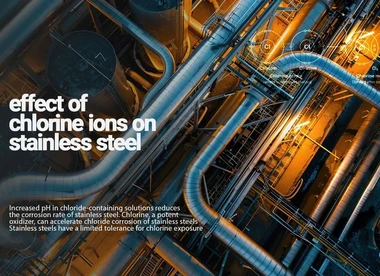
Effect of chlorine ions on stainless steels
The effect of chlorine and chloride parameters on the corrosion of stainless steels and the parameters affecting their corrosion rate, as well as the acceptable limits of chlorine ion levels in water and the differences in the effects of free chlorine and chloride on the corrosion of corrosion-resistant steels, are stated.
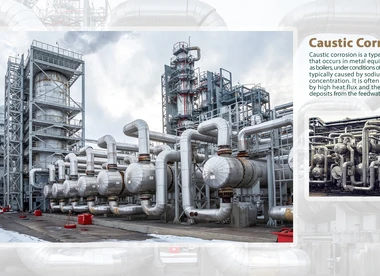
Caustic corrosion
Localized corrosion caused by the concentration of caustic or alkaline salts, which usually occurs under conditions of high evaporation or heat transfer. Caustic salt or caustic soda is one of the most widely used ionic compounds and is used in various industries including water treatment, cardboard and paper production, oil and refinery industries, aluminum production industries, food industries, alcohol production and glass.
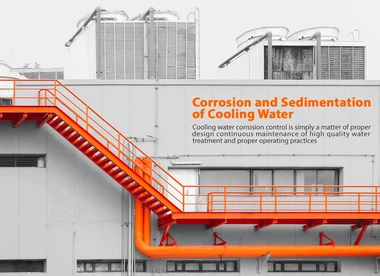
Corrosion and deposition of cooling water based on API 571
It refers to general or localized corrosion of carbon steels and other metals caused by dissolved salts, gases, organic compounds, or microbiological activity.
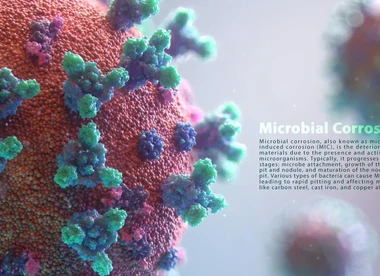
Microbial corrosion based on API 571
Microbial corrosion is a type of corrosion caused by living organisms such as bacteria, algae, or fungi. This type of corrosion is often associated with tubercles or slimy organic materials.
Corrosion process in different environments
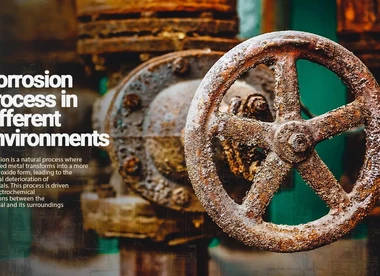
Corrosion processes are divided into three groups in a more comprehensive classification: corrosion in aqueous solutions or environments, corrosion in molten salts and liquid metals, and corrosion in gases.
Oil-soluble corrosion inhibitor for the protection of oil transfer and storage equipment
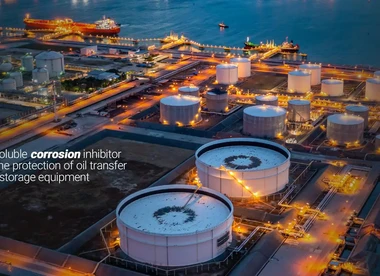
Corrosion is a natural phenomenon that occurs as a result of the electrochemical reaction of metal with the surrounding environment. In the oil and gas industry, corrosion is one of the major problems that accounts for a huge amount of money annually. Part of these amounts are related to the corrosion of pipes or oil transmission lines. Effective ways to prevent corrosion of oil transmission and storage equipment are divided into two categories: physical and chemical solutions.

couponing
The coupon method or corrosion coupons is the simplest method of corrosion monitoring. Coupons are the oldest corrosion monitoring tool. Corrosion coupons are small pieces of metal or alloy of the material of interest that are immersed in the process medium and removed after a specified period of time and their weight or dimension loss is evaluated and examined.
Deaerators
Deaerators are mechanical devices that remove dissolved gases from the boiler feedwater. By reducing the concentration of oxygen and carbon dioxide in the solution, they minimize corrosion and protect the boiler from the effects of corrosive gases.
Submit your opinion
Your email address will not be published.